EasyManua.ls Logo

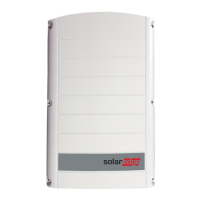
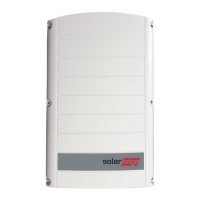
SolarEdge SE Series - User Manual

SolarEdge SE Series
79 pages
Print Icon
To Next Page IconTo Next Page
Loading...
Installation Guide
Three Phase Inverter with
SetApp Configuration
PN: SEXXK-XXXXIXXXX
For Europe and APAC
Version 1.0

Table of Contents

Questions and Answers

  • C
    chandlerrachelAug 12, 2025
    What to do if my SolarEdge SE Inverter has no internet connection?
    • E
      edgarbirdAug 12, 2025
      If your SolarEdge Inverter isn't connecting to the internet, connect a laptop to the network to verify internet access. If there's no internet, contact your IT administrator or internet provider. For Wi-Fi, double-check that the username and password match what's defined in your internet provider's access point or router.
  • B
    Bradley RomeroAug 16, 2025
    What to do if SolarEdge Inverter pairing failed?
    • T
      Thomas HicksAug 16, 2025
      If pairing failed on your SolarEdge Inverter, it might be because the power optimizers are shaded. If the inverter is connected to the monitoring platform, retry pairing remotely during sunlight. Ensure the inverter's ON/OFF/P switch is ON and that S_OK appears on the status screen.
  • E
    Eric SchneiderAug 19, 2025
    Why is my SolarEdge Inverter gateway not responding?
    • A
      alyssa98Aug 19, 2025
      If the gateway for your SolarEdge Inverter isn't responding, first check the physical connection to the switch or router. Ensure the link LED at the router or switch is lit, indicating a physical link. If the connection seems fine, contact your network IT. If not, replace the cable or change it from a cross to straight connection.
  • R
    robertjonesAug 25, 2025
    How to fix no DHCP issue on SolarEdge SE Inverter?
    • B
      bethgrimesAug 25, 2025
      If you're experiencing a 'No DHCP' issue with your SolarEdge Inverter, there might be an IP settings problem. Check both the router and the inverter configuration. You can also configure a Static IP or set the inverter to DHCP. If needed, consult your network IT.
  • A
    Amy HarringtonAug 27, 2025
    How to troubleshoot LAN cable disconnected error on SolarEdge SE Inverter?
    • A
      Alyssa KirkAug 27, 2025
      If you're getting a 'LAN cable disconnected' error on your SolarEdge Inverter, the cause is a physical connection fault. Check the cable pin-out assignment and the cable connection.
  • B
    Brandon SampsonSep 3, 2025
    Why is the string voltage lower than expected on my SolarEdge SE?
    • D
      Dustin JonesSep 4, 2025
      If the string voltage on your SolarEdge Inverter is not 0V but lower than the number of optimizers, it could be due to a few reasons. Ensure all power optimizers are connected in the string. Also, check that the panels are properly connected to the power optimizer inputs. Finally, verify the string polarity using a voltmeter and correct it if needed.
  • R
    Rachel CannonSep 7, 2025
    What to do if SolarEdge SE Inverter string voltage is 0V?
    • S
      Sheryl SolisSep 7, 2025
      If the string voltage on your SolarEdge Inverter is 0V, it indicates that the power optimizer outputs are disconnected. Ensure that all power optimizer outputs are properly connected.
  • L
    Lisa GarciaDec 1, 2025
    What causes high string voltage on SolarEdge SE Inverter?
    • J
      John MorenoDec 1, 2025
      A high string voltage on your SolarEdge Inverter might be due to several reasons. First, check if there's an extra power optimizer connected in the string. Also, verify that no module is directly connected to the string without a power optimizer. If neither is the case, the power optimizers might be malfunctioning. In this case: 1. Disconnect the wires connecting the power optimizers in the string. 2. Measure the output voltage of each power optimizer to locate the power optimizer that does not output 1V safety voltage. If a malfunctioning power optimizer is located, check its connections, polarity, module, and voltage. 3. Contact SolarEdge Support. Do not continue before finding the problem and replacing the malfunctioning power optimizer. If a malfunction cannot be bypassed or resolved...

Summary

Disclaimers

Handling and Safety Instructions

Safety Symbols Information

Explains symbols used in the document for warnings and notes.

Important Safety Instructions

Chapter 1: Introduction to SolarEdge Power Harvesting

System Components Overview

Introduces Power Optimizer, Inverter, Monitoring Platform, and SetApp.

Installation Procedures and Equipment

Lists installation steps and required tools for the system.

Inverter Transport and Storage

Guidelines for safely moving and storing the inverter before installation.

Chapter 2: Installing Power Optimizers

Optimizer Safety and Guidelines

Details safety warnings and guidelines for installing power optimizers.

Mounting and Connecting Optimizers

Step-by-step guide for mounting and wiring power optimizers in strings.

Chapter 3: Installing the Inverter

Inverter Package, Identification, and Interfaces

Lists package contents, unit identification, and connector details.

Inverter Controls and Mounting

Explains inverter controls (switch, LEDs) and mounting procedures.

Grounding and DC Safety Unit Installation

Procedures for grounding the inverter and installing the DC Safety Unit.

Chapter 4: Connecting AC and PV Strings

Grid Connection Guidelines

Recommendations for connecting the inverter to the AC grid.

Connecting AC Grid and PV Strings

Detailed steps for connecting AC power and DC PV strings to the inverter.

Residual Current Device (RCD) Selection

Information on selecting and installing RCDs for DC side protection.

Chapter 5: System Activation and Configuration

Activating and Commissioning the System

Steps to activate, commission, and configure the system using SetApp.

Verifying System Operation and Monitoring

Procedures to verify system operation and set up monitoring.

Creating Layouts for Monitoring

How to create logical and physical layouts for site monitoring.

Chapter 6: Setting Up Communication

Communication Options and Connectors

Overview of communication methods (Ethernet, Wi-Fi, RS485) and connectors.

Ethernet and RS485 Connection Setup

Detailed steps for establishing Ethernet and RS485 communication.

RS485 Bus Configuration and Verification

Steps to configure the RS485 bus and verify the connection.

Appendix A: Errors and Troubleshooting

Identifying and Troubleshooting Errors

Methods to identify errors using LEDs, SetApp, and the monitoring platform.

Troubleshooting Communication and Optimizers

Solutions for communication issues and power optimizer malfunctions.

Appendix B: Optional Components

Surge Protection Devices (SPD)

Information on installing RS485 and AC Surge Protection Devices.

Appendix C: SafeDC

Appendix D: Mechanical Specifications

Inverter and Bracket Dimensions

Technical drawings showing dimensions of the inverter and mounting bracket.

Technical Specifications

Europe & APAC Inverter Specifications

Detailed electrical and performance data for European and APAC models.

277;480 V Grid Inverter Specifications

Detailed electrical and performance data for 277/480V grid models.

Support Contact Information

SolarEdge SE Series Specifications

General IconGeneral
EfficiencyUp to 99%
Protection RatingIP65
CommunicationEthernet, Wi-Fi (optional), RS485
DimensionsVaries by model
WeightVaries by model
Rated AC PowerVaries by model
Max. DC PowerVaries by model
ModelSE Series (e.g., SE3000H, SE5000H)
AC Output PowerVaries by model
MPPT RangeVaries by model
Operating Temperature-25°C to 60°C
Warranty12 years standard, extendable to 20 or 25 years

Related product manuals