9.1 Fuel Settings for Starting the Engine
The ECU has n few sequences how to start the engine. An engine requires an initial prime pulse
of fuel to start the moment the engine is cranked, then a richer mixture during cranking. Once it
started, it also requires a certain amount of richer mixture than idling to get it going till normal idle
settings can take over. For cold starting all these settings must be increased at a certain %. This is
done automatically by the ECU by using the water temperature compensation Map. Adjust the
following setting when the engine is at normal operating temperature.
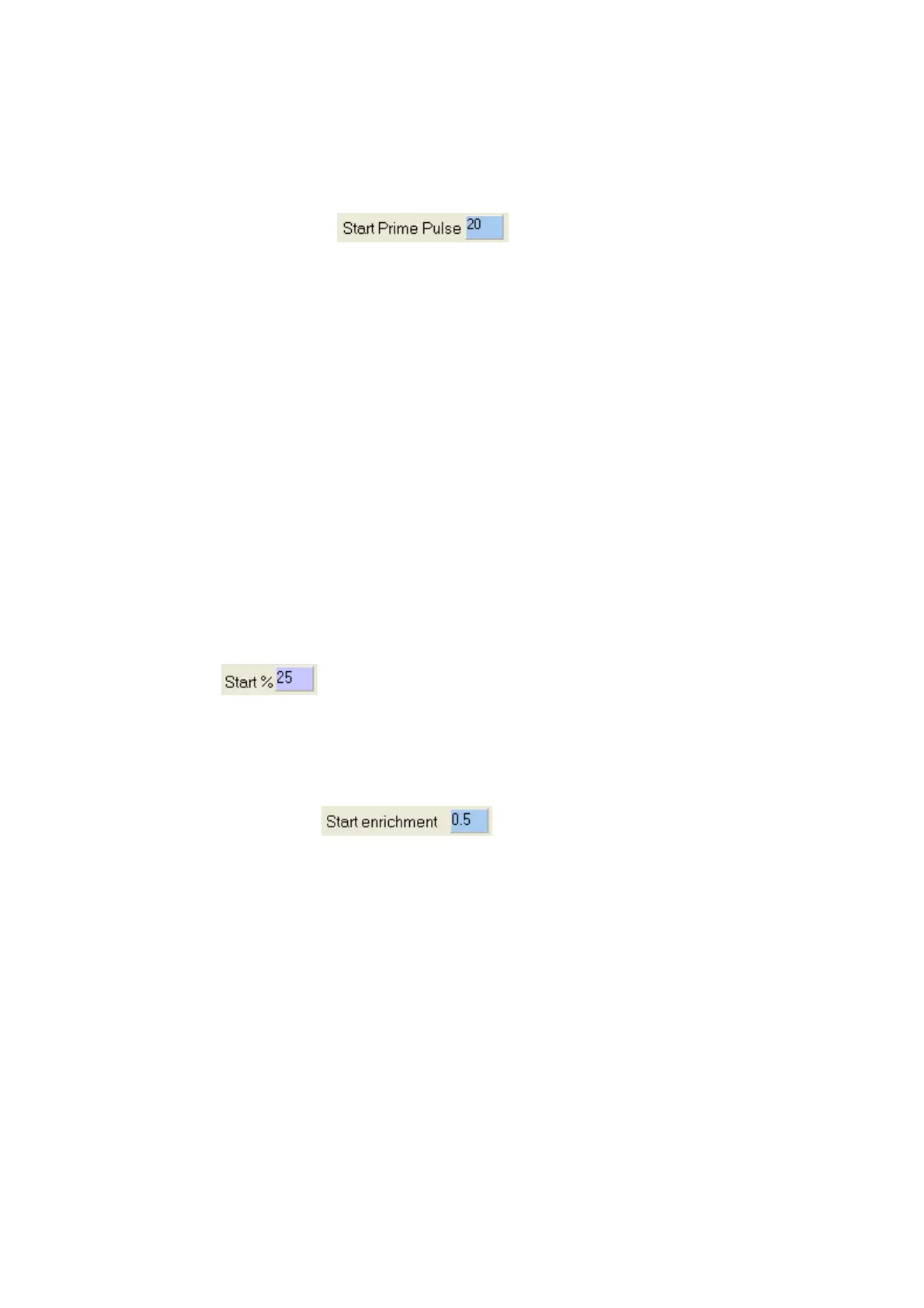
1. 9.1.1 Start Prime Pulse This setting will open the injectors for 20
milliseconds right after the first crank pulse occur. It is a once off pulse and will only happen
once after the ECU is powered up. If your ignition key is broken and you can turn the starter
again without switching off, this pulse will be absent and the engine may turn a couple of times
to start. When the engine starts look at the exhaust. If there is black smoke it is too much
petrol. Try decreasing this value till the engine struggles to start. Then increase it slightly. If this
pulse is too large, it may flood the engine.
2.
9.1.2 Throttle Priming is a function to manually inject fuel into the engine on very cold
days. The TPS must be connected for this feature. If you press the throttle more than 25%, the
ECU will prime the injectors by half the value set in the Start Prime Pulse block. It will start the
fuel pump for 1 second to get the fuel pressure up again. This function may be repeated if
more starting fuel is required.
3.
9.1.3 Flood Control is a function that clears a flooded engine. It is activated when the
accelerator is pressed more than 80% during cranking. The ECU will cut the injectors and no
fuel will be injected into the engine. The spark and clean air will eventually dry and ignite the
remaining fuel and clear the plugs. When the throttle is released the ECU resumes normal
fueling.
4. 9.1.4 Cranking Fuel is calculated using the Map sensor signal. As you crank, the Map
signal will creep to the left, increasing manifold vacuum, which requires less fuel. If you press
the throttle the vacuum will stay right causing the ECU to continue with the large fuel mixture.
5. 9.1.5 Start % If you have idle control, do not press the throttle as the idle control
will ensure enough air at starting. This value determines how much air the ECU must add to
the starting enrichment. If you don’t have idle control it helps to open the throttle slightly for
starting. Do not rev the cold engine as oil pressure is still low. Rather let it heat up gradually.
For cold starting you may need to keep the engine running with the throttle as it requires more
air.
6. 9.1.6 Start Enrichment This setting will enrich the idle fuel by adding
0.5 milliseconds to the injector time. This value will decrease with RPM counts, and should
fade in about 8 seconds at idling to zero milliseconds. If you rev the engine after starting, it
would be zero in 2 seconds. Try starting with a zero value. Do not press the throttle. If the
engine dies after starting, increase this value till it keeps running.
9.2 Tuning Basics
Tuning is basically getting the two main ingredients of fuel amount and spark timing correct. The
instruments used for this is a timing light and the lambda sensor wired into the ECU. The reason
why no Dyno is required, is because you can tune it with the help provided and the tools available.
If you do not have a lambda sensor on the engine you need to put a lambda tuning instrument in
the exhausted. You also need a good timing light. Rather mark the degrees on the engine pulley
as some timing lights are not very accurate and cannot measure wasted spark coils accurately.
The engine is designed for a certain torque and power curve. Inadequate mixtures and timing will
only reduce performance. Timing is the easiest parameter to get in the right region, as you can
use timing marks on the pulley and quality timing light. Also follow the guidelines for the specific
type of pickup to get it more or less in the firing zone. If you are not sure try to go for a retarded
time position. This will make the least damage and not break the starter.



 To Next Page