PARAMETRIC EOUALIZER SECTION
Before we begin, the label itself will requiresome
explanation. What
is
parametric and, equal to
what
?
A logical quest ion, because the term does
not describe what you do with the controls. In
multitrack audio, tone controls are almost
always
used to "make different" and the concept of
"make the
same" doesn't quite fit. How did we
get this
label on our tone control?
The telephone companyuses
it.
In the earlydays,
the system worked well in the lab, and in short
runs of 100 yards or so, but
. . .
. .
When two "phones" were 10 miles apart the line
between them did not transmit al1 of the sound
representing signal in the
same way. Some parts
of the frequency spectrum did not pass down
the
line at all, some parts were different in level
or displaced in "time". What came out of the ear-
piece
was definitely not what had "gone in" 10
miles away and understanding
a
conversation
proved to be difficult. What now?
'rhe Phone
company had to learn how to make the output
"sound like" the input.
If "output equals input"
is
the concept, an "equal-
izer" is a logical name for the device used to fix
your problem. Just as in many other concepts in
audio, the telephone company language has set
the terms we use today.
The term "parametric" refers to the
adjustable
frequency point. The "parameters" or "rules" are
not fixed at any given number, but are
continu-
ously
variable. Both aspects of the circuit, fre-
quency center point as well as gain or loss are
continuously
adjustable without "steps" but there
are
limits.
The
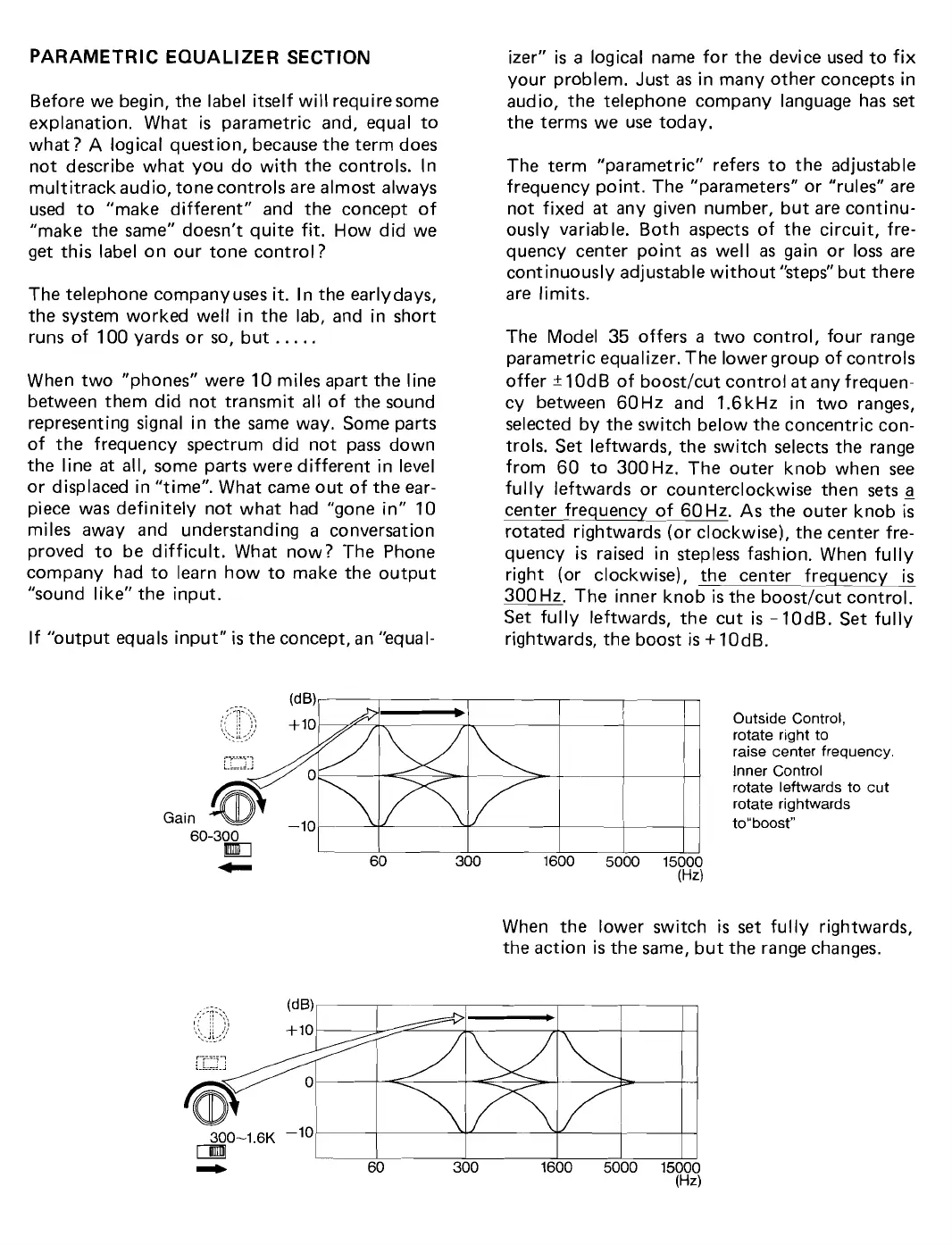
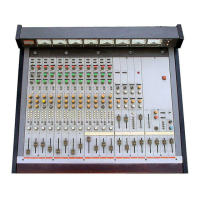
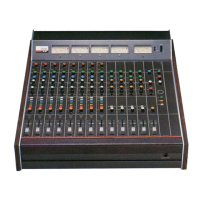
Model 35 offers a two control, four range
parametric equalizer. The lower group of controls
offer
+10dB of boostlcut control at any frequen-
cy between 60Hz and 1.6kHz in two ranges,
selected by the switch below the concentric
con-
trols. Set leftwards, the switch selects the range
from 60 to
300Hz. The outer knob when see
fully leftwards or counterclockwise then sets
3
center frequency of 60Hz. As the outer knob
is
rotated rightwards (or clockwise), the center fre-
quency
is
raised in stepless fashion. When fully
right (or clockwise), the center frequency
is
300Hz. The inner knobT the boostlcut control.
Set fully leftwards, the cut
is -10dB. Set fully
rightwards, the boost
is
+
10dB.
Outside Control,
rotate right to
raise center frequency.
Inner Control
rotate leftwards to cut
rotate rightwards
toWboost"
When the lower switch
is
set fully rightwards,
the action
is
the same, but the range changes.


 To Next Page