for long distance transmission and are not
simple or easy to explain. Suffice
it
to say
that the worst
possible thing you can do to
a
piece of electronic equipment is to lower the
resistance
it
is expected to work into (the
load). The lower the number of ohms, the
harder it is to design
a
stable circuit. When
you think about
"load", the truth
is
just the
opposite of what you might expect!
O
ohms
is
a
"short circuit", no resistance to the pas-
sage of signal. If this condition occurs before
your
signal gets from California to Boston,
you won't be
able to talk- the circuit didn't
"get there",
it
"shorted out". Once again, tele-
phone company logic has entered the language
on
a
permanent basis. Unless the value for
ohms
is
infinity (no contact, no possible energy
flow) you will be better off with
a
higher
value, and many working electronic devices
have input numbers in the millions or billions
of ohms.
3. A
volt is
a
unit of electrical pressure, and by
itself is not enough to describe the electrical
power available. To give you an analogy
-
that may help, you can think of water in a
hose. The pressure is not the amount of water,
and fast
flow will depend upon the size of
the
hose (impedance or resistance)
as
well.
Increase
the size of the pipe (lower the resist-
ance, or
Z)
and pressure (volts) will drop un-
less
you make more water (current) available
to keep up the demand. This analogy works
fairly well for DC current and voltage, but
alternating current asks you to imagine the
water running in and out of the
nozzle
at
whatever frequency your "circuit"
is
working
at,
and
is
harder to use
a
menta1 aid. Water
has never been known to
flow out of
a
pipe
at
10,000 cycles per second.
This reference level for
a
starting point has been
used by radio,
television, and many other groups
in audio because the
telephone company was the
largest buyer for audio equipment. Most of the
companies that
built the gear started out working
for the phone company and new audio indus-
trie~,
as
they came along, found
it
economica1 to
use
as
much of the ready-to-hand stuff
as
they
could, even though they were not routing signals
from one end of the world to the other.
Must we use this
telephone standard for record-
ing? Its use in audio has been so widespread that
many
people tiave assumed that
it
was the only
choice for quality audio. Not so.
A 600 ohm, 3-wire
transformer-isolated circuit
is
a
necessity for the telephone company, but the
primary reason
it
is
used has nothing to do with
audio
quality. It is noise, hum and buzz rejec-
tion in really long line operation (hundreds and
hundreds of
miles).
Quality
audio does not demand 600 ohm, 3-wire
circuitry. In fact, when
shielding and isolation
are not the major consideration, there are big ad-
vantages in using the 2-wire system that go well
beyond cost reduction. It is,
as
a
system, in-
herently capable
of much better performance
than 3-wire
transformer-isolated circuits.
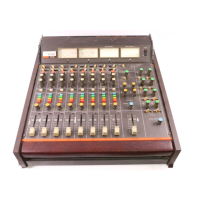
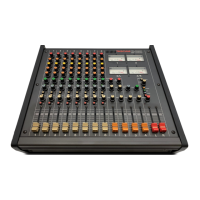
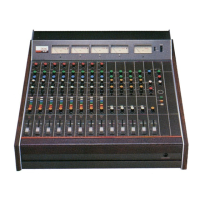
Since TASCAIVI M-35 mixer
is
designed to route
a
signal from
a
mic to
a
recorder, we think that
the 2-wire system
is
a
wise choice. The interna-
tionally
accepted standard (IEC) for electronics
of this kind uses
a
voltage reference without speci-
fying the exact load
it
is
expected to drive. The
reference
is
this:
O
=
l
volt
This is now the preferred reference for
al1
elec-
tronic work except for the telephone company
and some parts of the radio and
television busi-
ness.
Long distance electronic transmission still
is
in need of the 600-ohm standard.
If your test gear has provision for inserting
a
600
ohm
load, be cure the load is not used when
working on TASCAM equipment.
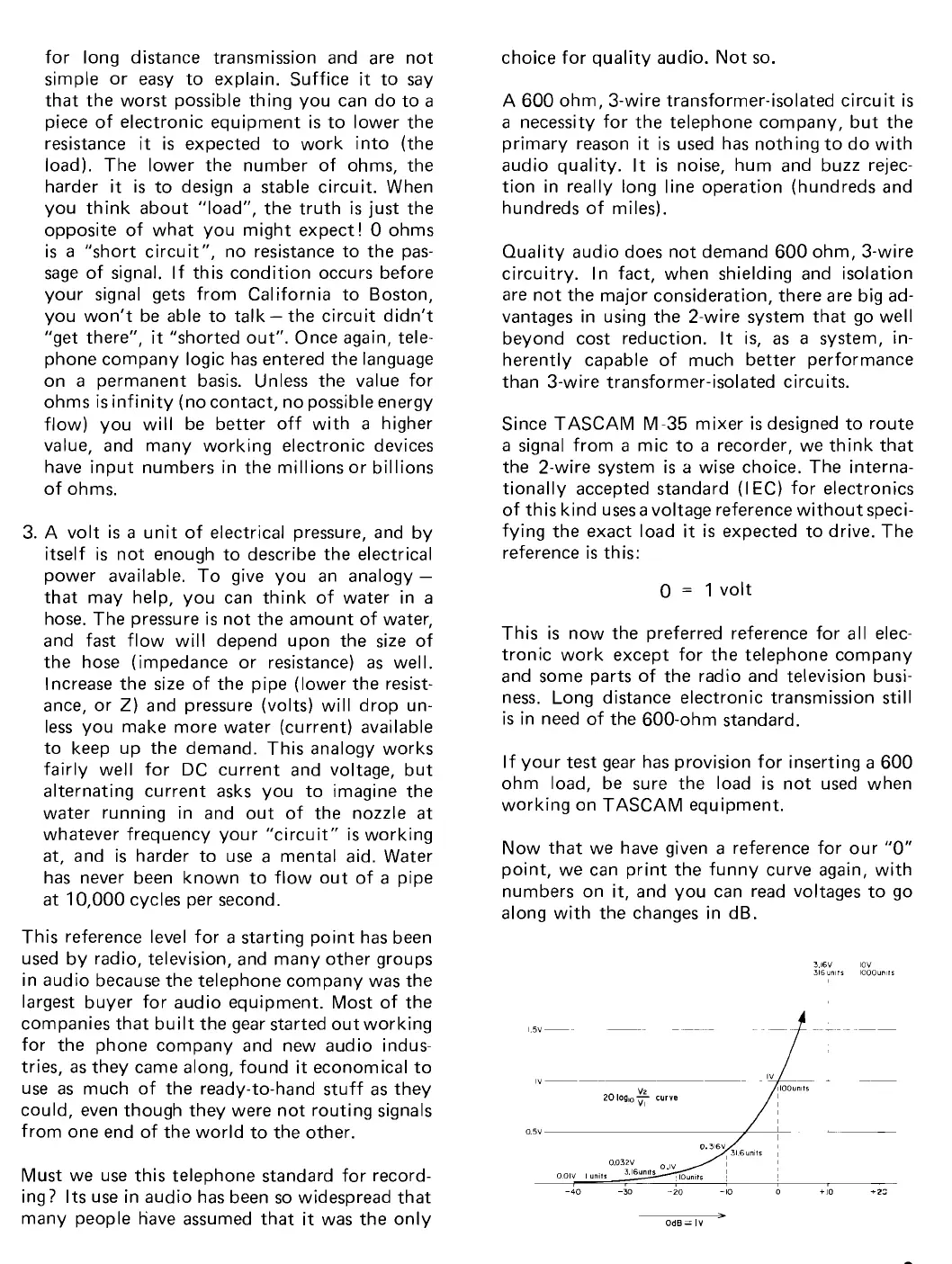
Now that we have given
a
reference for our "0"
point, we can print the funny curve again, with
numbers on it, and you
can read voltages to go
along with the changes in dB.
,"
20
log,,+
curve


 To Next Page