EasyManua.ls Logo

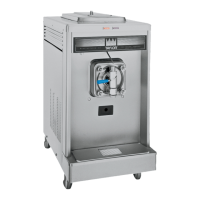
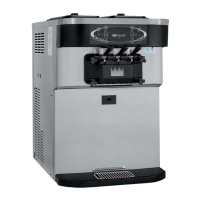
Taylor 340 - User Manual

Taylor 340
50 pages
Print Icon
To Next Page IconTo Next Page
Loading...
OPERATOR’S
MANUAL
Model 340, 341, 342
Slush Freezers
1/97 (Original Publication)
(Updated 7/29/2020)
Original Operating Instructions
028764M

Other manuals for Taylor 340

Questions and Answers

  • G
    grimesamyAug 16, 2025
    How to fix excessive mix leakage in the rear drip pan of Taylor Kitchen Appliances?
    • J
      jeremiah45Aug 16, 2025
      Excessive mix leakage in the rear drip pan of your Taylor Kitchen Appliance could be due to improper lubrication on the drive shaft o-ring or seal; use an approved food grade lubricant and follow the lubrication procedures. It may also indicate a bad or missing o-ring or seal on the drive shaft, which should be replaced every 3 months. A worn rear shell bearing can also cause this issue, so consider replacing it.
  • M
    Mr. Matthew HollandAug 18, 2025
    What to do if my Taylor Kitchen Appliances is not freezing in 'AUTO' position?
    • C
      Chelsey PearsonAug 19, 2025
      If your Taylor Kitchen Appliance isn't freezing in the 'AUTO' position, first, ensure the unit is plugged into the wall receptacle. If it is plugged in, check if the beater motor has tripped; if so, turn the power switch to 'OFF,' let the motor cool, and then resume normal operation. Also, inspect the circuit breaker or fuse and reset the breaker or replace the fuse if necessary.
  • J
    Jennifer KennedyAug 22, 2025
    Why is my Taylor Kitchen Appliances not freezing in 'AUTO' position?
    • R
      raymartinAug 22, 2025
      If your Taylor Kitchen Appliance isn't freezing product in the 'AUTO' position, it might be due to a bound torque rotor, preventing the compressor from running; free the torque rotor. Another cause might be a bent torque arm, which should be replaced. Also, ensure the condensers are cleaned regularly, as dirty condensers can hinder freezing.
  • D
    Dennis MarshallAug 25, 2025
    Why is no product dispensing from my Taylor Kitchen Appliances with the draw valve opened?
    • M
      Michele MartinAug 26, 2025
      If no product is dispensed from your Taylor Kitchen Appliances when the draw valve is opened, it could be due to several reasons. First, ensure the product is mixed properly by carefully following the mixing directions. Second, check if there's a mix low condition and add mix to the hopper if needed. Third, confirm that the torque arm is correctly installed. Finally, inspect the torque rotor for bends or improper installation; replace or reassemble as necessary.
  • M
    Maria MartinezAug 28, 2025
    What to do if the product from my Taylor Kitchen Appliances is too thin?
    • H
      harrellraymondAug 28, 2025
      If the product from your Taylor Kitchen Appliances is too thin, ensure you are carefully following the directions for mixing the product. Check the scraper blades; replace or correctly install them if they are missing or incorrectly installed. Also, adjust the consistency control knob. Finally, check if the torque rotor is bound, preventing the compressor from running; free the torque rotor.
  • K
    Kenneth CannonAug 31, 2025
    Why is the product from my Taylor Kitchen Appliances too stiff?
    • A
      andresrossAug 31, 2025
      If the product from your Taylor Kitchen Appliances is too stiff, check if the torque rotor is bound, causing the compressor to continually run; free the torque rotor. Also, inspect the torque arm; install or replace it if it's bent or missing. Adjust the consistency control knob as needed. Ensure proper mixing of the product by carefully following the directions. Keep the hopper full of mix, as insufficient product in the freezing cylinder can also cause stiffness.
  • C
    Collin UnderwoodSep 3, 2025
    How to stop excessive leakage from the door spout of my Taylor Kitchen Appliances?
    • K
      Kathleen DaltonSep 3, 2025
      Excessive leakage from the door spout of your Taylor Kitchen Appliance may be due to improper lubrication on the draw valve o-rings; use an approved food grade lubricant and follow the lubrication procedures. Additionally, the draw valve o-ring might be bad or missing, so replace the o-rings every three months.
  • M
    Matthew ContrerasSep 6, 2025
    What causes scored walls in the freezing cylinder of Taylor Kitchen Appliances?
    • H
      Heather RichardsonSep 6, 2025
      Scored walls in the freezing cylinder of your Taylor Kitchen Appliances could be due to broken beater pins, so repair or replace the beater assembly. Another cause might be the gear unit being out of alignment; align the gear unit. A bent beater assembly can also cause scoring, so repair or replace it. Lastly, check for a missing front bearing and replace or install it if necessary.
  • J
    Joshua SalinasSep 9, 2025
    Why can't I remove the drive shaft from my Taylor Kitchen Appliances?
    • J
      Jeffrey HarrisSep 9, 2025
      If you're unable to remove the drive shaft from your Taylor Kitchen Appliances, it might be due to lubrication on the square end of the drive shaft; remove the lubrication. Alternatively, the corners of the drive shaft and/or drive coupling may be bent, requiring replacement of the affected parts.
  • E
    Ebony BriggsSep 12, 2025
    Why won't the door go into position easily on my Taylor Kitchen Appliances?
    • V
      Valerie SimmonsSep 12, 2025
      If the door of your Taylor Kitchen Appliances does not go into position easily, ensure that the beater assembly is correctly positioned. The open end of the beater assembly should be in the 11 o’clock position.

Summary

Section 1: To the Installer

Installer Safety

Safety guidelines for installation personnel and general machine handling.

Site Preparation

Guidelines for selecting and preparing the installation location for optimal operation.

Air-Cooled Machine

Requirements for air circulation around the machine for efficient cooling.

Water Connections

Instructions for connecting the water supply for water-cooled models.

Electrical Connections

Guidelines for safe and compliant electrical hookups according to codes.

Beater Rotation

Procedure for ensuring correct beater motor rotation direction for proper function.

Refrigerant

Information and safety precautions regarding the machine's refrigerant.

Section 2: To the Operator

Compressor Warranty Disclaimer

Details on warranty coverage for the refrigeration compressor and refrigerant use.

Section 3: Safety

To Operate Safely

Essential safety rules and precautions for operating the machine.

Section 4: Operator Parts Identification

Model 340 Parts Identification

Lists and illustrates all parts specific to the Model 340.

Model 341 Parts Identification

Lists and illustrates all parts specific to the Model 341.

Model 342 Parts Identification

Lists and illustrates all parts specific to the Model 342.

Beater Door Assembly (Standard)

Lists and illustrates parts for the standard beater door assembly.

Beater Door Assembly (Self-Closing)

Lists and illustrates parts for the self-closing/prime plug door assembly.

Accessories

Lists and illustrates optional accessories available for the machine.

Section 5: User Interface

Symbol Definitions

Explains international symbols used on the operator switches and controls.

Control Switch Functions

Describes the functions of the main control switch (OFF, WASH, AUTO).

Consistency Control Adjustment

Explains how to adjust the product's viscosity using the consistency control.

Indicator Light - Add Mix

Explains the function of the indicator light signaling low mix supply.

Additional Usage Information

Provides additional usage tips, syrup ratios, and serving advice.

Section 6: Operating Procedure

Assembly Procedures

Step-by-step guide to assembling the machine parts after cleaning.

Freezer Door Assembly (Standard Door)

Instructions for assembling the standard freezer door.

Freezer Door Assembly (Self-Closing;Prime Plug)

Instructions for assembling the self-closing/prime plug door.

Sanitizing Procedure

Detailed steps for cleaning and sanitizing the machine.

Priming the Machine

Steps to prepare the machine for operation after cleaning and sanitizing.

Closing Procedure

Steps for disassembling the machine for cleaning and maintenance.

Draining Product

How to drain product from the freezing cylinder before cleaning.

Rinsing the Machine

Procedure for rinsing the machine after cleaning to remove residue.

Cleaning Components

Detailed steps for cleaning specific machine components.

Disassembly Steps

Instructions on how to take apart the machine for thorough cleaning.

Brush Cleaning Instructions

Specific instructions for cleaning using the provided brushes.

Section 7: Operator Checklist

Cleaning and Sanitizing Checklist

Precautions and steps for daily cleaning and sanitizing.

Troubleshooting Bacterial Count

Steps to address and resolve issues related to bacterial counts.

Regular Maintenance Checks

Schedule and tasks for performing routine machine maintenance.

Winter Storage Procedures

Guidelines for safely storing the machine during winter or closure.

Section 8: Troubleshooting Guide

Section 9: Parts Replacement Schedule

Section 10: Limited Warranty on Equipment

Limited Warranty Conditions

Conditions that must be met for the equipment warranty to be valid.

Limited Warranty Exceptions

Items and conditions explicitly not covered by the equipment warranty.

Section 11: Limited Warranty on Parts

Limited Warranty Conditions

Conditions for the warranty coverage on replacement parts.

Limited Warranty Exceptions

Situations and specific parts not covered by the parts warranty.

Taylor 340 Specifications

General IconGeneral
BrandTaylor
Model340
CategoryFreezer
LanguageEnglish

Related product manuals