16
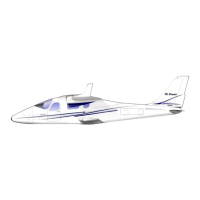
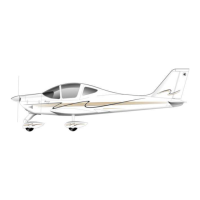
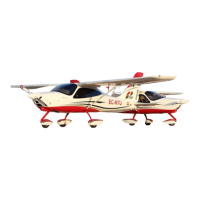
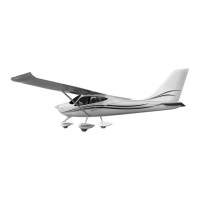
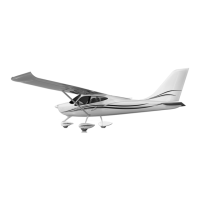
1.7 Airframe
1.7.1 Wing
The wing is constructed of a central light alloy torque box; an aluminum leading edge is attached to the front spar while
flap and aileron are hinged to rear spar. Flaps are constructed of a center spar to which front and rear ribs are joined; wrap-
around aluminum skin panels cover the flap structure. The aileron is constructed of an aluminum spar to which a formed
sheet metal leading edge and metal ribs are attached; a wrap-around. Aluminium material covers aileron structure.
The wing box incorporates the integral fuel tanks of 52liters each.
1.7.2 Fuselage
The fuselage and the vertical stabilizer are made up of a composite fiber structure. The engine housing is isolated from the
cabin by a stainless steel firewall (0.5mm thick); the steel engine mount is attached to the cabin's composite structure.
NOTE: See the AMM for the lamination schemes and repair procedures.
1.7.3 Empennage
The vertical tail is made up of a mixed structure: the vertical stabilizer is made up of composite fiber while the rudder
consists of an aluminum torque stringer connected to light alloy ribs and skin. The horizontal tail is an all-moving type
(stabilator); its structure consists of an aluminum spar connected to ribs and leading edge; the entire structure is covered
with aluminum material.
1.7.4 Flight controls
The control surfaces are manually operated using a control stick for ailerons and stabilator and rudder pedals for the rudder;
longitudinal control acts through a system of push-rods and is equipped with a trim tab. Aileron control is of mixed type
with push-rods and cables; the cable control circuit is confined within the cabin and is connected to a pair of push-rods
positioned in the wings that control ailerons differentially. Aileron trimming is carried out on ground through a small tab
positioned on left aileron.
Flaps are extended via an electric servo actuator controlled by a switch on the panel. Flaps act in a continuous mode; a
panel mounted indicator shows surface position. A fuse positioned on the right side of the panel protects the electric circuit.
Longitudinal trim is performed by a small tab positioned on the stabilator and controlled via an electric servo actuator by
pushing an Up/Down push-button located on the control stick.


 To Next Page