115-0214-004 10
Setting Up Your Workshop
Workshop Requirements
Locate the Nova DVR XP close to a power source in an area with
good lighting. Leave enough clearance on all sides of the lathe;
allow for motor clearance when the headstock is swiveled. Other
machines in your shop should not interfere with the operation of the
lathe.
Your shop should have adequate lighting. The work area of the
lathe should be well lit; there should not be shadows cast on your
work. If possible, locate near a window. A portable spotlight may be
helpful.
The Nova DVR XP requires the appropriate power outlet nearby to
power the motor. Wiring and outlets should adhere to local electrical
codes. If in doubt, seek advice from an electrician. Minimize use of
extension cords. See "Connecting to power" section for Surge
Protector requirements.
Your shop should be adequately ventilated. The degree of
ventilation will vary based on the size of the shop and the amount of
work done. The use of dust collectors and filters will minimize risks
to your health.
Lathe Stand Recommendations
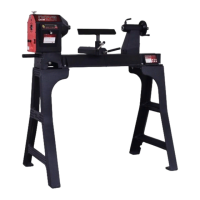
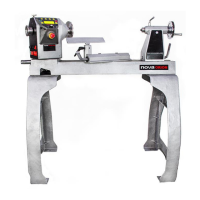
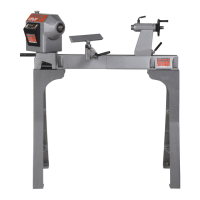
A sturdy and rigid stand is required so that the Nova DVR XP Woodlathe can deliver optimum
performance. A common flaw with many woodlathe installations is an inadequate stand for the lathe.
The larger the size of your turnings, the greater the importance of the lathe stand design.
The height of the stand should locate the centerline of the lathe
spindle at the elbow height of the turner.( illustration next page)
The stand top should be flat so the lathe does not twist when it
is bolted down. Check for any gaps between lathe feet and
stand top before bolting down. Shim and prepare stand as
necessary.
The stand should have enough weight and mass so that it
doesn't move when turning large work pieces, and so that the
stand can absorb vibrations. A lathe stand's stability can be
improved by weighing it down with sand bags on a lower shelf.
The stand should sit level on the floor and not rock.


 To Next Page