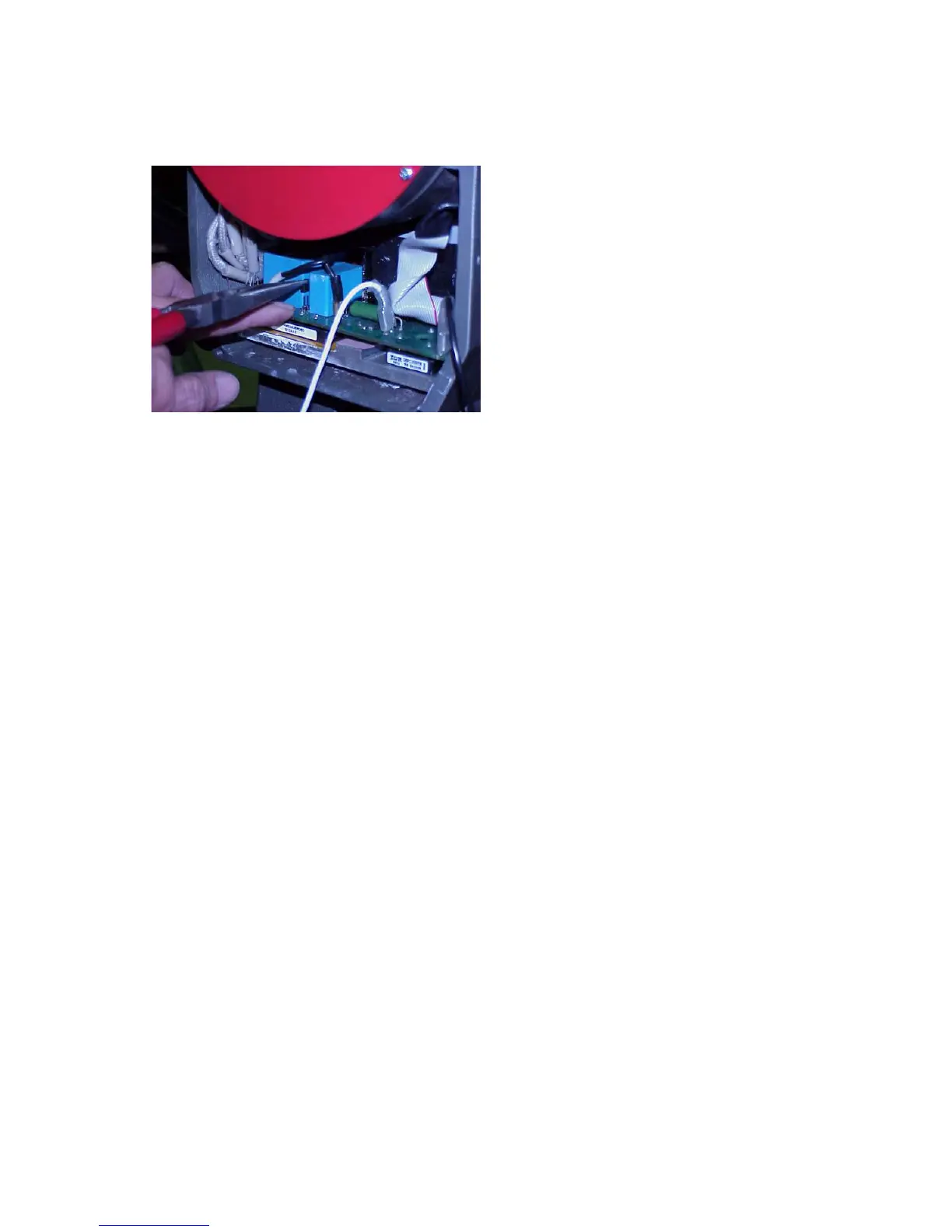
5. Carefully place your index finger on the edge of the board avoiding any soldier points. Using the
top of your finger as a guide run the pliers along and lightly grab the jumper in the pliers. Do not
squeeze too tight as you may crush the jumper. This is important as the jumper will need to be
placed back should you want to run 115V again.
6. Reattach rear guard ensuring all wiring is captured inside casting. Be careful as the back of the
fuse and switch protrude out and should not hit any components as you position the guard in
place.
7. Securely fasten the guard with the 4 cap screws
8. Change the plug to a suitable 220V type either for 15 or 20 amp plug fitting.
Note: Your 220V power supply may be such that the voltage is split 110 V down each the phase
and neutral. If so, then the neutral supply should be switched also, which requires the switch to
be replaced with a double pole, single throw switch (DPST).
If the unit is plugged into a 115 volt outlet with the jumper now set to 220v , it will not damage the
electronics and the motor will still run , but it will not have the same performance , and may show
error – “current overload” under higher loadings.
9. The unit can now run 220V ~ 240V.


 To Next Page