Need help?
Do you have a question about the ThinkPad E555 and is the answer not in the manual?
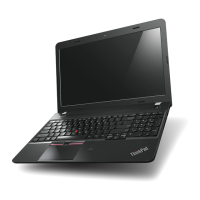
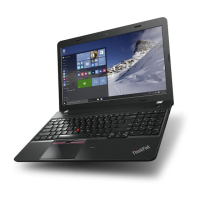
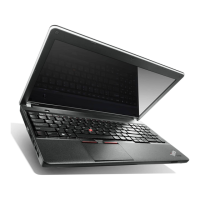
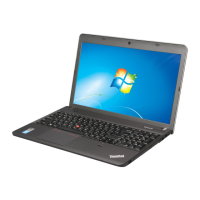
Introduces the computer hardware features and their locations for basic usage.
Helps locate labels containing essential product information such as machine type and model.
Lists the key features of your computer, including memory, storage, and display capabilities.
Details the physical specifications of your computer, including size, heat output, and power source.
Provides information about the recommended operating environment for the computer.
Describes programs provided by Lenovo to help you work easily and securely.
Explains the benefits and process of registering your computer with Lenovo.
Provides tips to optimize computer use and links to troubleshooting resources.
Details the special keys on your keyboard that enhance usability and productivity.
Explains how to use the ThinkPad pointing device, including TrackPoint and trackpad functions.
Covers using AC power, checking battery status, charging, and maximizing battery life.
Provides instructions for establishing Ethernet and wireless LAN connections.
Guides on connecting, choosing display modes, and changing settings for external displays.
Details the computer's audio capabilities, connectors, and configuration for sound.
Explains how to start and configure the integrated 2D or 3D camera.
Information on the Multi-Burner drive's capabilities for reading and recording discs.
Instructions for inserting and removing flash media cards in the reader slot.
Helps prevent unauthorized use by setting up power-on, supervisor, and hard disk passwords.
Procedure to set, change, or remove a power-on password for system access.
Protects system information in ThinkPad Setup; enables administrator control.
Explains user and master hard disk passwords for protecting stored information.
Tips to maximize security against unauthorized access and data breaches.
How to protect computer access using drive encryption software.
Enables fingerprint authentication for secure and simple computer login.
Methods to securely delete data before disposing of, selling, or handing over the computer.
Explains how a firewall program protects against internet security threats and privacy.
Information on using the preinstalled antivirus program to detect and eliminate viruses.
Use Lenovo Solution Center for troubleshooting and resolving computer issues.
Steps to force shutdown, remove power sources, and restart the computer if unresponsive.
Immediate actions to take if liquid is spilled on the computer to prevent damage.
Explains error codes and their corresponding solutions for system issues.
Addresses screen issues like blank screens or dimming without specific error codes.
Interprets beep patterns during startup to diagnose hardware problems.
Checks for proper memory module installation and BIOS compatibility.
Covers Ethernet, wireless LAN, and Bluetooth connection issues and their solutions.
Addresses problems with the ThinkPad pointing device, keyboard, and numeric keypad.
Solutions for blank screens, distorted displays, and external monitor connection problems.
Troubleshoots sound playback, microphone input, and volume control issues.
Addresses problems with fingerprint enrollment, authentication, and maintenance.
Solutions for battery charging failures, short operating times, and power adapter issues.
Troubleshoots problems with hard disk drives, optical drives, and software.
Addresses problems related to USB devices and computer docks.
Information about recovery solutions for the Windows 7 operating system.
Instructions on how to create and use recovery media for system restoration.
Guides on performing backup and recovery operations using Rescue and Recovery.
Details on performing recovery operations independently of the Windows OS.
Instructions on creating and using a rescue medium for computer recovery.
Guides for reinstalling factory-installed programs and device drivers.
Troubleshooting steps for accessing the Rescue and Recovery workspace or Windows.
Information about recovery solutions for the Windows 8.1 operating system.
Procedure to refresh the computer without losing personal files or settings.
Steps to reset the computer to factory default settings, reinstalling the OS.
How to change firmware settings, startup options, or restore from system image.
Enables recovery or repair of the OS even if Windows 8.1 fails to start.
Precautions to take to avoid static-electricity damage to computer components.
Instructions for safely removing and installing the computer's battery.
Step-by-step guide for removing and reinstalling the computer keyboard.
Procedure for replacing the computer's hard disk or solid-state drive.
Instructions on how to remove and replace the computer's optical drive.
Guides for replacing or adding memory modules to increase computer capacity.
Procedure for replacing the coin-cell battery, including safety precautions.
Guidance on solving problems by referring to documentation and the Lenovo website.
Explains the process and benefits of registering your computer with Lenovo.
Information on how to download updated software to resolve computer problems.
Details on what information to record before contacting Lenovo support.
Information on sources for help, service, and technical assistance from Lenovo.
How to use diagnostic programs to identify and solve hardware problems.
Details on accessing technical support information on the Lenovo website.
Information on getting help and information by telephone during the warranty period.
Information on purchasing additional services for support and repair.
Identifies the location of integrated UltraConnect wireless antennas for optimal reception.
Details standards and profiles for Wireless LAN and Bluetooth device interoperability.
Discusses radio frequency emissions from wireless cards and their safety for consumers.
Information on how to find wireless regulatory notices for the computer.
Provides product name, compliance ID, and machine types for regulatory certification.
Details the product's compliance with US Export Administration Regulations (EAR).
Covers FCC Declaration of Conformity and other electronic emission standards.
States compliance with FCC Part 15 rules for digital devices and potential interference.

 To Next Page
 General