15
The rst step to balancing the Axis is to achieve static balance. We want the sled to hang with the post
vertical and the sled slightly bottom heavy, keeping the camera at the top and the monitor at the bottom.
This doesn’t have to be perfect, but get the rig balance as close as possible given the time you have.
The following steps are common to balancing most sleds and will be familiar if you’ve worked with a
Steadicam before. Some images show different models, but the techniques are basically the same.
The Axis is adjustable in many ways to balance various cameras sizes:
• Heavier cameras may require adding balance weights at the bottom, rotating
the battery lower, lengthening the post, or removing camera accessories.
• Lighter cameras may require adding balance weights at the top, raising the
battery, shortening the post or adding a larger camera battery.
Make sure the dovetail lock is
secure so the camera won’t move.
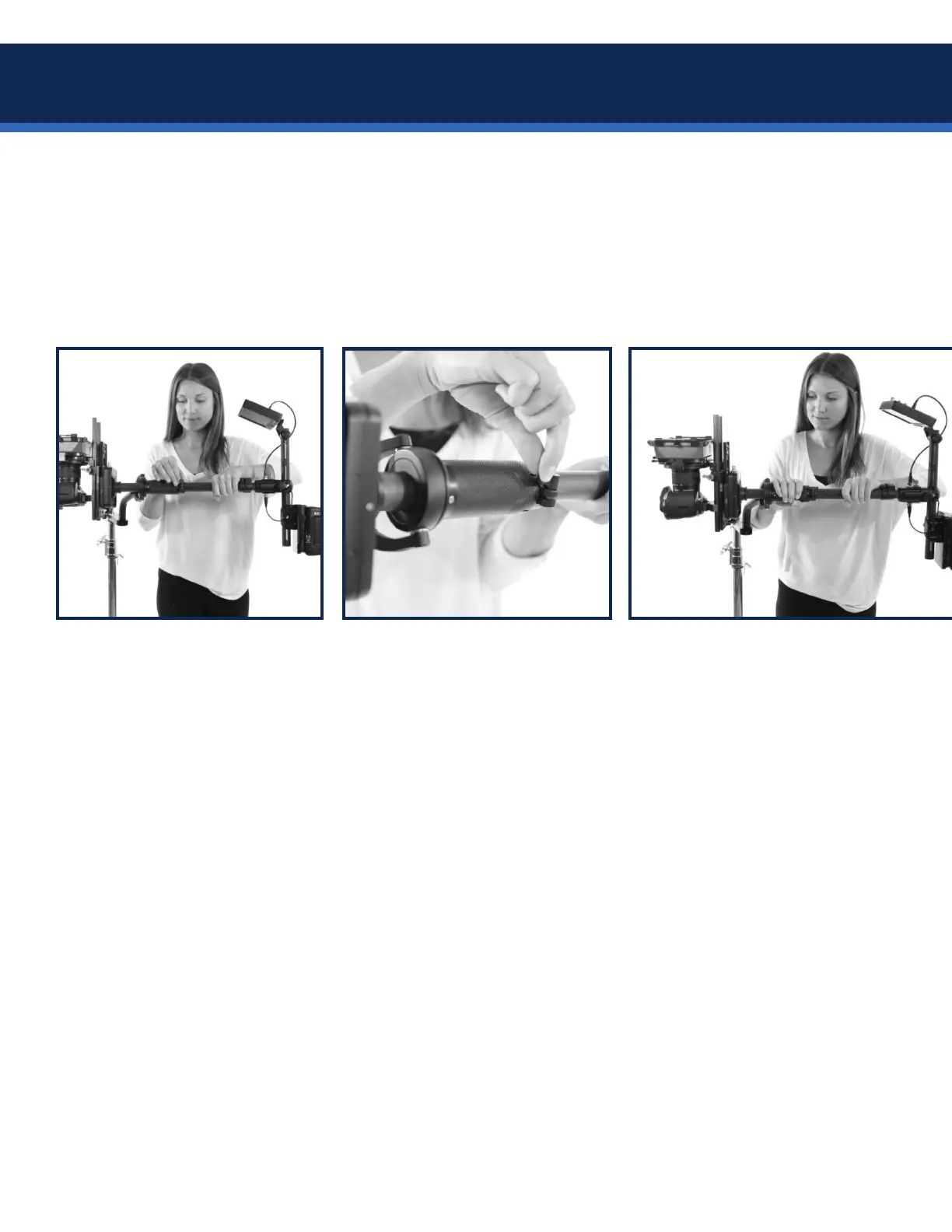
With your rig on the balance pin,
grab the post with two hands and
rotate it horizontal.
With one hand on either side of
the gimbal, unlock the gimbal
clamp and start sliding the post
throughthegimbaltondthe
position where it balances.
NOTE: If the rig inverts with the
gimbal at the top of the post,
extending the lower post is one
way to move the balance point
down to the gimbal. See below.
Relax your grip a LITTLE while
feeling for the balance point, but
never let go of the post.
Onceyoundthatbalancepoint,
slide the gimbal about 1/2”
(12mm) closer to the top stage.
Align the gimbal grip mark with
the line on the back of the upper
post and close the gimbal clamp.
WARNING: Always keep the post horizontal when the gimbal clamp is open. If you don’t, and the sled
rotates, the post will slide through the gimbal and can damage your equipment or pinch your ngers.
Balance: static


 To Next Page