18
Chimneys taller than 6m above the connection will require a draft test to determine if
the draft is too high.
Note: The High Burn Draft should not exceed 50Pa. A draft stabiliser is fitted to the
starter flue to counteract a certain amount of excessive draft but additional measures
may be required.
Creosote Formation and Need for Removal - When wood is burned slowly, it
produces tar and other organic vapours, which combine with expelled moisture to
form creosote. The creosote vapours condense in the relatively cool chimney flue of a
slow-burning fire. As a result, creosote residue accumulates on the flue lining. When
ignited, this creosote makes an extremely hot fire. The pellet flue pipe should be
inspected at least twice monthly during the heating season to determine if a creosote
build-up has occurred. If creosote has accumulated it should be removed to reduce
the risk of a chimney fire.
Guidance on minimizing creosote formation and the need for periodic creosote
removal: The chimney should be inspected during the heating season to determine if
a creosote build-up has occurred. If a significant layer of creosote has accumulated
(3mm or more) it should be removed to reduce the risk of a chimney fire.
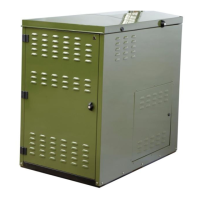
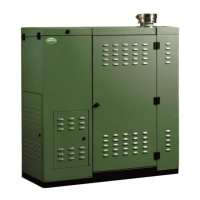
The TR Engineering Ltd Boiler may be used and installed into an existing masonry or
a flue pipe suitable for use with a class 1 appliance (i.e. an appliance burning solid
fuel).
It can not be installed in a chimney serving another appliance.
The chimney should be cleaned and or inspected before installation.
WARNING
Keep combustible materials such as grass, leaves, etc. at least 3 feet away
from the point directly under the flue termination. (between the flue and the
ground)
CAUTION
KEEP COMBUSTIBLES AWAYFROM FLUE OUTLET.
INSTALLATION IS TO BE PERFORMED BY A QUALIFIED INSTALLER.
DO NOT INSTALL A FLUE DAMPER IN THE EXHAUST FLUE SYSTEM
OF THIS UNIT.
DO NOT CONNECT THIS UNIT TO A CHIMNEY FLUE SERVING
ANOTHER APPLIANCE.



 To Next Page