EMISSION
AND
EVAPORATIVE LOSS CONTROL SYSTEMS
Electronic
Control
of
the
Fuel
Injection
System
At the heart
of
the electronic control system
is
the Electronic
Control Unit
(E.C.U.) which
is
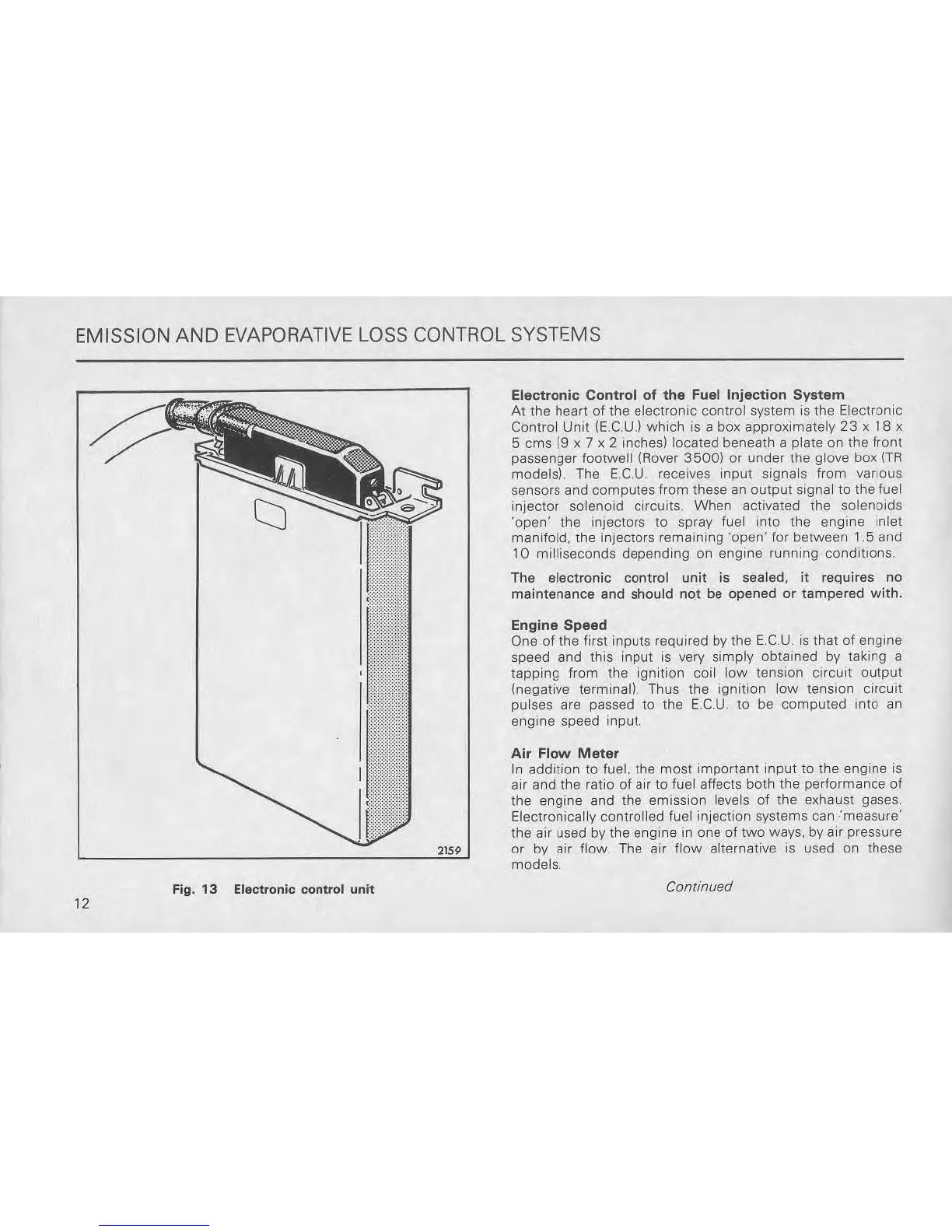
a box approximately
23
x
18
x
5 ems
(9
x 7 x 2 Inches) located
beneath
a
plate
on
the
Iront
passenger footwell (Rover
3500)
or under
the
glove box
(TR
models),
The
E.C.U.
receives input signals from various
sensors and computes from these
an
output signal to the fuel
injector solenoid circuits. When activated the solenoids
'open' the injectors to spray fuel into the engine inlet
manifold, the injectors remaining 'open' for between 1.5 and
10
milliseconds depending on engine running conditions.
The electronic control unit
is
sealed,
it
requires no
maintenance and should
not
be opened or tampered
with.
Engine
Speed
One of the first inputs required
by
the EG.U.
is
that of engine
speed and this input
is
very simply obtained by taking a
tapping from the ignition coil
low
tension circuit output
(negative terminal), Thus the ignition
low
tenSion circuit
pulses are passed to the
E.C,U.
to be
computed
into
an
engine speed input.
Air
Flow
Meter
In
addition to fuel. the most important input to the engine
is
air and the ratio of air to fuel affects both the performance of
the engine and the emission levels of the exhaust gases,
Electronically controlled fuel injection systems
can
'measure'
the air used
by
the engine
In
one of two ways.
by
air pressure
or
by
air flow. The air flow alternative IS used on these
models.
12
Fig.
13
Electronic
control
unit
Continued


 To Next Page