YK15-0009-DI-002-04
6
【Spec. F】
Fluorine oil is used as lubricating oil
The Spec. F uses extremely chemically stable and inert fluorine oil as a countermeasure
against oil deterioration caused by corrosive, combustible, and oxidizing gases.
Fluorine oil cannot be replaced with mineral oil (ULVOIL R-72).
At the factory, assembly inspection is performed using fluorinated oil, but we do not ship
products with fluorinated oil. Please order separately if necessary.
【Spec. N】
NBR is used for O-ring and sealing material of wetted surface in the case of Spec. N.
This specification is not suitable in case the Pump runs in the high load that the Pump
temperature exceeds more than 80℃ because heat resistance of NBR is inferior as
compared with FKM.
Spec. N is not available for the VD60C and VD90C.
【Spec. B】
Silicon rubber is used for O-ring and sealing material of wetted surface in the case of
Spec. B.
NBR, which has high sealing performance, is used for shaft seal at atmospheric side.
Similarly to Spec. N, this specification is not suitable in case the Pump runs in the high
load that the Pump temperature exceeds more than 80℃.
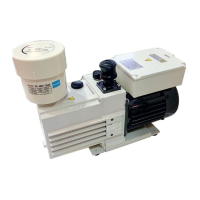
Independent oil filling to oil seal
Oil is supplied to the atmospheric seal part (oil seal) independently from circulating oil by
mounting the oiler to the Pump. It suppresses damage on the atmospheric seal part by
not circulating moisture, chemicals and dust, which have been mixed with lubricant oil
inside the oil tank, to the atmospheric seal part.
There is no gas ballast port. Refer to contents of “gas ballast port close” for performance
described below.
Spec. B is not available for the VD60C and VD90C.
【Spec. H】
Independent oil filling to oil seal
The Pump inside and atmospheric seal part are isolated each other by closing the
connection pass between the Pump inside and shaft seal by mounting the oiler to the
Pump. The Pump oil circulates through the connection pass in the case of the standard
model.
External leak test
It is inspected before shipment if helium leak rate from outside to the Pump is less than
10
-6
Pa・m
3
/sec (helium leak test by hood test method). Leak rate will increase due to
aging degradation of seal materials and so leak rate during use is not guaranteed.
There is no gas ballast port. Refer to contents of “gas ballast port close” for performance
described below.


 To Next Page