HE250 - Installation and Operation Manual 17
4 OPERATING YOUR FIREPLACE
4.1 The use of a firescreen
This fireplace has been tested for use with an open door in conjunction with a firescreen (AC01560, sold
separately). Make sure the firescreen is properly secured on the fireplace to avoid any risk of sparks
damaging your flooring. When the firescreen is in use, do not leave the fireplace unattended so that you
can respond promptly in the event of smoke spillage into the room. Potential causes of smoke spillage are
described in Section 8: The Venting System of this manual. See Appendix 5: Installing the Firescreen
(AC01560) for installation instructions.
OPERATING WITH THE FIRESCREEN INCREASES THE POSSIBILITY OF GENERATING CARBON MONOXIDE.
CARBON MONOXIDE IS AN ODOURLESS GAS THAT IS HIGHLY TOXIC AND WHICH CAN CAUSE DEATH AT
HIGH CONCENTRATION IN AIR.
4.2 Your First Fires
Two things will happen as you burn your first few fires; the paint cures and the internal components of the
fireplace are conditioned.
As the paint cures, some of the chemicals vaporize. The vapors are not poisonous, but they do smell bad.
Fresh paint fumes can also cause false alarms in smoke detectors. So, when you first light your fireplace, be
prepared by opening doors and/or windows to ventilate the house. As you burn hotter and hotter fires,
more of the painted surfaces reach the curing temperature of the paint. The smell of curing paint does not
disappear until you have burned one or two very hot fires.
Burn one or two small fires to begin the curing and conditioning process. Then build bigger and hotter fires
until there is no longer any paint smell from the fireplace. Once the paint smell disappears, your fireplace is
ready for serious heating.
4.3 Lighting Fires
Each person who heats with wood develops their own favorite way to light fires. Whatever method you
choose, your goal should be to get a hot fire burning quickly. A fire that starts fast produces less smoke and
deposits less creosote in the chimney. Here are three popular and effective ways to start wood fires.
4.3.1 Conventional Fire Starting
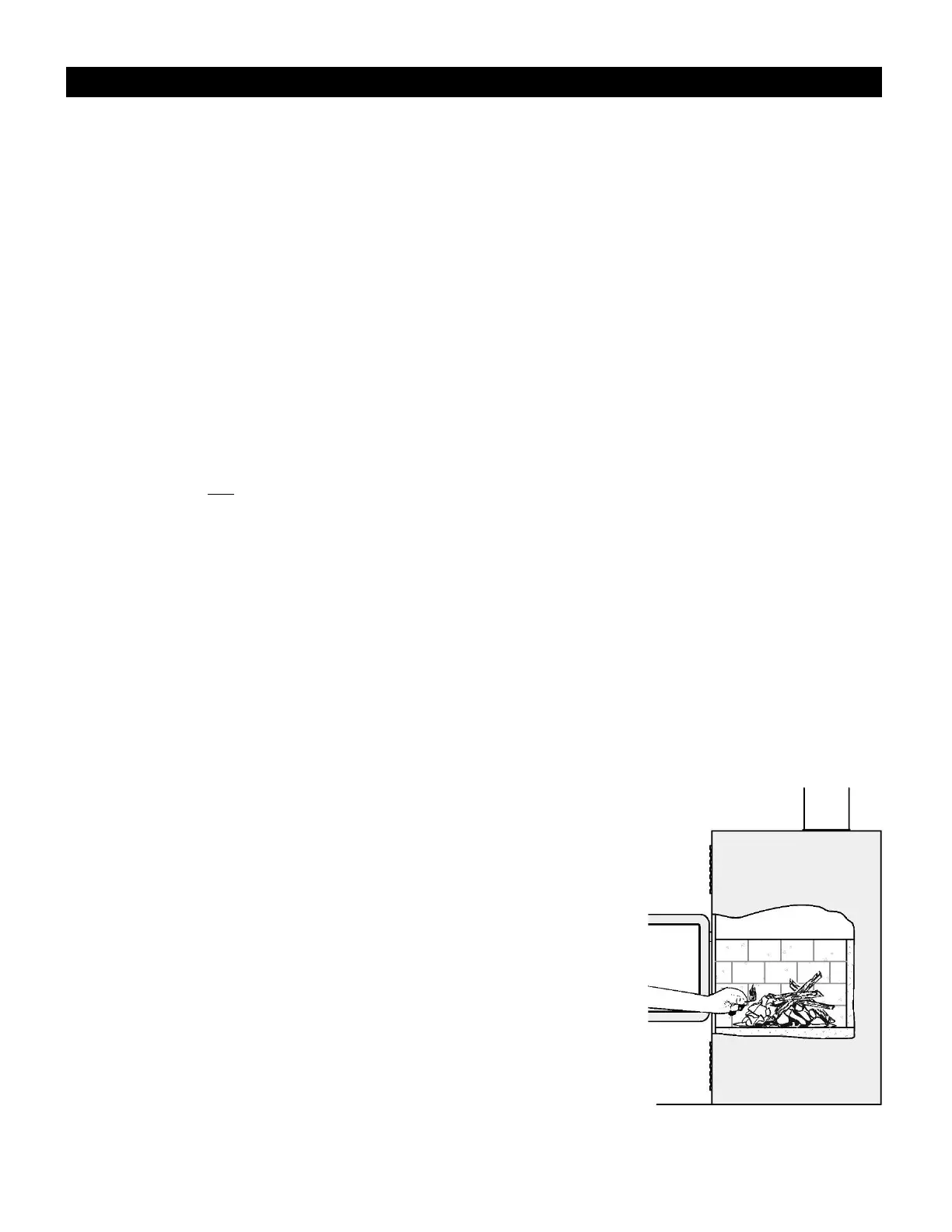
The conventional way to build a wood fire is to bunch up 5 to 10 sheets of
plain newspaper and place them in the firebox. Next, place 10 or so pieces
of fine kindling on the newspaper. This kindling should be very thin; less
than 1” (25 mm). Next, place some larger kindling pieces
kindling. Open the air control fully and light the newspaper. If you have a
tall, s
traight venting system you should be able to close the door
immediately and the fire will ignite. Once the fire has ignited, close the
door and leave the air control fully open.
A conventional kindling fire with paper under finely split wood.
DO NOT LEAVE THE FIREPLACE UNATTENDED WHEN THE DOOR IS SLIGHTLY OPENED. ALWAYS CLOSE AND
LATCH THE DOOR AFTER THE FIRE IGNITES.


 To Next Page