HE250 - Installation and Operation Manual 21
4.4.6 Building Different Fires for Different Needs
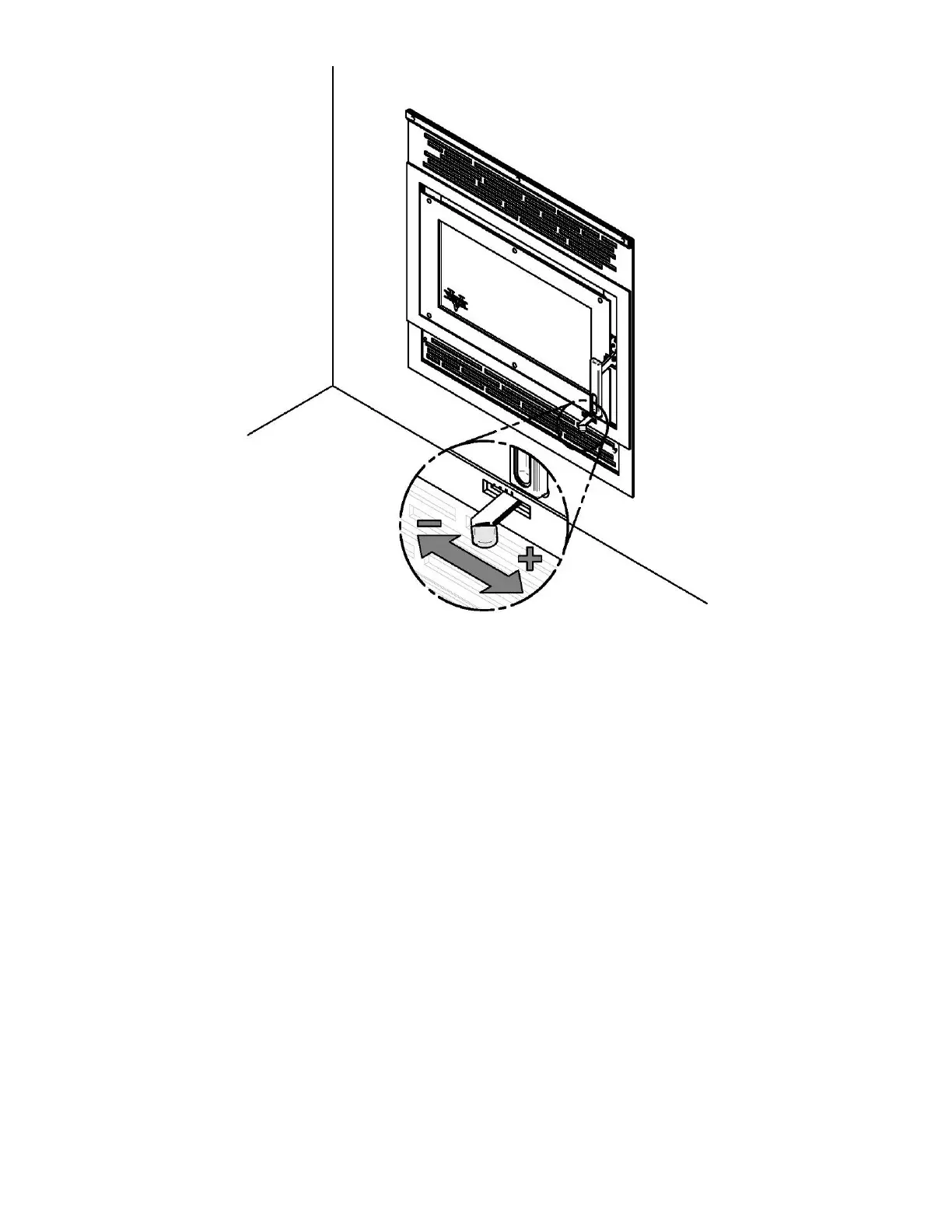
Using the air control is not the only way to match the fireplace’s heat output to the heat demand. Your
house will need far less heat in October than in January to be kept at a comfortable temperature. If you fill
the firebox full in fall weather, you will either overheat the space or turn the fireplace down so much that
the fire will be smoky and inefficient. Here are some suggestions for building fires to match different heat
demand.
4.4.6.1 Small Fires to Take the Chill Off the House
To build a small fire that will produce a low heat output, use small pieces of firewood and load them
crisscross in the firebox. The pieces should be only 3” to 4” in diameter. After raking the coals, you can lay
two pieces parallel to each other corner to corner in the firebox and lay two more across them in the other
direction. Open the air control fully and only reduce the air after the wood is fully flaming. This kind of fire is
good for mild weather when you are around to tend the fireplace and should provide enough heat for four
hours or more. Small fires like this are a good time to use softer wood species so there will be less chance of
overheating the house.
4.4.6.2 Long Lasting Low Output Fires
Sometimes you will want to build a fire to last up to eight hours, but don’t need intense heat. In this case
use soft wood species and place the logs compactly in the firebox so the pieces are packed tightly together.
You will need to fire the load hot for long enough to fully char the log surfaces before you can turn the air
down. Make sure the fire is flaming brightly before leaving the fire to burn.


 To Next Page