14.2 Treatment of plastic
14.2.1 The purpose of treatment
In order to carry out a particular process, the surface energy of the material needs to be raised
from the basic surface energy to one of the level ranges prior to application.
It is often very difficult to make printing ink, lacquer and glue bond effectively to plastic.
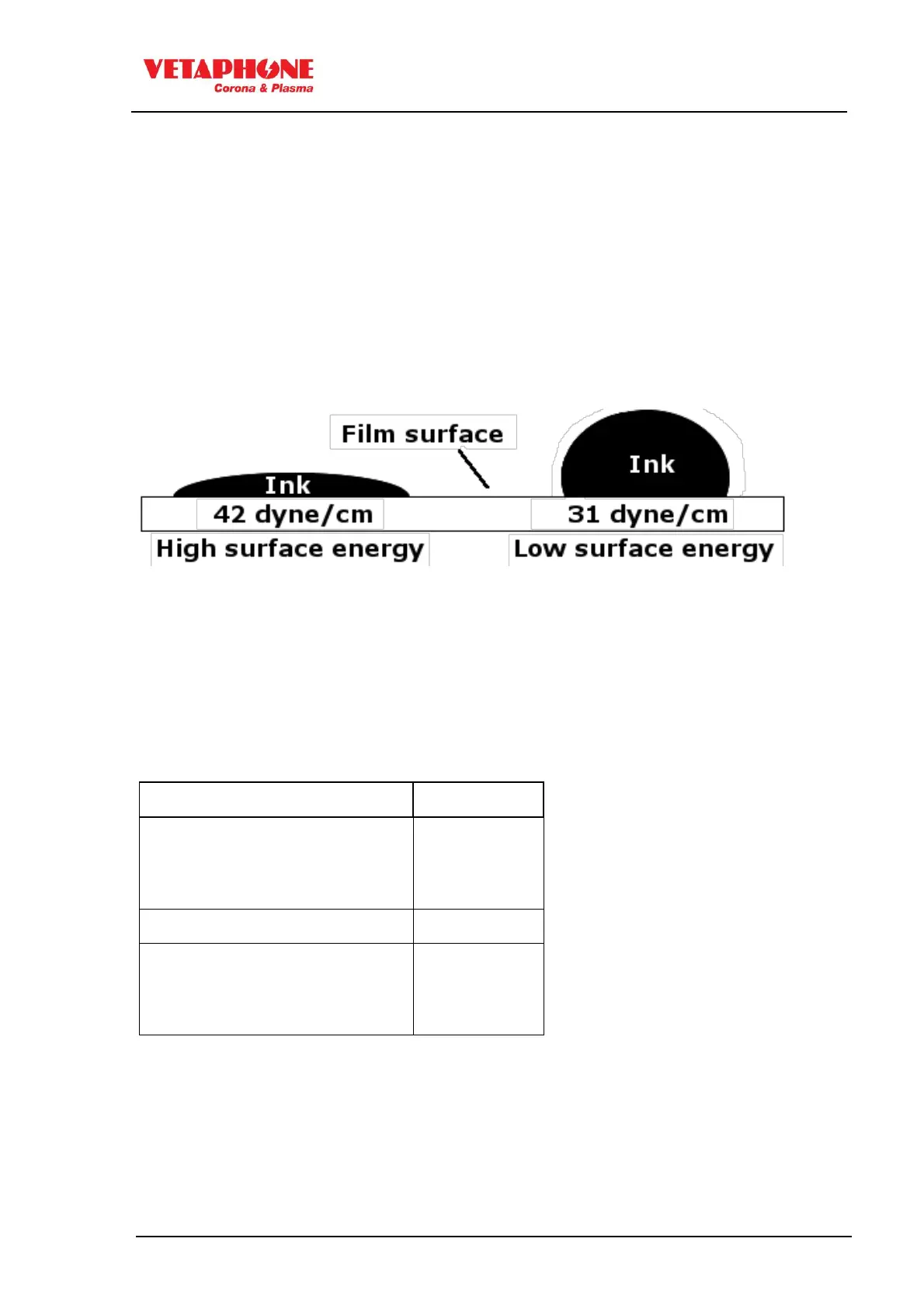
This is because plastics have a low surface energy, a force that is closely related to
adhesion. The commonly used units that describe surface energy are dynes/cm. It has
been shown that, to be sure of a good bond between printing inks and plastic substrates,
the surface energy of the substrate must be appreciably higher than that of the ink.
If a plastic material has a surface energy of, for example, 31 dynes/cm, as is the average
for freshly produced polyethylene film, the result will be a very poor bond. It is therefore
necessary to raise the surface energy of the plastic.



 To Next Page