3.1Calculating the required collector surface area
39
VITOSOL
Central heating
Central heating by solar energy is found
to be less advantageous than DHW
heating. The period when the greatest
amount of solar energy is available does
not coincide with the time when the most
heat is required.
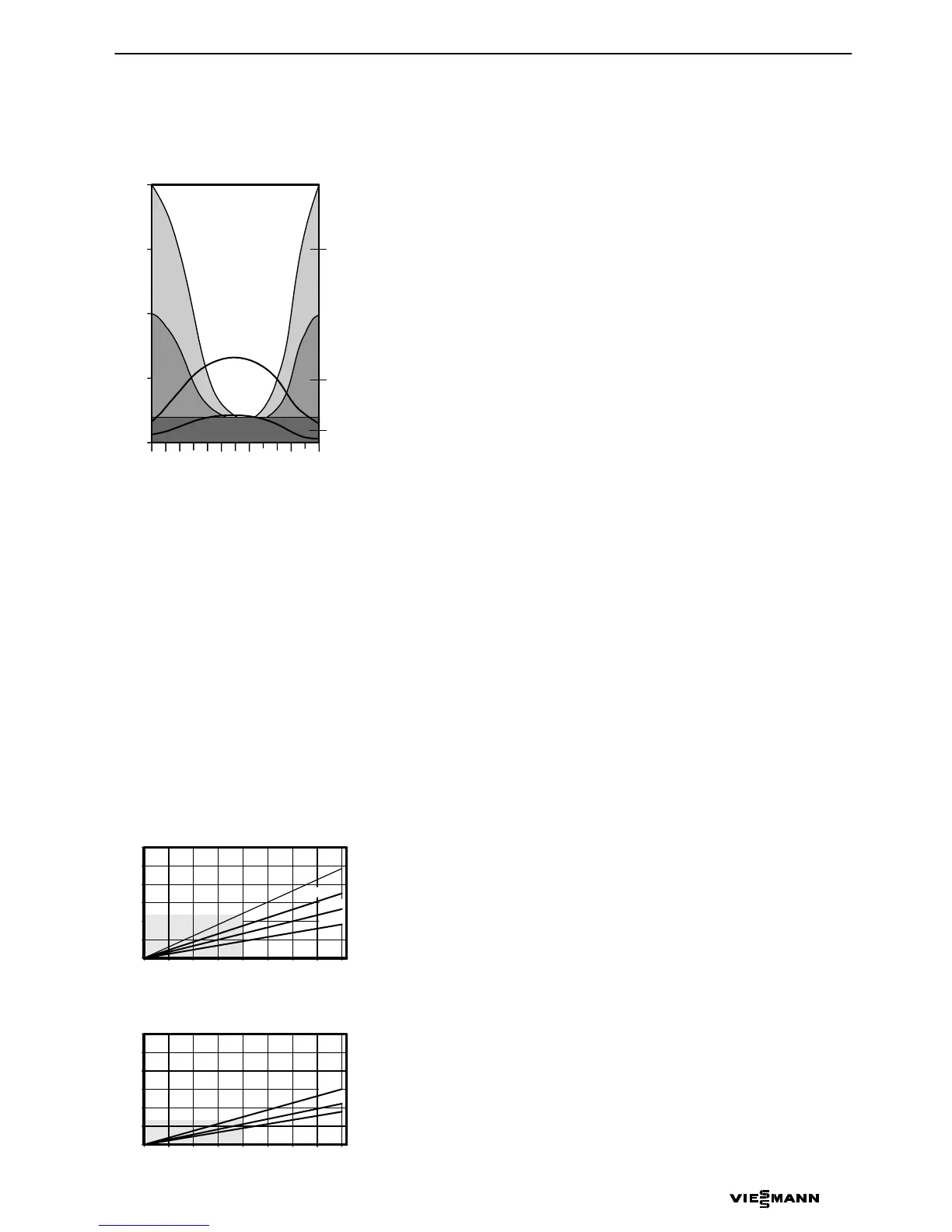
While the heat consumption for DHW
loading is relatively constant throughout
the year, only very little solar energy is
available at the times when the heat
demand for central heating is at its
highest (see diagram).
A relatively large collector area is
required to provide central heating
backup. In summer, this can result in
stagnation in the solar circuit. Systems
for central heating backup can be created
with very simple water connections by
using a combination cylinder (e.g.
Vitocell333 or 353).
Solar installations for domestic hot water
applications and for backing up central
heating facilities have already been tried
and tested in practice.
Guide values for sizing the collector area
can be found in the table on page40; a
corresponding design example is shown
on pages 65 and75.
Guide values for sizing solar heating systems
for an angle of inclination of 25 to 70º and a deviation from south of up to 45º
Aperture area
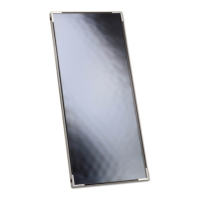
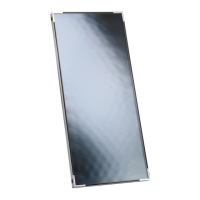
Vitosol 100
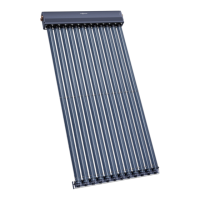
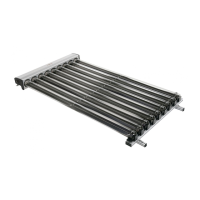
H type s/w2.5: 2.50 m
2
H type 5 DI: 4.92 m
2
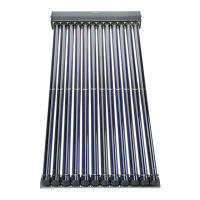
Vitosol 200
H type D
10: 1.07 m
2
H type D20: 2.14 m
2
H type D30: 3.21 m
2
Vitosol 250: 1.025m
2
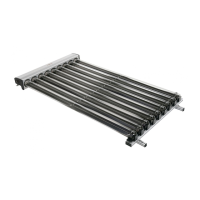
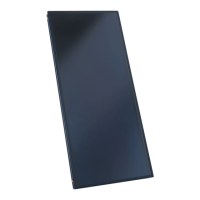
Vitosol 300
H type H
20: 2.14 m
2
H type H30: 3.21 m
2
For DHW heating, the following diagrams
can be used to size the aperture area in
relation to the desired coverage. The
diagrams represents approximate guide
values.
Vitosol 100
Vitosol 200, 250 and 300
Example:
Hot water consumption: 200 litres/day
DHW temperature: 45 ºC
For a required coverage of 60
%, select the
following aperture area:
H 5 m
2
for flat collectors
2 Vitosol 100, type s/w
or
1 Vitosol 100, type 5DI
H 3 m
2
for vacuum tube collectors
1 Vitosol 200, type D30
1 Vitosol 300, type H30
3 Vitosol 250
(see also calculation example on page41
and in accordance with ESOP in the
appendix).
Note
In applications involving the wall
installation of the Vitosol200 and 250,
oversize the absorber area by 20
%.
5822135 GB
A Central heating requirement for one house (built after 1984)
B Central heating requirement for one low energy house
C Hot water requirement
D Solar energy yield at5m
2
absorber surface (flat collector)
E Solar energy yield at 15m
2
absorber surface (flat collector)
Jan.
Feb.
Mar.
Apr.
Aug.
May
Jun.
Jul.
Sep.
Oct.
Nov.
Dec.
Energy requirement or gain (%)
A
B
C
D
E
100
75
50
25
0
10
30%
50%
40%
60%
50 100 150
Aperture area in m
0
2
4
6
8
11
0 200 250 300 350 400
DHW consumption in l/d
2
11
60%
50%
40%
50 100 150
Aperture area in m
0
2
4
6
8
10
0 200 250 300 350 400
DHW consumption in l/d
2





 To Next Page