1.2Solar energy
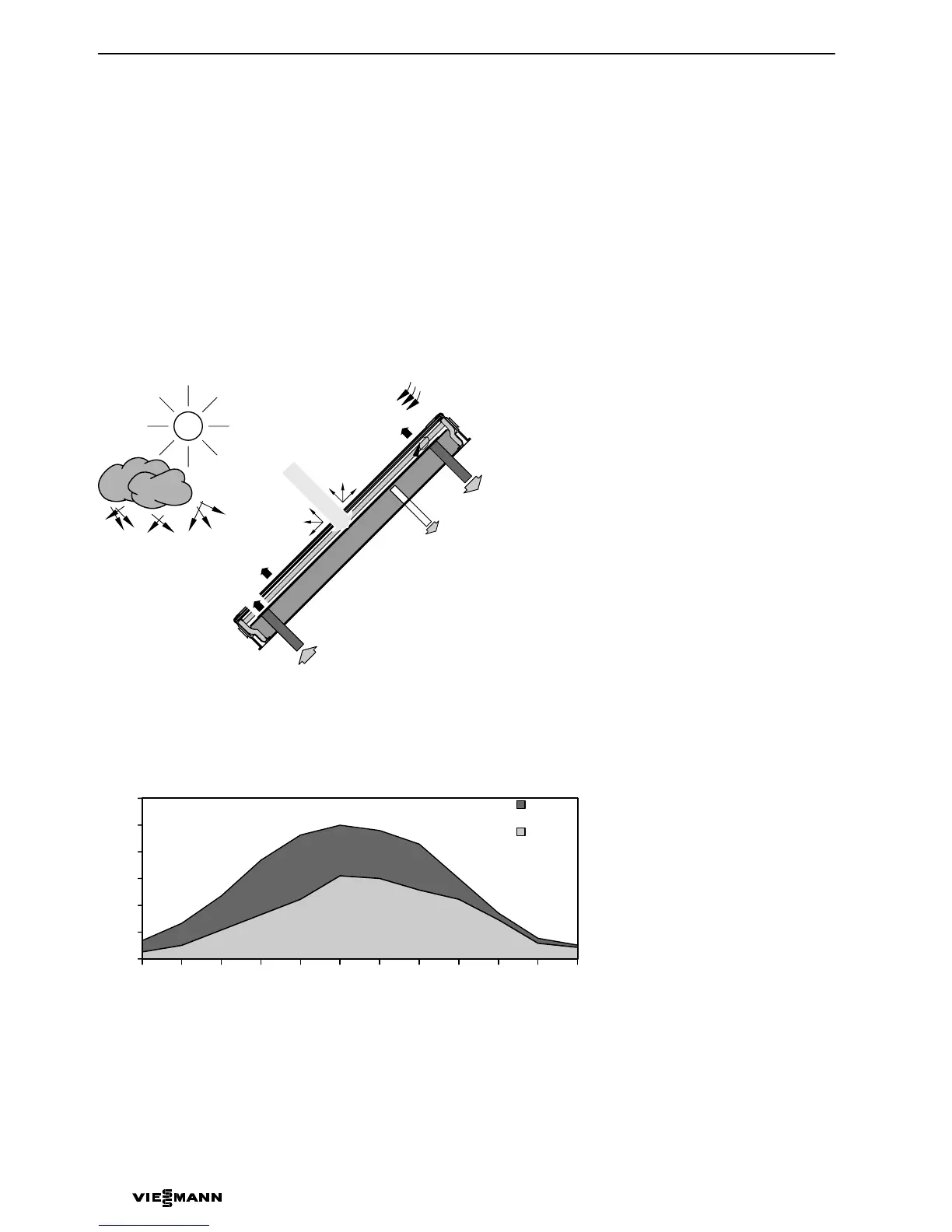
B
C
D
E
F
G
H
H
RL
VL
K
A
Direct
radiation
Jan. Feb. March April May June July Aug. Sept. Oct. Nov. Dec.
0
1000
2000
3000
4000
5000
6000
Diffused
radiation
4
VITOSOL
1.2 Solar energy
Exploiting solar energy
We have been using the sun’s heat since
time immemorial. In summer, it heats our
buildings directly, while in winter we
make use of solar energy stored in the
form of wood, coal, oil and gas, to
provide heat for our buildings and
domestic hot water.
To protect fuel reserves, the heating
industry has committed itself to finding
more responsible ways of handling these
precious resources which have
accumulated over millions of years.
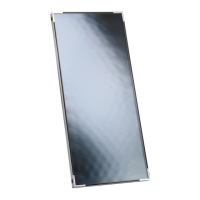
One rational way of achieving this aim is
to make direct use of solar energy by
means of solar panels.
Thanks to the use of highly sophisticated
collectors and a perfectly matched overall
system, the economic use of solar energy
is no longer a futuristic vision, but a
proven everyday reality.
Considering that fuel prices will continue
to rise in the years ahead, investing in a
solar heating system can be viewed as a
genuine investment in the future.
Solar radiation
A Diffused celestial radiation
B Direct solar radiation
C Wind, rain, snow, convection
D Convection losses
E Conduction losses
F Heat radiation of the absorber
G Heat radiation of the glass cover
H Useful collector output
K Reflection
Solar radiation represents a flow of energy
irradiated uniformly in all directions by the
sun. Of that energy, an output of
1.36kW/m
2
, the so−called solar constant,
hits the earth’s outer atmosphere.
Global radiation
After penetrating the earth’s atmosphere,
the solar radiation is reduced by
reflection, dispersion and absorption by
dust particles and gaseous molecules.
The portion of the radiation which passes
unimpeded through the atmosphere and
strikes the earth’s surface directly is
known as direct radiation.
The portion of the solar radiation which is
reflected and/or absorbed by dust
particles and gas molecules and
irradiated back and strikes the earth’s
surface indirectly is known as diffused
radiation.
Direct and diffused radiation together
result in global radiation Eg.
In the latitudes of Western Europe, the
global radiation under optimum
conditions (clear, cloudless sky at
midday) amounts to a maximum of
1
000W/m
2
.
With solar panels, as much as 75
% of this
global radiation can be utilised,
depending on the type of collector, the
system size or application.
5822135 GB





 To Next Page