24
Checks during operation
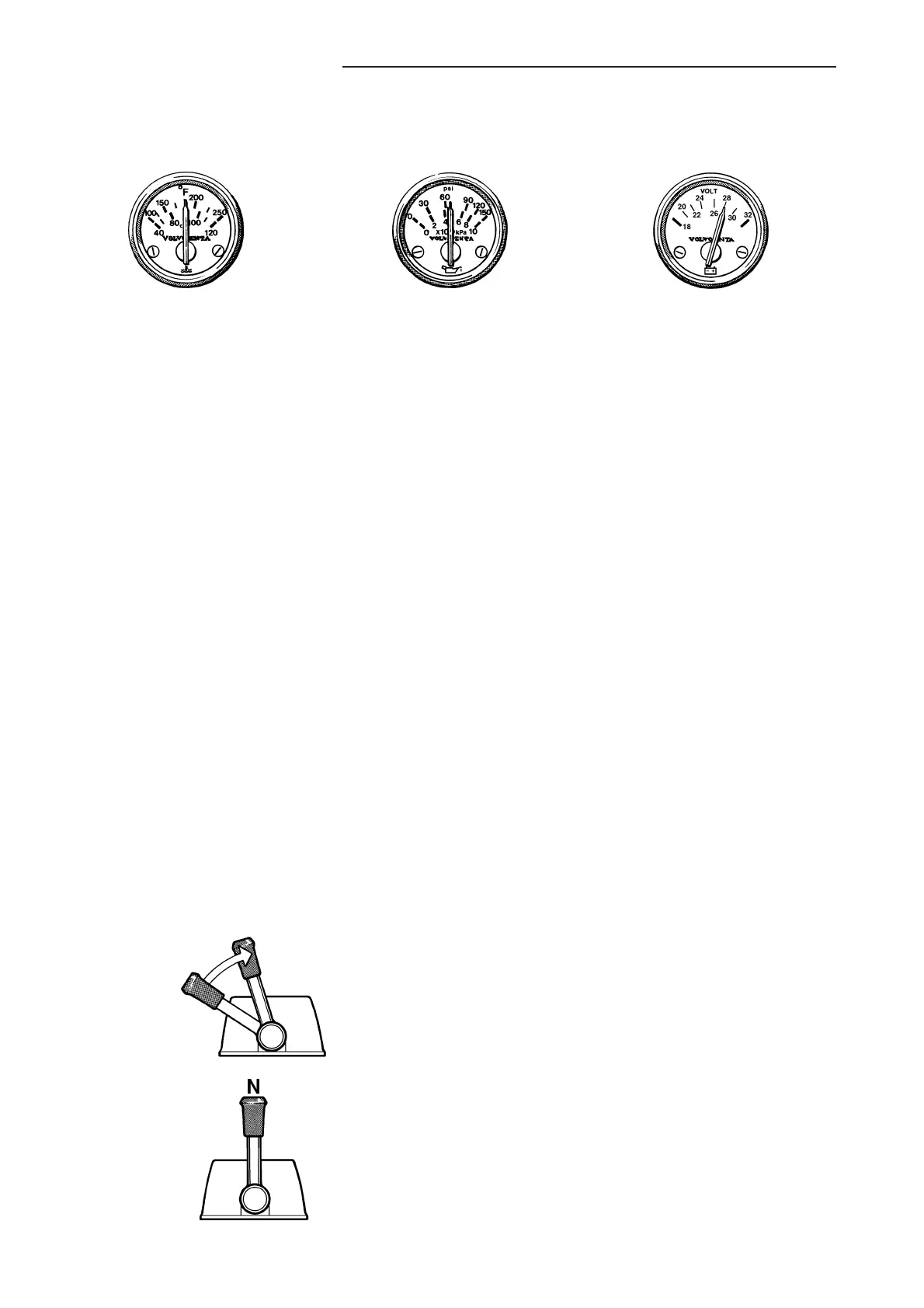
The normal operating values are:
Coolant temperature Oil pressure, engine System voltage
75–95°C TAMD63: 300–550 kPa approx. 14V (12V), or
TAMD71, 72: 420–650 kPa 28V (24V)
If the oil pressure drops, the temperature rises above the permitted values or there is a loss of charge, the
alarm will sound and one of the warning lamps will start to flash to indicate the source of the malfunction.
If the alarm sounds:
– High coolant temperature. Reduce the speed to idling (in neutral) until the temperature drops. Inves-
tigate the cause of the alarm (e.g. blocked engine water intake). Stop the engine if the temperature
does not drop.
– Low lubricating oil pressure. Stop the engine immediately and investigate the cause of the alarm.
If an extra alarm panel is fitted, the alarm will also sound if the lubricating oil or coolant levels are too low before
starting or if there is water in the extra fuel pre-filter. An extra alarm function may also be connected.
Note! When running the engine for long periods the engine oil level must be checked at least every 8 hours
with the engine stopped (check after the engine has been stopped for approx. 3 minutes).
Manoeuvering during operation
For economic running it is necessary to select an optimal cruising speed. The recommended cruising speed
is the maximum speed which can be achieved at any given time minus 200 rpm.
All forward/reverse manoeuvering should be done at idling speed. Manoeuvering at higher speeds may dam-
age the reverse gear and will also be uncomfortable for those on board. Manoeuver as follows:
Reverse gear
1. Reduce engine speed to idling and, if possible,
let the boat lose most of its speed.
2. Move the reverse gear control lever quickly and
firmly into the neutral position, then wait for a
moment.



 To Next Page