EasyManua.ls Logo

Volvo 819 E - General Principles

Volvo 819 E
108 pages
Print Icon
To Next Page IconTo Next Page
To Previous Page IconTo Previous Page
Loading...
Group
28
Ignition
systems
Design
and
function
-
General
General
cB
o
A
Function
of
ignition
system;
combustion
theory
in
brief
Correct ignition
tim
ing
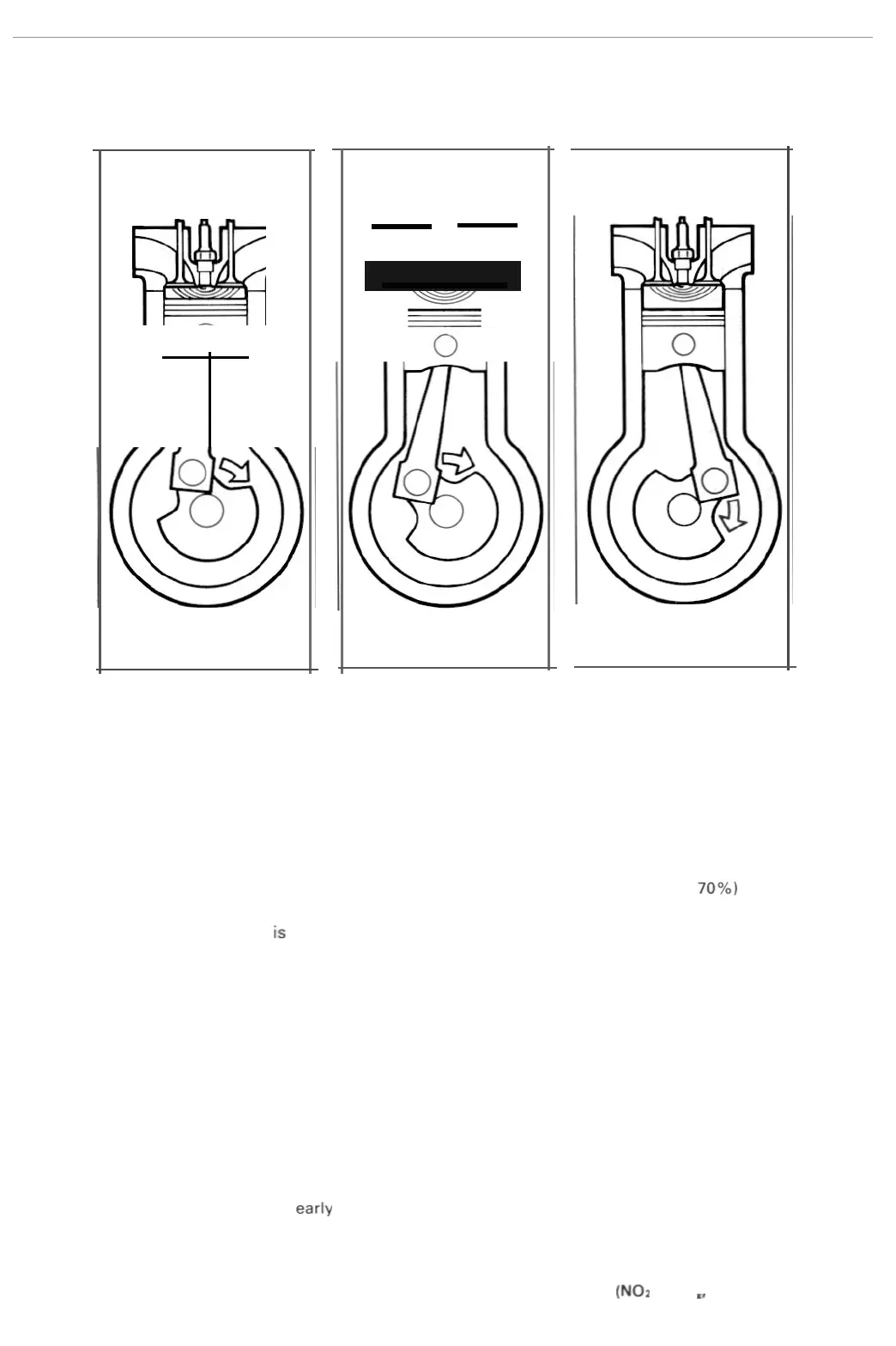
A. The
function
of
the
ignition
system
is
to
ignite
the
compressed fuel/air
mixture
in each
cylinder
at
exactly
the cor-
rect
instant
.
Ignition
is
followed
by
the
propagation
of a
flame
fr
ont
through
the
combustion
chamber
until
the
com-
plete ch
arge
has been
burned.
The
combustion
pressure.
whi
ch is
higher
than
that
of
the
comp
ressed
mix
ture,
gen-
erates a
high
f
orce
whi
ch
drives
the
pis
t
on
downwards
in
the
cylinder. (Al
thou
gh
a
proportion
of
the
energy
released
is
converted
into
mechanical
work
by
the
crankshaft,
most
of
the
energy
in
the
fuel
(approx.
70%)
is
dissipated
in
the
form
of
cooting
losses,
exhaust
gas losses
and
mechanical losses.)
To
ensure
that
the
igni
ti
on
timing
is
as
close as
possible
to
the
'co
rrect'
setting
under
all
runn
i
ng
conditions,
the
tim-
ing
must
be
adjusted
continuously
to
take
account
of
variations
in
the
conditions.
In
other
words
,
the
optimum
tim-
ing is
not
a
fixed
sett
i
ng
for each
eng
i
ne
,
but
varies
with
factors such
as
engine
speed, load, fuel/
air
ratio
and
temper
-
ature
.
Furthermore
,
the
timi
ng
may
be
ad
jus
ted for
optimum
comfort,
maximum
torQue
or
maximum
power
as
ap
-
propriate
.
In
the
rest
of
this
discussion
,
the
term
optimum
tim
i
ng
shall
be
taken
to
mean
a
setting
which
takes
account
of
all
the
factors
influenced
by
the
ignition.
In
other
words
, it is a
compromise
between
the
demands
of
high
power
,
low
fuel
consumption
and
the
cleanest
possible
exhaust
emissions.
The
emergence
of
ever-stricter
emission
s
tandards
has
been
the
main
factor in
the
development
of
igni
t
ion
systems
designed
to
optimize
the
combus
tion process
under
all
running
condi
tions.
Earlv ignition
B. Early
ignition
prevents
efficien
t
expansion
of
the
fuel/
air
mixture
since
the
piston
is s
ti
ll
travelling
upwards
to-
wards TOC
as
the
pressure rise occurs,
generating
an
abnormally
high
pressure
accompanied
by
an excessive tem-
perature rise. As a
consequence
of
early
ignition,
part
of
the
unburnt
fuel/a
ir
mixture
may
i
gnite
spontaneously,
causing
the
engine
to
knock
.
In general,
early
ignition
also has
an
adverse effect
on
the
exhaust
emissions.
The
Quantity
of
unburnt
hydrocarbons
(
HC
) increases,
while
the
pressure
and
temperature
rises cause
the
nitrogen
in
the
trapped
air
to
react wi
th
the
oxygen
to
fOfm greater
quantities
of
nitrogen monoxide (NO) and nitrogen dioxide (NO)
Of
NO
..
oxides
of
nitrogen)
.
9

Related product manuals