EasyManua.ls Logo

Volvo 819 E - Ignition System Components

Volvo 819 E
108 pages
Print Icon
To Next Page IconTo Next Page
To Previous Page IconTo Previous Page
Loading...
Group
28
Ignition
systems
Design
and
function
-
Components
B
c
Components
Control
un
it
The
control
unit
in an
electronic
ignition
system
continuously
computes
the
optimum
timing based
on
information
supplied
by
the
various
sensors,
which
combine
to
provide
the
unit
with
an
extremely
accurate
picture
of
engine
run-
n
ing
co
nditions.
The
con
tro
l
unit
receives
immediate
notice
of
any
change in
the
conditions
under
which
the
engine
is
powering
the
car,
enabling
it
to
compute
a
new
setting
instantaneously. Once
this
has been
completed
(in
an
oper-
ation
taking
as
little
as a
thousandth
of
a second!),
the
unit
delivers an
ignition
pulse
to
the
power
stage.
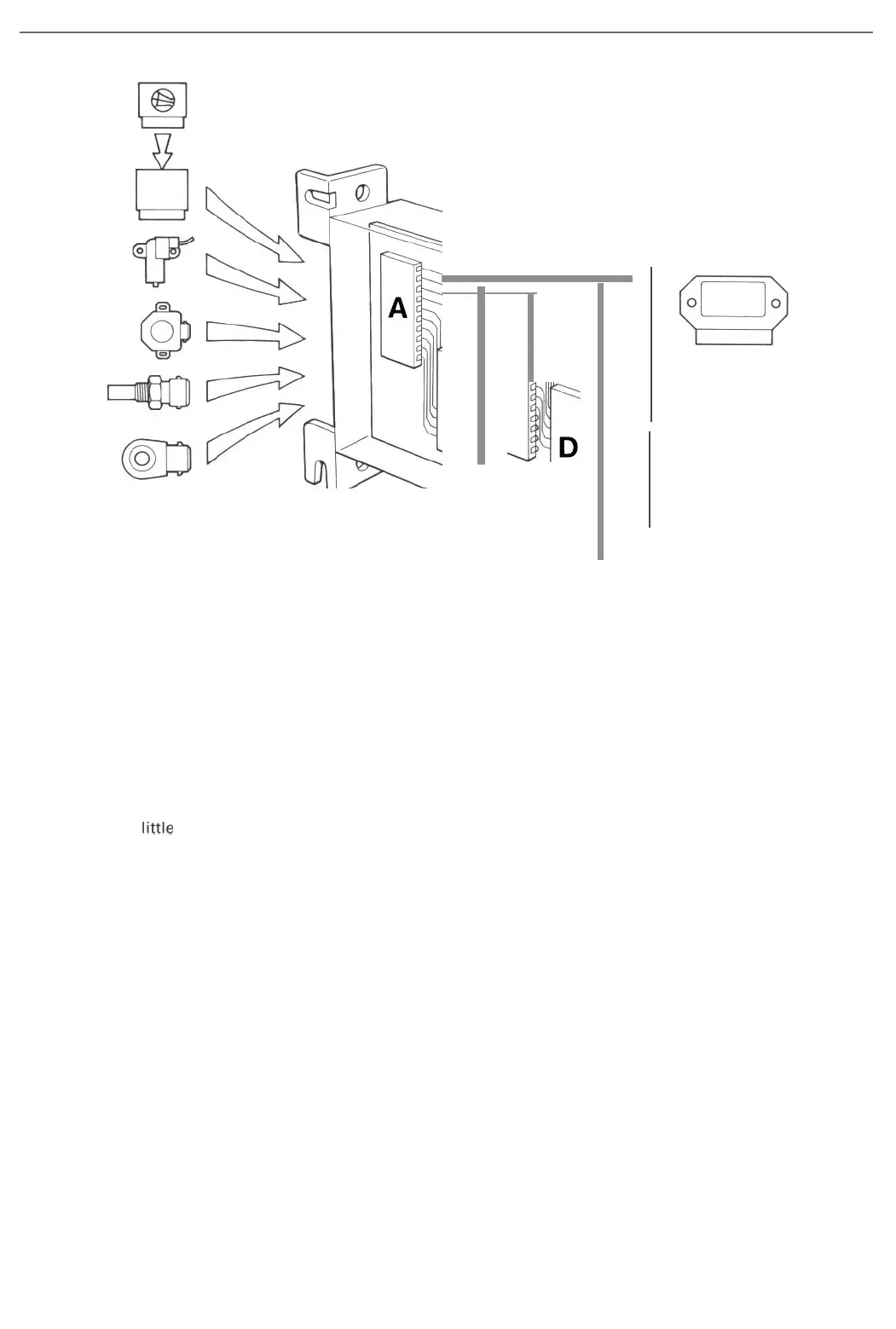
The
control
unit
consists
of
a
number
of
electronic
components.
In
simplified
terms,
these
consist
of
four
main
ele-
ments
-
converter
(A),
memory
(B),
microprocessor
(chip)
(C)
and
output
unit
(D).
Co
nv
e
rt
er
A.
The
converter
(A) receives
information
from
the
sensors
and
converts
the
signals
into
digital
(n
umerical)
form.
Some
of
the
sensors
supply
analogue
signals (such as
the
temperature-dependent
change
in resistance
typical
of
a
temperature
sensor),
while
the
signal
transmitted
by
others
depends
on
whether
or
not
a
voltage
is
present
(as in
the
case
of
a
throttle
switch).
The
sensors
may
also
transmit
signals in
the
form
of
voltage
pulses (like an
inductive
pick-
up)
or
a
variable-frequency
voltage
(like a load
signal
vacuum
converter). All
of
these electrical signals,
whe
t
her
in
the
form
of
a single,
variable
voltage
or
a series
of
voltage
pulses, are
converted
into
standard
digital
form
by
the
converter,
the
outputs
from
which
are used
by
the
microprocessor
and
memory.
Memory
B. All
programs
and
pre
-programmed
values are
stored
in
the
memory
(B), in
which
all
possible
values
of
para-
meters
such
as
engine
load
and
speed are available
for
immediate
use
by
the
microprocessor.
Micropr
oce
ssor
c.
The
microprocessor
(C)
receives
the
digital
signals
from
the
converter.
Depending
on
the
signal
configuration,
the
device selects
the
memory
program
which
best meets
the
needs
of
the
prevailing
running
conditions.
14

Related product manuals