EasyManua.ls Logo

Volvo 819 E - Page 36

Volvo 819 E
108 pages
Print Icon
To Next Page IconTo Next Page
To Previous Page IconTo Previous Page
Loading...
Group
28
Ignition
sys
t
ems
De
sign
and
fun
ct
ion
-
Compensation
fu
nc
ti
ons
Q'
0
0'
0
41
0
0'
_1
0
Ii"
I
0'
_2
0
.a
a b
D
0'
_3
0
_3°
""
#:
a
_4
°
I'
...
011
Ii"
I D
0'
-5
0
I
....
011
I
I
0'
_6
0
-6
ot,
ICI
CI
a
all
c!J
co
#:
Q'
_7
0
&'
...
I!I
D
p-
-
a
_s
o
I
.....
D
I
I
.co'"
0'
_9
0
-9011 a _
III
II!
D
*
~
r
-
O'
-15°{
I
..
alllcd
REX-I
1.
1011
Rex
-I
On
th
e Rex-I syst
em,
the
program
functions
which
con
trol
the
tendency
of
the
engine
to
kn
ock
are
somewhat
di
ffer
-
ent
to
tho
se in
the
EZ-K syst
ems
.
The
differences are
des
c
ribed
in
the
following
pages
.
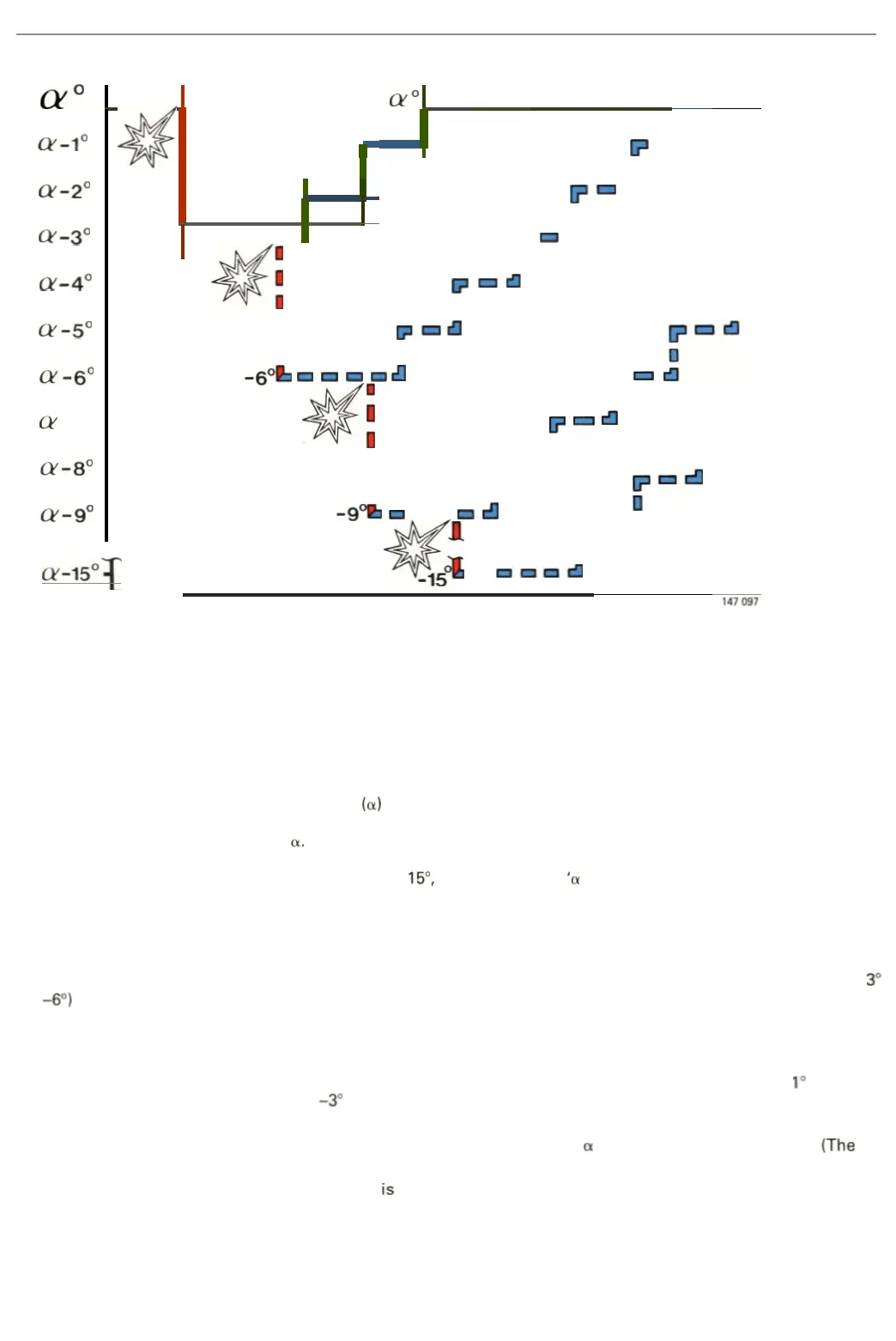
Knock
characteristic
The
figure
shows
the
'no
rmal
'
ignition
se
tt
ing
(0.)
assuming,
in
th
is case,
that
speed
and
load
are
cons
ta
nt
(hence
the
extremely
simplified
's
traight
'
yellow
line).
The
vertical axis
ind
icates
the
extent
to
wh
ich
th
e
timing
has been
re
tard-
ed
in
relation
to
the
normal
se
tt
ing, 0.
The
horizontal
axis indicates
the
tim
e,
as
defin
ed
by
a certain nu
mber
of en·
gine
revolutions
. Knock
re
ta
rd
ation
is
illu
strated
by
the
downward
steps (red) and
re
·advance
by
the
sma
ller
upward
steps
upwards
(blue).
The
maximum
retardation
is
15
°, here
deno
t
ed
by
'0
- 1
5'
.
Knock-controlled
retardation
When
the
engine
is
running,
the
control
unit
co
mputes
the
optimum
igni
tion
t
iming
on
the basis
of
speed
and
load
signals.
The
occurrence
of
knock
in
a
cylinder
is detected
by
the
control
uni
t,
wh
ich retards
th
e
ignition
by
a
step
of
3"
in
the
cylinder
in
question
.
If
the
phenomenon
persists,
the
con
trol
unit
re
tar
ds
the
ignit
i
on
by
a
further
step
of
In
-6")
and
so
on,
until
knock is e
li
minated
.
Ae-advance
at
different
rates
Re-advance
of
the
i
gnit
i
on
to
the
normal
sett
i
ng
(a),
or
until
knock again occurs, takes place
at
di
fferent
rates
depend-
ing
on
engine
speed.
However
,
the
steps are
equal
in
magnitude
in all cases, representing
an
advance
of
1° at a time.
Once
the
ti
ming
has been
retarded
(
to
a -JO
or
morel
(a
),
the
succeedi
ng
re-advance steps (b) are
performed
tw
ice
as
fast.
Thus
,
the
interval 'a'
in
the
fi
gure
is
tw
ice
as
long
as 'b
'.
At
high
eng
ine speed,
the
interval
'a'
dur
ing
which
t
he
tim
ing is retarded (
to
a
-3"
or
more)
is relat
ively
long
. (The in-
terval is e
qu
i
valent
to
approx.
80
revolutions
at
an
engine
speed
of
abou
t 6000 rImin).
At
low
eng
ine speed,
the
corresponding
interval
is
abou
t
half
that
at high speed
lapprox
. 35
revolutions
at an
engine
speed
of
about
1000
rlmin
}.
The
re
-advance rates
vary
across
the
speed range,
becom
ing
slo
wer
as
e
ngine
speed increases.
34

Related product manuals