PEM-C2
HAZARD PREVENTION
General
• Read all instructions and safety precautions before
operating.
• Comply with all appropriate local, state and national
codes governing ventilation, fire prevention, and
operation of Electrostatic equipment usage.
• The United States Government Safety Standards have
been adopted under the Occupational Safety and Health
Act. These standards, particularly the General
Standards, Part 1910 and the Construction Standard,
Part 1926, should be consulted.
• NFPA Standard No. 33 is to be followed when setting up
your spray area. Contact the National Fire Protection
Association, Batterymarch Park, Quincy, Massachusetts,
02269 for more information.
• Check with insurance company for additional
requirements.
• Use only identical replacement parts.
• Personnel must be given training in accordance with the
requirements of NFPA Standard No. 33 chapter 15.
• It is the duty of all personnel responsible for the spray
equipment operation and maintenance to read and
understand all safety information furnished with this
equipment.
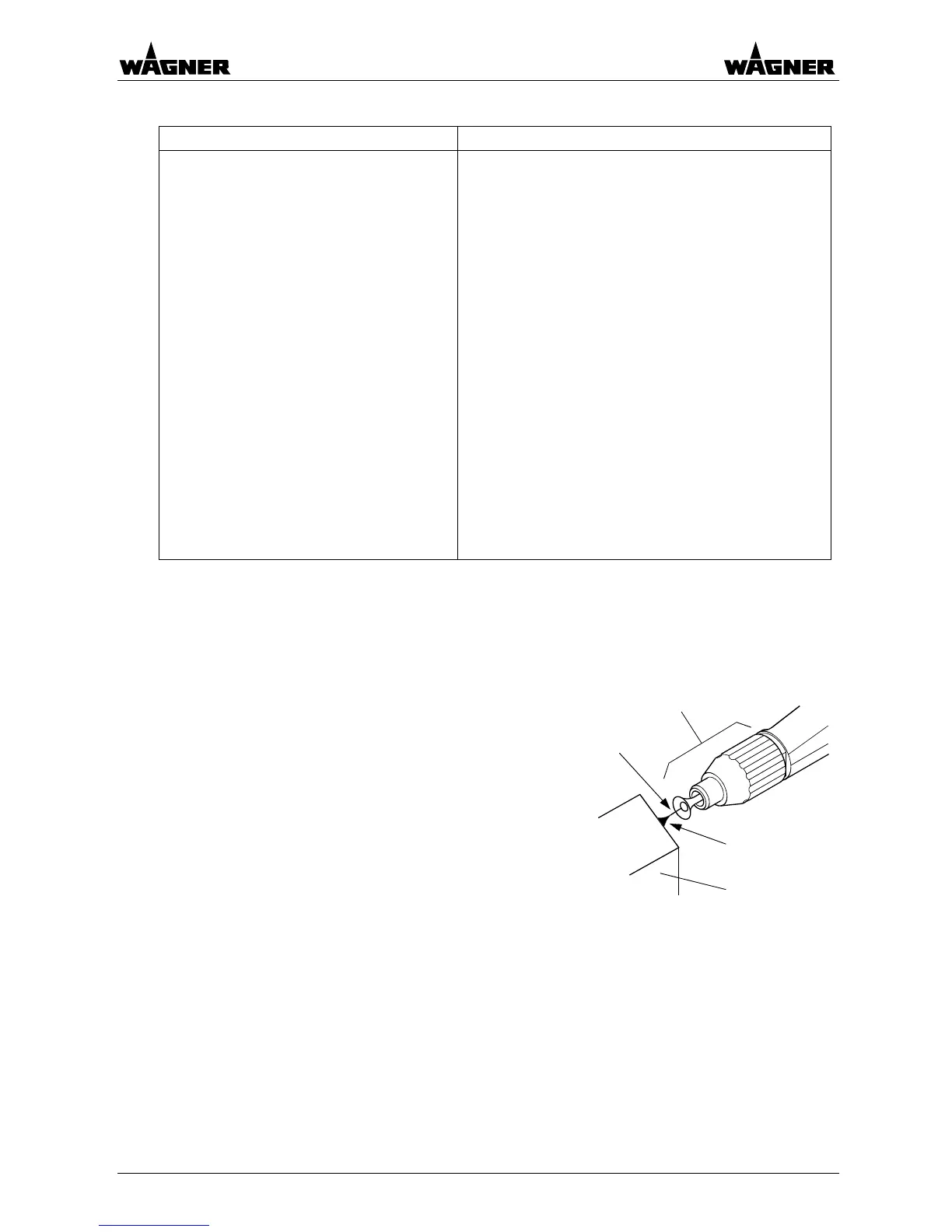
1.3 Harmless discharge
When the high voltage is turned on, a glow or
Corona discharge, that is only visible in a dark
environment, occurs at the electrode tip. This
physical phenomenon can be observed when
the electrode approaches the grounded
workpiece.
This glow discharge does not provide any
ignition power and does not have any influence
on the handling of the installation. When the
electrode approaches the workpiece, the
control device automatically reduces the high
voltage to a safe level or turns off the high
voltage, depending on the setting.
nozzle
electrode
glow discharge
workpiece
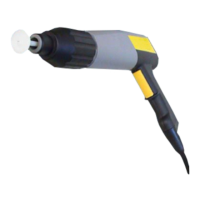
If the finger comes in contact with the plastic parts of the spraygun, harmless discharges (so-
called brush discharges) can occur. The charging of the plastic parts is caused by the high
voltage electrostatic field of the gun. However, these discharges do not provide any ignition
power.
02/01 8 0351801




 To Next Page