6 7
Blood pressure tends to go up and down, even in people who
normally don’t have high readings. If your numbers stay above the
“normal” range most of the time, you may be at increased risk and
should consult your physician.
Although one can easily find where their own blood pressure
readingsfallonthistable,thismonitorcomesequippedwithaRisk
CategoryIndexthatautomaticallycompareseachreadingtothe
defined levels and provides a helpful cue if your reading falls into
one of the stages that could potentially indicate increased risk. See
page28formoreinformationonthisfeature.
Please note that cues provided by this monitor are only intended to
assistyouinusingthistable.Thetableandcuesareonlyprovided
for convenience to help you understand your non-invasive blood
pressurereadingasitrelatestotheNIHinformation.Theyare
notasubstituteforamedicalexaminationbyyourphysician.Itis
important for you to consult with your physician regularly. Your
physician will tell you your normal blood pressure range as well as
the point at which you may actually be considered to be at risk.
ABOUT BLOOD PRESSURE
What is Blood Pressure?
Bloodpressureisthepressureexertedonthearterywallswhile
bloodflowsthroughthearteries.Thepressuremeasuredwhenthe
heart contracts and sends blood out of the heart is systolic (highest)
bloodpressure.Thepressuremeasuredwhentheheartdilateswith
blood flowing back into the heart is called diastolic (lowest) blood
pressure.
Why Measure Your Blood Pressure?
Among today’s various health problems, those associated with high
blood pressure are very common. High blood pressure dangerously
correlateswithcardiovasculardiseases.Therefore,bloodpressure
monitoring is important for identifying those at risk.
Why Are My Readings Different?
Blood pressure is a body parameter that is subject to normal
variations throughout the day. A single reading that is different from
yoursoryourdoctor’sreadingsisnotnecessarilyinaccurate.The
average of several readings, taken under similar conditions, using
the same arm is preferred for accurate blood pressure readings.
BLOOD PRESSURE STANDARD
Thetableonpage7containsdefinedlevelsforhypertensionthat
arepubliclyavailablefromtheNationalHeartLungandBlood
InstituteattheU.S.NationalInstitutesofHealth(NIH)
(http://www.nhlbi.nih.gov/health/dci/Diseases/Hbp/HBP_WhatIs.
html).Userscancomparetheirownbloodpressurereadingsagainst
these defined levels to determine if they may be potentially at
increased risk.
Thistableisapplicabletomostadultsaged18andolder.
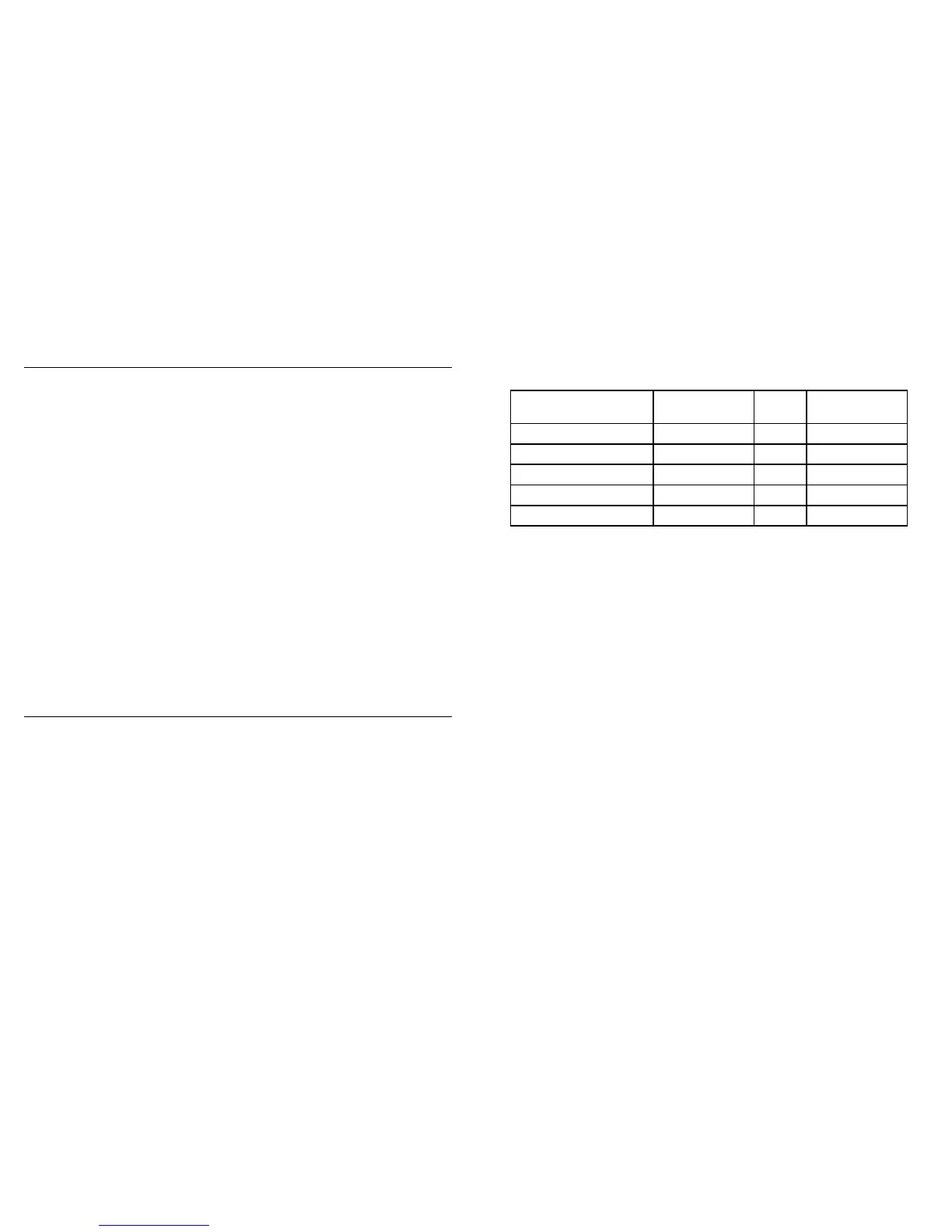
Category
Systolic (mmHg)
Diastolic
(mmHg)
Normal Less than 120 and Less than 80
Prehypertension 120-139 or 80-89
High Blood Pressure
Stage 1 140-159 or 90-99
Stage 2 160 or higher or 100 or higher


 To Next Page