20
2. Operation
2.7 Check before first heating
a) System pressure (heating water pressure):
The system must be filled and vented. With the system cold, pressure should be at least 1.0 bar (maximum
1.8 bar). If you have any questions, your installer will gladly answer them.
b) Ventilation:
Please make sure the boiler room/installation room is well ventilated. The air supply must be as free of
dust as possible.
c) Flue:
Please have the chimney sweep check the flue regularly, and, if necessary, clean it.
d) Barriers:
Check that the barriers installed in the heating system are set correctly.
e) Accumulator tank
If the temperature shown on the central thermometer is already 70 °C – Do not keep heating and do not
replenish any fuel!
f) Thermal process safeguard
Discharge funnel check. Outflow must not drip.
2.8 Heating operation – Preparing, heating up or refilling
Important note before heating up or replenishing fuel:
Do not heat up or replenish fuel unless adequate heat consumption is assured, i.e.:
– First check the “accumulator temperature” on the central thermometer. Do not heat up or replenish fuel if
this is already showing 70 °C.
– Open the manual mixing valve, do not turn off the radiators.
– Correct amount of fuel – i.e. boiler only ¼ – ½ full at the turn of the seasons.
Information!
Having a correctly sized accumulator tank is essential for correct operation.
2.8.1 Preparing heating mode
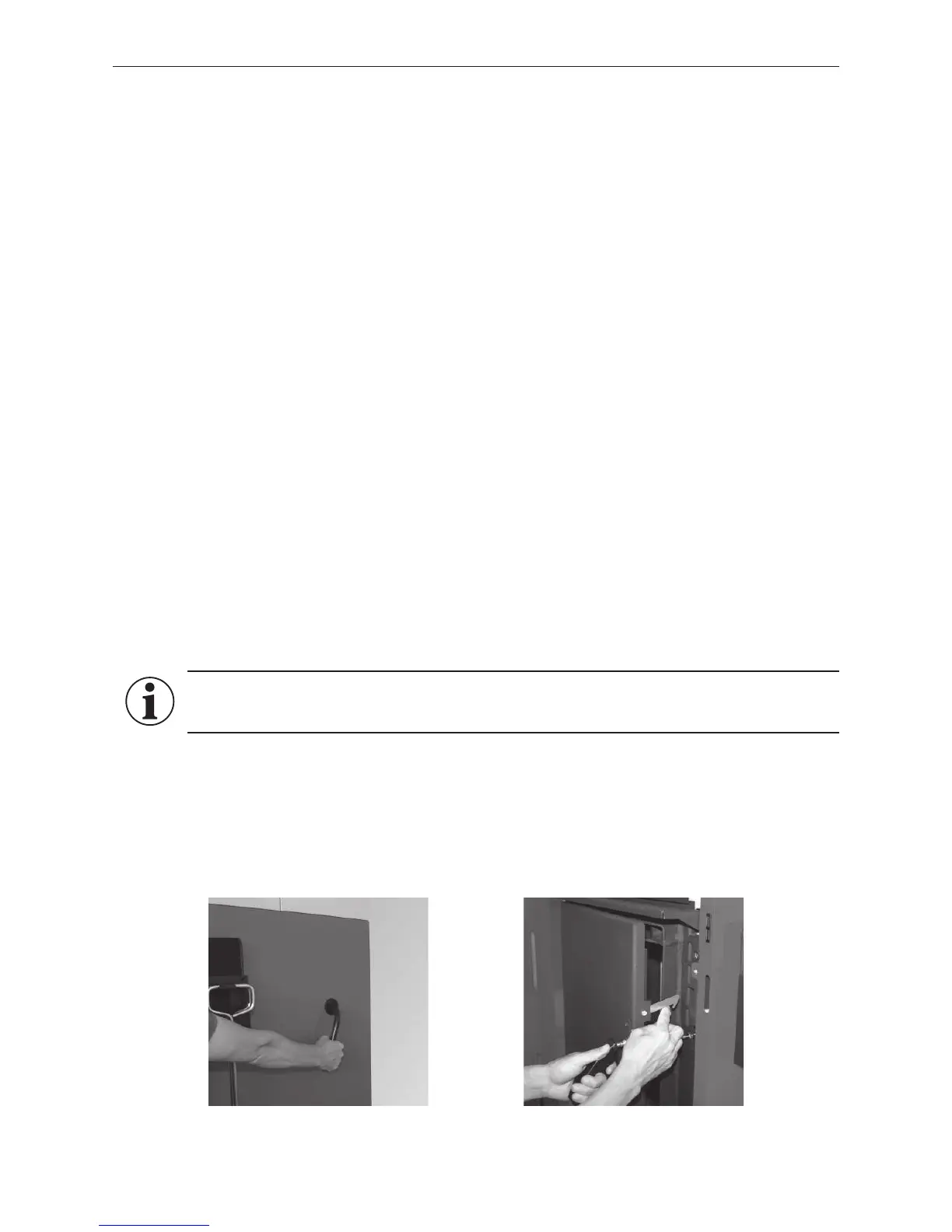
1.) Press the lever for cleaning heating surfaces around 5–10 times for each fill – Fig. 49.
2.) Open the cladding door. Blower starts up. Open the filling door (top door) until it makes contact with the lock,
lift the hook catch – (Fig. 50), filling door fully open.
Fig. 49 Pressing lever for cleaning
heating surfaces 5–10 times
Fig. 50 Opening the filling door lock


 To Next Page