H-1.601. 00137-B3.0
Page 30 of 81
4.4
Connection of Oxygen Cylinder
Warning:
• Before operating oxygen supply device, please wear a clean pair of
medical gloves. Hydrocarbon (such as engine oil, lubricating grease,
alcohol, hand cream, or adhesive plaster) may lead to an explosion by
contacting high-pressure oxygen.
• Do not use wrench or any tool to tighten or loosen any connecting nut.
4.5
Removal of Empty Cylinder
1. 1. Shut off the air valve of the cylinder.
• Start T5 by using the Start-Shut Down button, so as to release any residual
oxygen and relieve any pressure inside the equipment.
• Release the switching valve by hand only when the reading on reducing
valve is 0 bar.
2. Shut down T5.
3. Loosen the connecting nut on the cylinder by hand.
4.6
Connection of New Cylinder
1. Open the valve on new cylinder for a short moment and then shut it off,
so as to remove any potential dirt at the outlet.
Warning:
• When connecting gas supply equipment, make sure the patient is not
connected to T5. Or otherwise automatic self-detection feature of the
equipment may start and cause negative effect.
• Keep the valve port from body to avoid potential personal injury!
2. Connect reducing valve to port of the cylinder. Tighten the nut by hand.
3. Screw the pressure hose with 9/16-18UNF connecting nut into the outlet
of reducing valve.
4. Connect the other end of the pressure hose to the air source port on T5.
4.7
Patient Respiratory Hose Assembly and Its
Connection
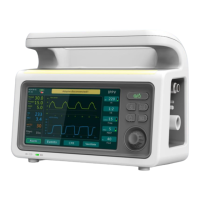
T5 provides a reusable or disposable respiration management assembly. The
assembly will be connected to the respirator and related accessories in
accordance with the following procedure(As shown below).
1. Connect respiratory hose, patient valve in the respiratory hose assembly


 To Next Page