31
All long range shipping and oceanic air traffic (as well as long range military aircraft) use USB. DATA
modes such as RTTY, SITOR, PACKET, FAX etc may be resolved using USB.
SSB is a very efficient method of transmission as the unwanted second sideband and carrier have been
removed. This allows the full transmitter power to be employed in conveying useful information within the
wanted sideband. As a result, greater distances are possible on SSB with a smaller frequency band-
width being required than most other receive modes.
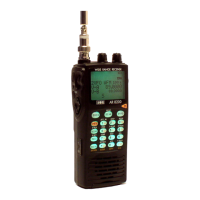
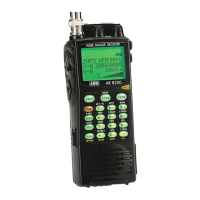
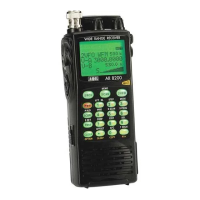
The AR8200 uses true carrier re-insertion and a dedicated SSB I.F. filter so that voice becomes
intelligible. However due to the complexities of SSB, audio never sounds 100% natural, like all
SSB-equipped receivers, the AR8200 may sound a little ‘robotic’ but you soon get used to SSB receivers.
Small tuning steps of 50 Hz or 100 Hz should be used for tuning in USB and the other
similar modes LSB & CW.
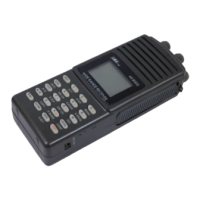
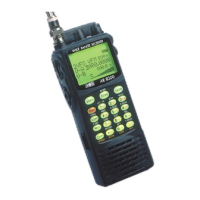
The AR8200 being a hand held wide band receiver cannot offer the receive performance of a
dedicated short wave receiver such as the AOR AR7030 or base wide band receiver AOR AR5000.
This is due to the limitation of size, as a result the receiver’s AGC (Automatic Gain Control)
circuitry band pass circuits and reference stability cannot be as complex. The AR8200 will
however provide adequate results for oceanic, ship to shore and amateur band listening etc.
The SSB frequency display is not offset (like some other units), this is good for referencing to frequency
booklets and data bases. However being such a compact wide band receiver, it will not be unusual for
the SSB display to be a few hundred Hz off frequency when listening to known frequencies such as
VOLMET (airband weather forecast service). For example the European 5.5050 MHz VOLMET service
may appear between approximately 5.5045 and 5.5055 MHz... this is considered normal.
LSB
Lower Side Band - The same comments apply as for USB. By convention, radio amateurs use LSB
below 10 MHz.
CW
Continuous Wave - Often referred to a Carrier Wave or Morse code ‘dots and dashes’. Commonly
used on the short wave bands by radio amateurs toward the lower end of each band allocation. Some
commercial use is still made by shipping etc although its use is being phased out due to the introduction
of automated stations.
3-8 Changing tuning STEP size
The specification for channel occupancy, step (separation) and mode are decided by and allocated by
departments of Governments following International discussions.
Not surprisingly the allocation of frequency bands are not the same all over the world and channel
separation (step) varies from band to band. As an example, the channel separation (step) for the
medium wave band in Europe is 9 kHz while in the U.S.A. it is 10 kHz.
For the above reasons it is necessary to alter the STEP size according to local bandplan conventions.
The AR8200 has been pre-programmed at the factory with all the bandplan data (specific to each market
area) so that the AR8200 will automatically select the appropriate step size and mode for the frequency
chosen. This greatly simplifies operation of the receiver while you are familiarising yourself with all the
facilities.
The pre-programming of step size may be manually over-ridden so you may choose alternative settings
at will or when band plans are updated.
Section 3-7-2, 3-8


 To Next Page