29
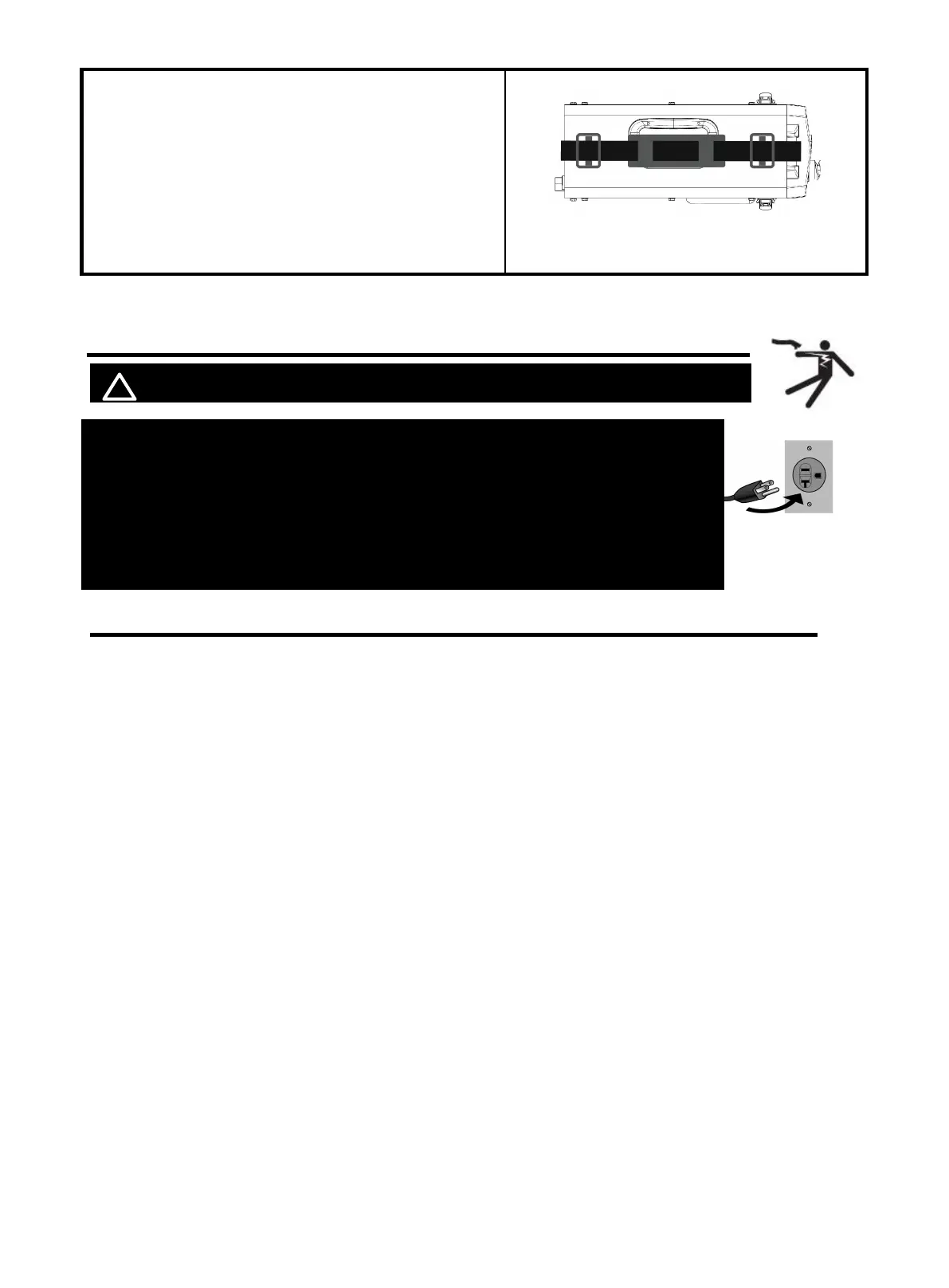
5. The strap installation is complete
9. MIG Basic Welding Technique
! WARINING BEWARE OF ELECTRIC SHOCK!
NOTICE: The following steps require applying power to the Welder
with the cover open.
To prevent serious injury from fire or electric shock:
1.DO NOT touch anything, especially not the ground clamp, with the
gun or welding wire or an arc will be ignited.
2. DO NOT touch internal Welder Components while it is plugged in.
9.1 Basic MIG Welding
Good weld quality and profile depend on factors like gun angle, travel direction, electrode extension
(stick out), feeding speed, base metal thickness, wire feed speed (amperage), and arc voltage. Here are
some basic guidelines to help with your setup:
Gun Position and Travel Direction
Gun position refers to how the wire is directed at the base metal, including the angle and travel direction
chosen. Feeding speed and work angle affect the weld bead profile and penetration depth.
Push Technique
In the push technique, the wire is positioned at the leading edge of the weld pool and pushed towards
the unmelted work surface. This technique offers a clear view of the weld joint and wire direction. It
directs heat away from the weld puddle, allowing for faster feeding speeds, resulting in a flatter weld
profile with light penetration. It's suitable for welding thin materials, producing wider and flatter welds with
minimal cleanup or grinding required.
Perpendicular Technique
In the perpendicular technique, the wire is fed directly into the weld. This method is primarily used in
automated situations or when necessary. It typically results in a higher weld profile and deeper
penetration.
Drag Technique
With the drag technique, the gun and wire are pulled away from the weld bead. The arc and heat focus
on the weld pool, resulting in more heat on the base metal, deeper melting, increased penetration, and a
higher weld profile with more buildup.
Figure 45
https://www.arccaptain.com/


 To Next Page