can render the brake nonfunctional.
10,000 LBS.
12,000 LBS.
Elec. or Hyd.
Elec. or Hyd.
The proper clearance between the shoe and drum surfaces will be set up initially from our factory to assure
proper operation during the normal break in period. No further adjustment will be necessary until the vehicle
completes the recommended break in period of 200 miles (322 km).
Since all brakes of this type must be burnished or “run in” before their full e ectiveness can be achieved, the
MFG. maintenance manuals call for readjustment after the rst 200 miles (322 km) of operation. This usually
allows ample time for the burnishing to take place. Readjustments are not necessary for brakes tted with
self-adjustment features although periodic inspection is suggested.
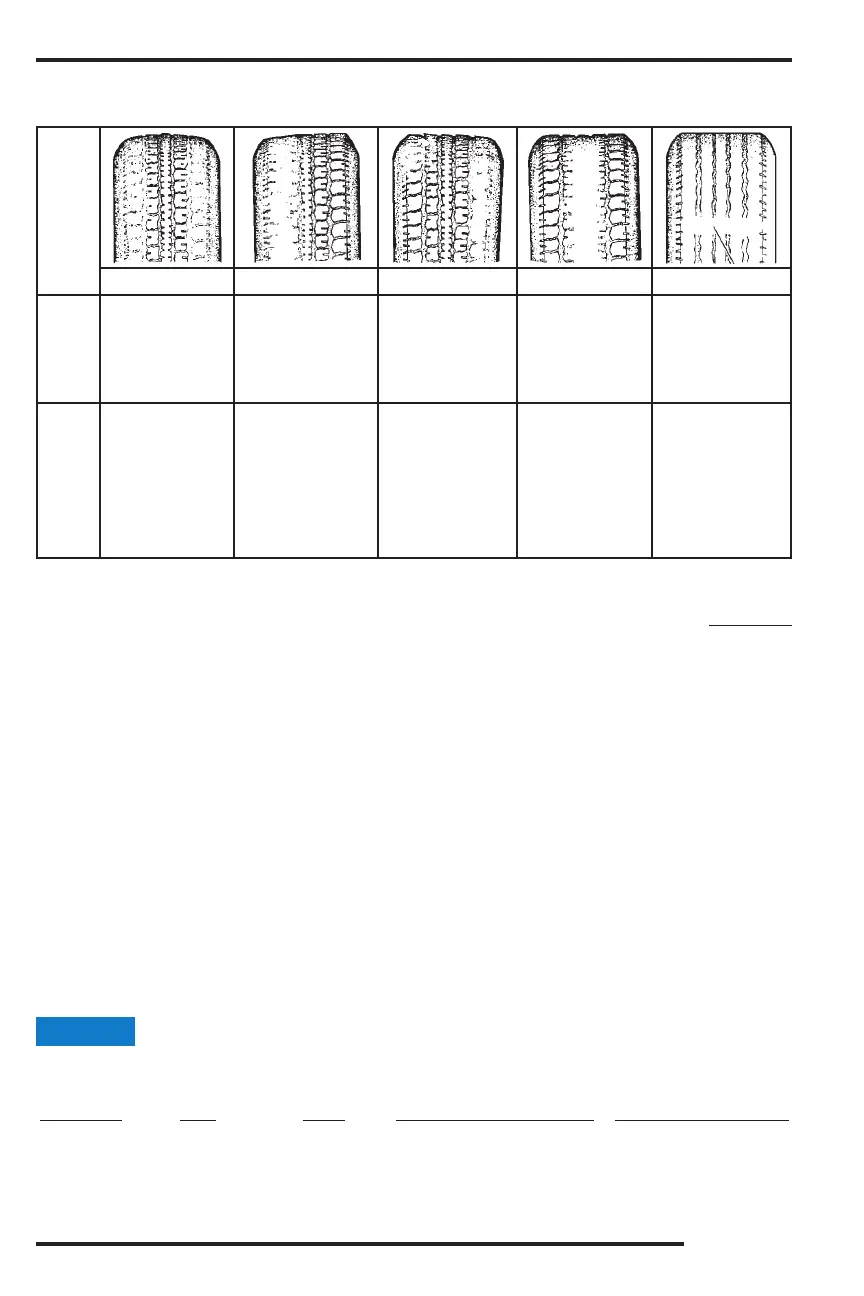
The wear pattern and tread life of tires involves many variables that the user has control of, but DOES NOT
fall under faulty manufacture or design.
The following is a list of some causes supplied by tire suppliers and axle manufacturers:
• Misalignment - from rough roads, pot holes, excessive speeds and hitting curbs.
• Tire Width - the wider the tire for otation, the more uneven the tire wear.
• Tire Air Pressure - to much or too little, for the load.
• Vehicle Hitch Height - if trailer is not level with ground, axle camber is misaligned.
• Maintenance - wheel bearing lubrication and adjustment. Follow axle MFG. instructions.
• Brakes - uneven or misadjusted brakes cause irregular brake activation.
MAINTENANCE
The following shows the correct adjustment for the MFG. brakes of 12 1/4” diameter


 To Next Page