Need help?
Do you have a question about the Bartell TS100 and is the answer not in the manual?
Never operate the machine in an explosive atmosphere, near combustible materials or where ventilation does not clear exhaust fumes.
Never come into contact with the engine or muffler when engine is operating or shortly after it is turned off. Serious burns may occur.
Never place hands or feet inside safety guard rings. Serious injury will result from contact with rotating blades.
Before starting the machine ensure that all guards and safety devices are in place and functioning properly.
Read and understand operator's manual before using this machine. Failure to follow operating instructions could result in serious injury or death.
Instructions for connecting and securing the battery before attempting starting procedures, noting it is shipped dry.
Details on bolting the pitch control tube to the bracket and adjusting the cable for proper tension and clearance.
Steps for starting the trowel in warm conditions: check fluids, bleed fuel system, operate choke, use safety switch, and adjust throttle.
Procedure for starting the trowel in cold weather, requiring a longer warm-up period due to heavier oil.
Steps for safely stopping the engine: low throttle, release dead-man switch, and turn off ignition key.
Explanation of operating the hydraulic steering system for forward, reverse, and rotational movement using joysticks.
General maintenance tasks including checking oil levels, fuel, bolts, belts, and cleaning the unit after each use.
Procedure for cleaning the air filter using recommended solvent to maintain engine life and performance.
Instructions for regularly checking and cleaning spark plugs, and setting the gap to recommended clearance.
Emphasizes checking engine oil before use and using the manufacturer's recommended oil and fill levels.
Instruction to grease all 8 spider plate fittings frequently to ensure smooth pitch efficiency and trowel arm life.
Daily check of gearbox oil level sight plugs and topping up with specified Chevron HiPerSYN ISO 320 oil.
Procedure to drain old oil, replace plugs, and refill gearbox with specified oil, noting capacity.
Instructions to grease all 12 bearings to ensure adequate lubricant supply, located in various assembly points.
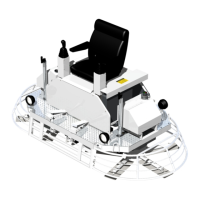
Exploded view and part identification for the complete chassis of the TS100 Ride-On Trowel.
Exploded view and part identification for the powerplant, including the engine and related components.
Exploded view and part identification for the drivetrain, detailing spider plates, gearboxes, and belts.
Exploded view and part identification for the steering system, including hydraulic controls and components.
Exploded view and part identification for the gearbox, showing internal components and assembly details.
Exploded view and part identification for the pitch control mechanism, including tube, shaft, and cable.
Exploded view and part identification for the greased spider assembly and the pressure plate assembly.
Exploded view and part identification for the trowel blade kit, showing blades, bolts, and washers.
Exploded view and part identification for the retardant spray system, including tank, pump, and nozzles.
Exploded view and part identification for the TS100 transporter, detailing dolly and hitch components.
Exploded view and part identification for the transporter handle assembly, showing beam, arms, and handle.
Lists common reasons why the engine will not start, such as fuel issues, battery problems, or safety switch faults.
Lists common reasons for lack of high speed operation after starting, including engine or throttle cable issues.
Lists common reasons for trowels turning at idle engine speed, such as belt tension or clutch issues.
Lists common reasons for the machine jumping on the floor, including hardened concrete or seized spider plates.
Lists common issues related to greasing spider plates, such as plugged fittings or hardened grease.
Lists common issues with pitch control operation, such as broken cables or worn pressure plates.
Lists common causes for rapid belt wear, including improper adjustment or pulley misalignment.
Lists common causes of oil leaks from the gearbox, such as damaged O-rings or loose end caps.
Lists causes for blades hitting each other, specific to modified models, like out-of-synchrony blades.
Lists common reasons for inability to move forward or reverse, such as broken levers or seized rod ends.
Lists common reasons for steering issues, including worn linkage or sheared gearbox studs.
Lists common reasons for the drive shaft not turning, such as seized universal joints or stripped splines.

 To Next Page
 General