22
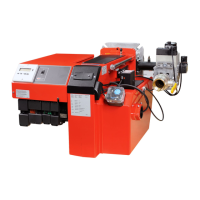
Bentone BFG 1
Z
Y
6. Settings
6.1 Brake plate adjustment
The burner is equipped with a control which changes the position of the brake
plate in the blast tube. This is used to set the correct pressure differential across
the combustion device and thereby get a good combustion without pulsations.
The setting to be used depends on the set effect and the overpressure in the
boiler. (For basic setting, see Technical data).
Brake plate settings
• Smaller gap: turn the screw to the right
• Larger gap: turn the screw to the left
The setting of the brake plate position affects the air ow. Therefore, the air
must always be readjusted with the air regulation device of the burner.
6.2 Air adjustment
For two-stage burners, the amount of air is set in two different positions.
When performing adjustments, the maximum load must always be adjusted
rst. This is because adjusting the air damper for the maximum load may
affect the air quantity for the minimum load. The maximum load is adjusted
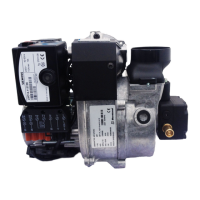
by turning the air regulator (Y). The air setting at maximum load will then
operate so that when the boiler is calling for the maximum load, the damper
motor opens completely and the amount of air for combustion is controlled
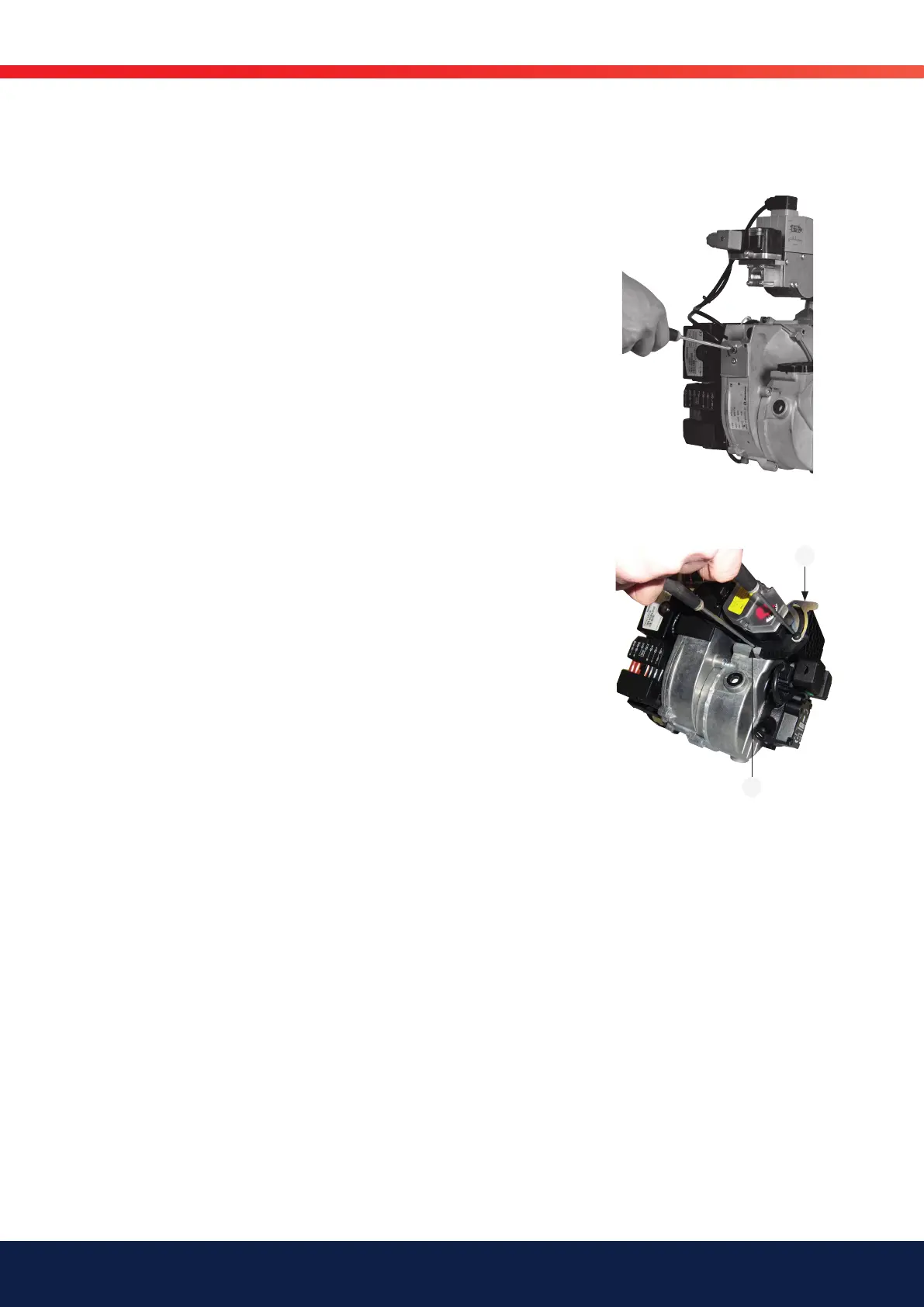
by the air regulator (Y). Minimum load is set by loosening the screw (X) and
adjusting the control plate (Z) for the damper powered by the damper motor.
6.2.1 Air volume
The air volume setting for the maximum load is adjusted by turning screw (Y)
with an allen key. How open the damper must be is determined by the heat
output and overpressure in the boiler as well as other settings on the burner
such as the position of the brake plate. To adjust the burner as quickly and as
easily as possible, adjustments should always start with the maximum load,
as adjustments here also affect the minimum load.
Set the minimum load by adjusting the control plate (Z). By changing settings
on the control plate towards the higher values on the scale, the opening
of the damper powered by the damper motor increases, thus increasing
the amount of air for the combustion process. To reduce the amount of
air, perform the opposite adjustment. When adjusting the minimum load,
you should always make sure that the damper for maximum load is open
far enough so that it has no signicant effect on the amount of air for the
minimum load. The adjustment should be performed alternately: rst
adjustment of the minimum load followed by adjustment of the maximum
load and then repeat the procedure unless acceptable combustion is
achieved.
172 525 46-3



 To Next Page