4-5 Driving assistance function
ABS (Anti-lock Brake System)
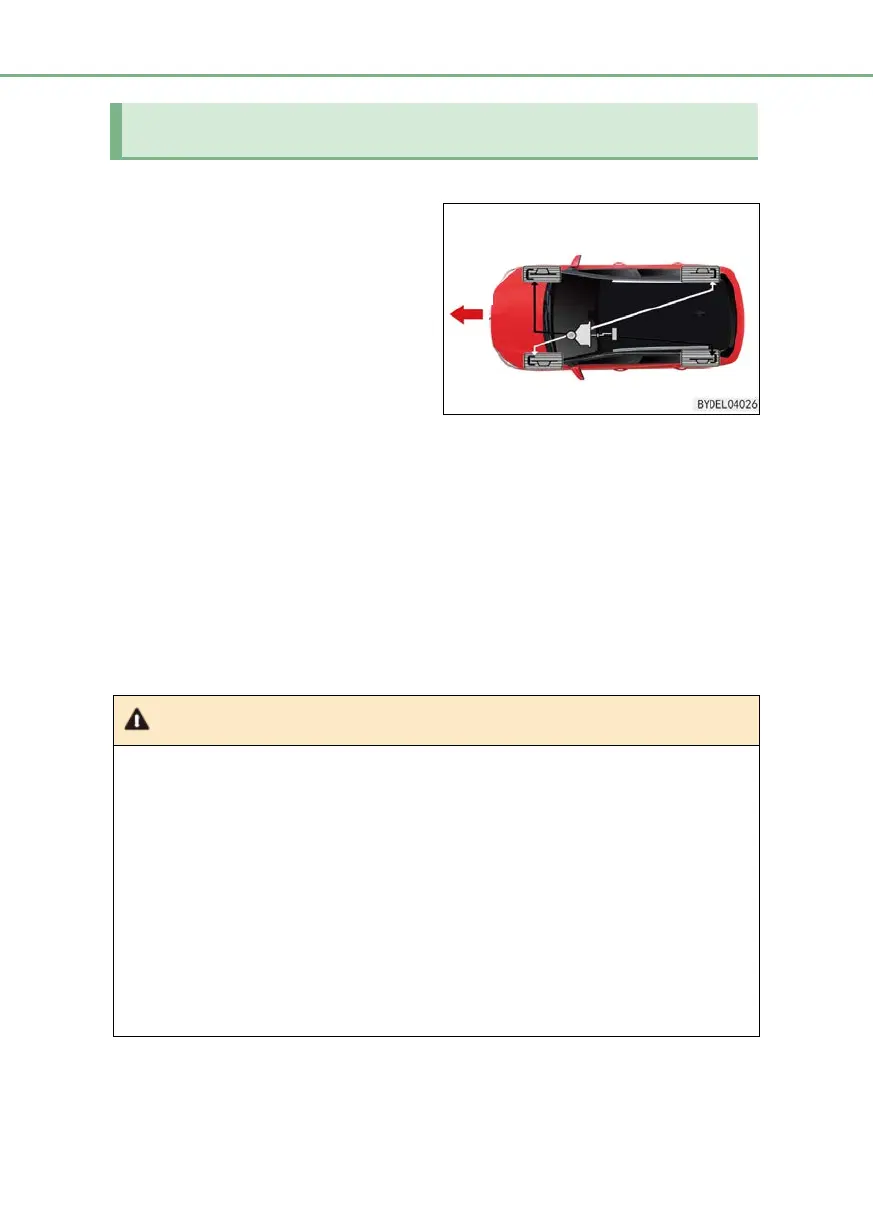
■ The hydraulic system of the ABS is
installed with two independent
circuits. Every circuit passes
through the vehicle in diagonal
direction (For instance, the left
front wheel brake is connected to
the right rear wheel brake
) to
actuate. If one circuit is
malfunctioned, two wheels can still
be braked.
■ ABS can be used to prevent wheel locking or slipping when the brake is applied
suddenly or applied on slippery roads, to maintain the steering control.
■ If the front wheels are slipping, the steering will not be controlled, that is, the car will be
still driven straight forward when turning the steering wheel. ABS can be used to
prevent the wheel locking and maintain the steering control because its pulse fast
braking reacts much faster than manual operation.
■ Do not depress the brake pedal in pulse mode; otherwise, ABS will be faulty. When
turning the steering wheel to avoid a danger, a strong and stable pressure should be
applied on the brake pedal to play the role of ABS.
■ When ABS is operated, you will feel a vibration and hear a noise from the brake pedal.
It is normal and is caused by the pulse fast braking of ABS.
Warning
■ In the following cases, ABS will not be operated effectively:
● Use tires with insufficient adhesion (such as, use the excessively worn tires on
snow roads);
● The car slips when driving at high speed on slippery roads.
■ The ABS is not designed to shorten the braking distance of vehicle. Please ensure
to maintain a safe distance from vehicle ahead under following conditions:
● When driving on muddy, sandy or snowy roads;
● When driving on pitted or uneven roads;
● When driving on bumpy roads.
the car



 To Next Page