1.2 AF S
YSTEM
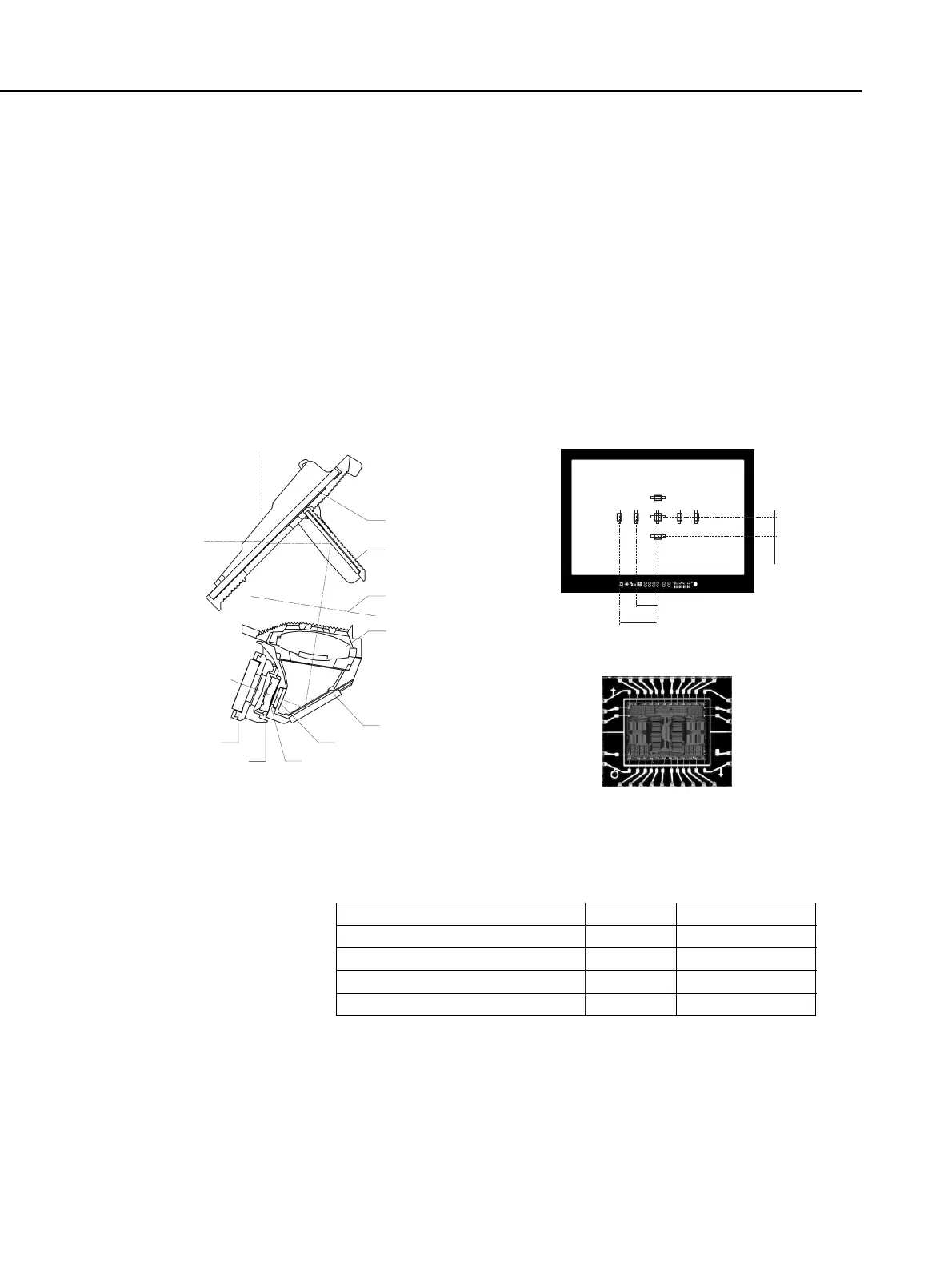
(1) Basic Configuration of Focusing Optics
The basic configuration of the focusing optics, AF sensor, and AF unit are the same
as the EOS 300/Rebel 2000/EOS Kiss III's. The actual focusing optics are shown in
Fig. 2-7. The light comes through the camera lens, the focusing light flux passes
through the semi-silvered mirror (40% transmittance), then it is refracted downward
by 81 deg. by the secondary mirror (flat and fully reflective). Then it goes through the
field lens, AF mirror (fully reflective), infrared filter, fixed diaphragm, and the
secondary image-formation lens before reaching the AF sensor.
(2) AF Sensor
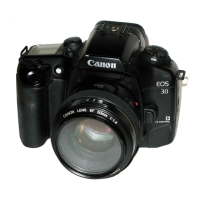
As with the EOS 300/Rebel 2000/EOS Kiss III, the EOS ELAN 7 E / EOS 30 uses a
7-point CMOS sensor. For technical details on the AF sensor, see the EOS 300/Rebel
2000/EOS Kiss III's Service Manual.
(3) AF Speed and AF Processing
1) Faster AF speed
A high-speed
microcomputer
with a 33.554
MHz clock speed
and a command
execution time of
only 0.03 ms
makes the AF
speed during automatic focusing point selection just as fast as the EOS-3's.
Table 2-2 compares the CPU performance of recent EOS cameras.
Part 2: Technical Information
2-4
Table 2-2 CPU Performance Comparison
Camera
EOS ELAN 7 E / EOS 30
EOS ELAN II E / EOS 50 E
EOS-3
EOS 300 / Rebel 2000 / EOS Kiss III
Clock Speed
Command Execution Time
33.554MHz 0.03 u
16.0MHz 0.0625 u
24.576MHz 0.04 u
16.0MHz 0.12 u
Fig. 2-9 AF Sensor


 To Next Page