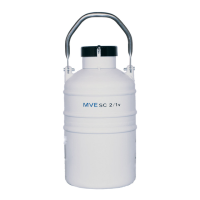
Nitrogen
Nitrogen (an inert gas) is a simple asphyxiant. It will not support or sustain life and can produce
immediate hazardous conditions through the displacement of oxygen. Under high pressure these gases
may produce unconsciousness even though an adequate oxygen supply, sufficient for life, is detect.
Nitrogen vapors in air dilute the concentration of oxygen necessary to support or sustain life. Inhalation of
high concentrations of this gas can cause anoxia, resulting in dizziness, nausea, vomiting, or
unconsciousness and possibly death. Individuals should be prohibited from entering areas where the
oxygen content is below 19% unless equipped with a self-contained breathing apparatus.
Unconsciousness and death may occur with virtually no warning if the oxygen concentration is below
approximately 8%. Contact with cold nitrogen gas or liquid can cause cryogenic (extreme low
temperature) burns and freeze body tissue.
Persons suffering from lack of oxygen should be immediately moved to areas with normal atmospheres.
SELF CONTAINED BREATHING APPARATUS MAY BE REQUIRED TO PREVENT
ASPHYXIATION OF RESCUE WORKERS. Assisted respiration and supplemental oxygen should be
given if the victim is not breathing. If cryogenic liquid or cold boil-off gas contacts a worker's skin or
eyes, the affected tissues should be promptly flooded or soaked with tepid water (105-115
o
F; 41-46
o
C).
DO NOT USE HOT WATER. Cryogenic burns, which result in blistering or deeper tissue freezing,
should be examined promptly by a physician.


 To Next Page