5. To lock the seat belt, pull down on the shoulder part of the belt until you have pulled all the seat
belt webbing out of the retractor. Then, allow the webbing to retract back into the retractor. As
the webbing retracts, you will hear a clicking sound. This means the seat belt is now in the
Automatic Locking mode.
6. Try to pull the webbing out of the retractor. If it is locked, you should not be able to pull out any
webbing. If the retractor is not locked, repeat step 5.
7. Finally, pull up on any excess webbing to tighten the lap portion around the child restraint while
you push the child restraint rearward and downward into the vehicle seat.
8. If the child restraint has a top tether strap and the seating position has a top tether anchorage,
connect the tether strap to the anchorage and tighten the tether strap. See the section
“Installing Child Restraints Using the Top Tether Anchorage” for directions to attach a tether
anchor.
9. Test that the child restraint is installed tightly by pulling back and forth on the child seat at the
belt path. It should not move more than 1 inch (25.4 mm) in any direction.
Any seat belt system will loosen with time, so check the belt occasionally, and pull it tight if
necessary.
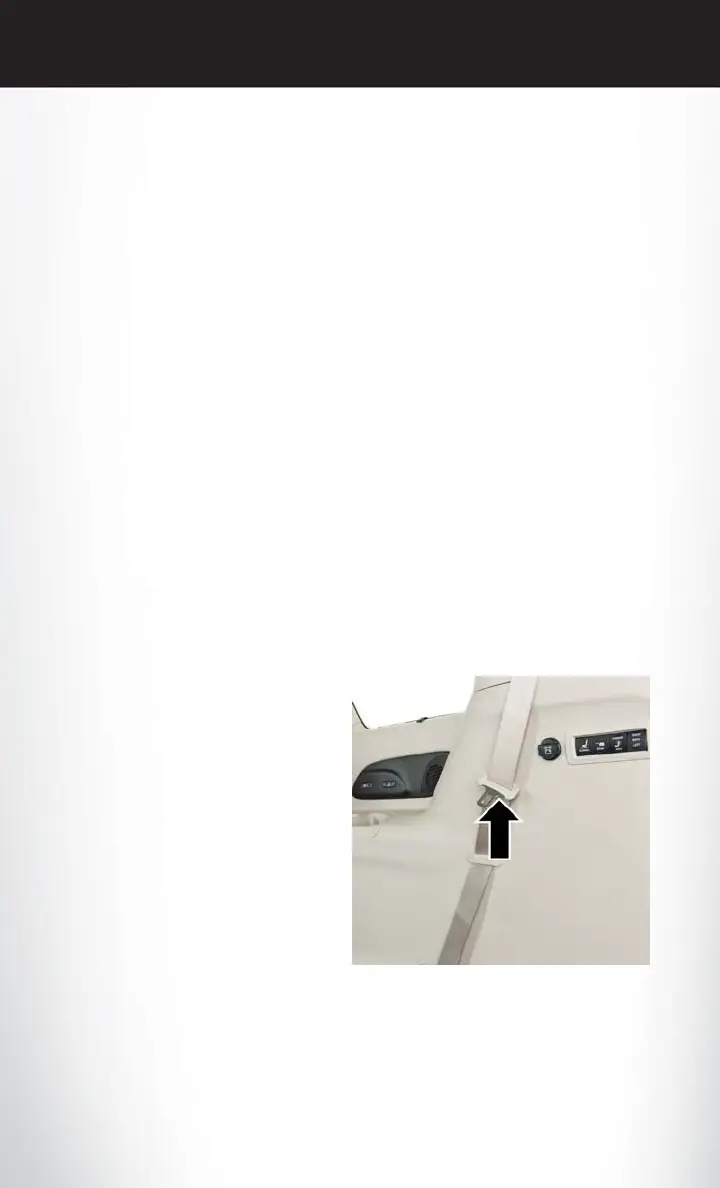
Seat Belt Park Stitch — If Equipped
The rear outboard seat belts may be equipped with a park stitch to raise the latch plate for easier
access to occupants. If the park stitch interferes with the tight installation of a child restraint, slide
the latch plate over the stitching to shorten the lap portion of the belt and install the car seat
following the steps above. When the car seat is removed from the vehicle, slide the latch plate
above the park stitch to enable occupants to latch the seatbelt securely.
Seat Belt Park Stitch Location
GETTING STARTED
62











 To Next Page