2.3 General complications associated with enteral tube feeding
Mechanical complications
• Tube obstruction
• Primary malposition
• Perforation of the intestinal tract
• Secondary displacement of the feeding tube
• Knotting of the tube
• Accidental tube removal
• Breakage and leakage of the tube Leakage and
bleeding from insertion site
• Erosion, ulceration and necrosis of skin and mucosa
• Intestinal obstruction (ileus)
• Hemorrhage
• Inadvertent IV infusion of enteral diet
Infectious complications
• Infection at the tube insertion site
• Aspiration pneumonia
• Nasopharyngeal and ear infections
• Peritonitis
• Infective diarrhea
Metabolic complications
• Electrolyte disturbances
• Hyper- and hypoglycemia
• Vitamin and trace element deficiency
• Tube feeding syndrome (“Refeeding syndrome”)
2.4 Specific precautions related to the compatible sets and nutrition
Due to the diversity of nutritional solutions used, which have a wide range of characteristics (i.e. density, viscosity, quantity of dissolved gasses, rheology,
particles, temperature, individualized nutrition preparation), in certain circumstances the performance of the pump may be limited, due to occlusion of the
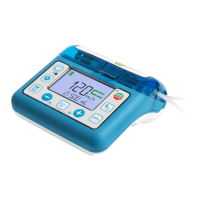
feeding set or tube. In all circumstances such an incident will be detected by the Compat Ella
®
pump and will trigger an occlusion alarm.
We recommend only using the Compat Ella
®
pump with timely and regular patient monitoring, especially in sensitive patient population where an interruption of
the nutrition delivery may lead to a patient hazard.
Therefore, when Compat Ella
®
pumps are used to feed patients who require a constant supply of nutrition (for whom the disruption of food supply can lead
to critical situations), it is necessary to only use commercially available enteral nutritional solutions prepared as described by the manufacturer, use of com-
patible sets and appropriate and regular monitoring food administration.
EN
Ѵ


 To Next Page