Droop mode/VSG (virtual synchronous generator) mode
If the ESS supports this, the ASC Storage controller can operate the ESS in droop mode for island operations (grid-forming) and
parallel operations (grid-following).
2.4.2 Energy source or power source
The energy and power source functions determine the source priority.
• Energy source
The ASC 150 Storage controller prioritises battery power over genset power. This means that the system uses as much battery
power as possible before starting a genset. If the genset is in operation, the ASC 150 Storage controller tries to decrease the
genset load to minimum (P DG minimum). When the generator is operating, the ESS works as a power source with spinning
reserve functionality.
• Power source
The ASC 150 Storage controller operates parallel to other sources. Genset power is prioritised over battery power. Use this
mode when you want to make sure that spinning reserve requirements are met.
2.4.3 Charging and discharging
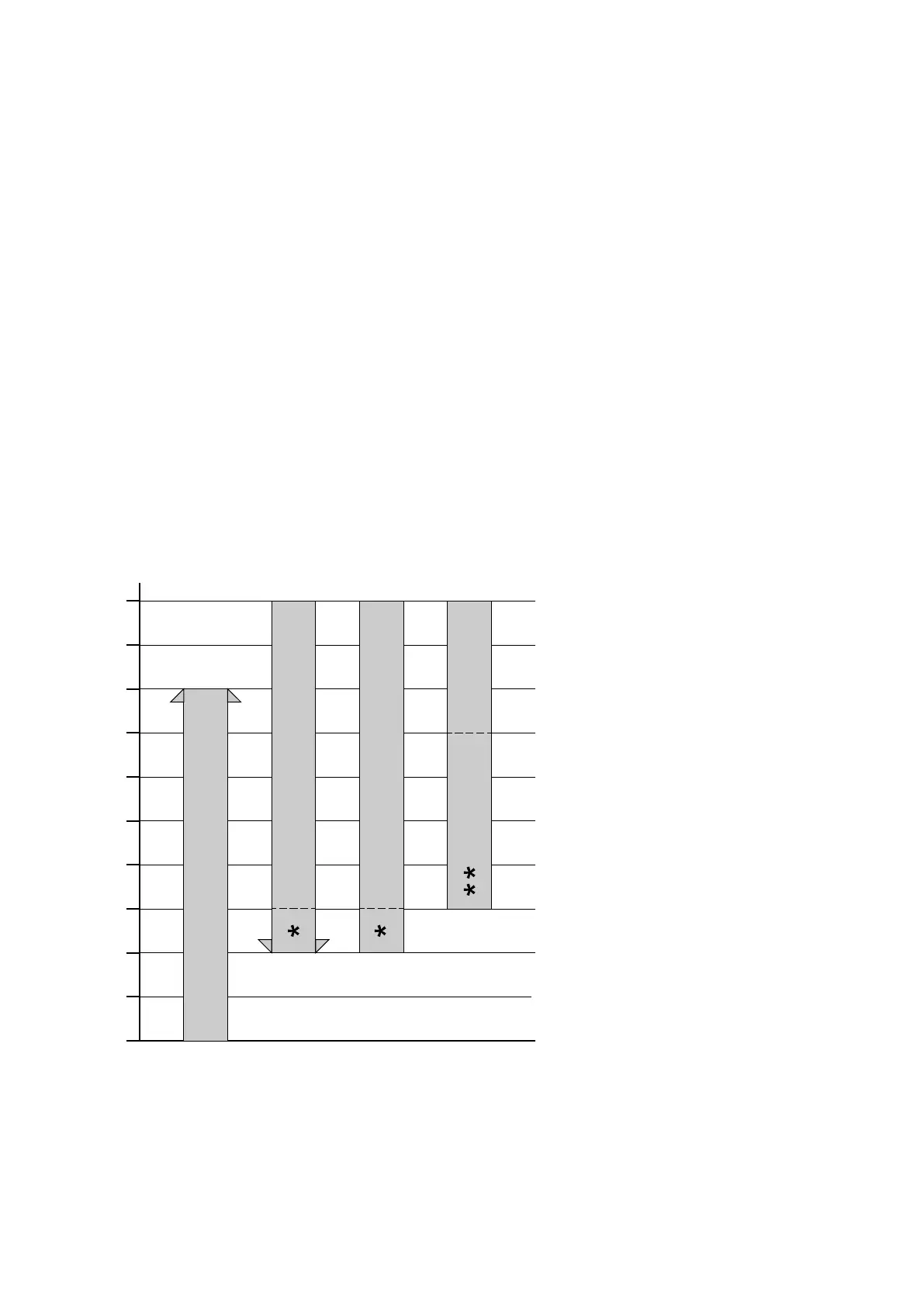
The energy management system controls when the ESS charges and discharges. This is based on the state of charge conditions.
The ASC controller reads the state of charge from the ESS.
State of charge (SOC) conditions
SOC [%]
100
High alarm
Threshold 2
Threshold 1
Minimum
Low alarm
0
Charging allowed
Discharging allowed
ESS can be
energy source
ESS can be
power source
Maximum
Charging: If the SOC is less than maximum, the ESS can charge.
Discharging: If the SOC is more than minimum, the ESS can discharge. * Less than threshold 1: The ESS can discharge until the
SOC reaches the minimum. The ESS must then recharge to threshold 1 before it can discharge again.
OPERATOR'S MANUAL 4189341343A EN Page 11 of 36



 To Next Page