F800 Disassembly and Disposal
PR-2013-0105-GB • Subject to modifications • R2-04/2016 37
7 Disassembly and Disposal
7.1 Dismantling
To dismantle the unit proceed as follows:
• Close all hydraulic shut-off valves.
• Isolate all connections and ensure leak-free condition regarding oil, refrigerant or
water-glycol mixture.As the coil piping diameter is small, residual water can remain
in the unit following normal evacuation. For safety reasons, use compressed air to
blow through the system in order to remove all remaining water.
• Release the fixing to the base or wall.
The unit is ready for transport.
• Consider all instructions specified in chapter "Transport" on page 14.
7.2 Disposal
An authorized appointed contractor specializing in waste processing must dispose
of the unit or its individual components. This appointed contractor must ensure that:
– the components are separated according to material types
– used operating materials are sorted and separated according to their respective
properties.
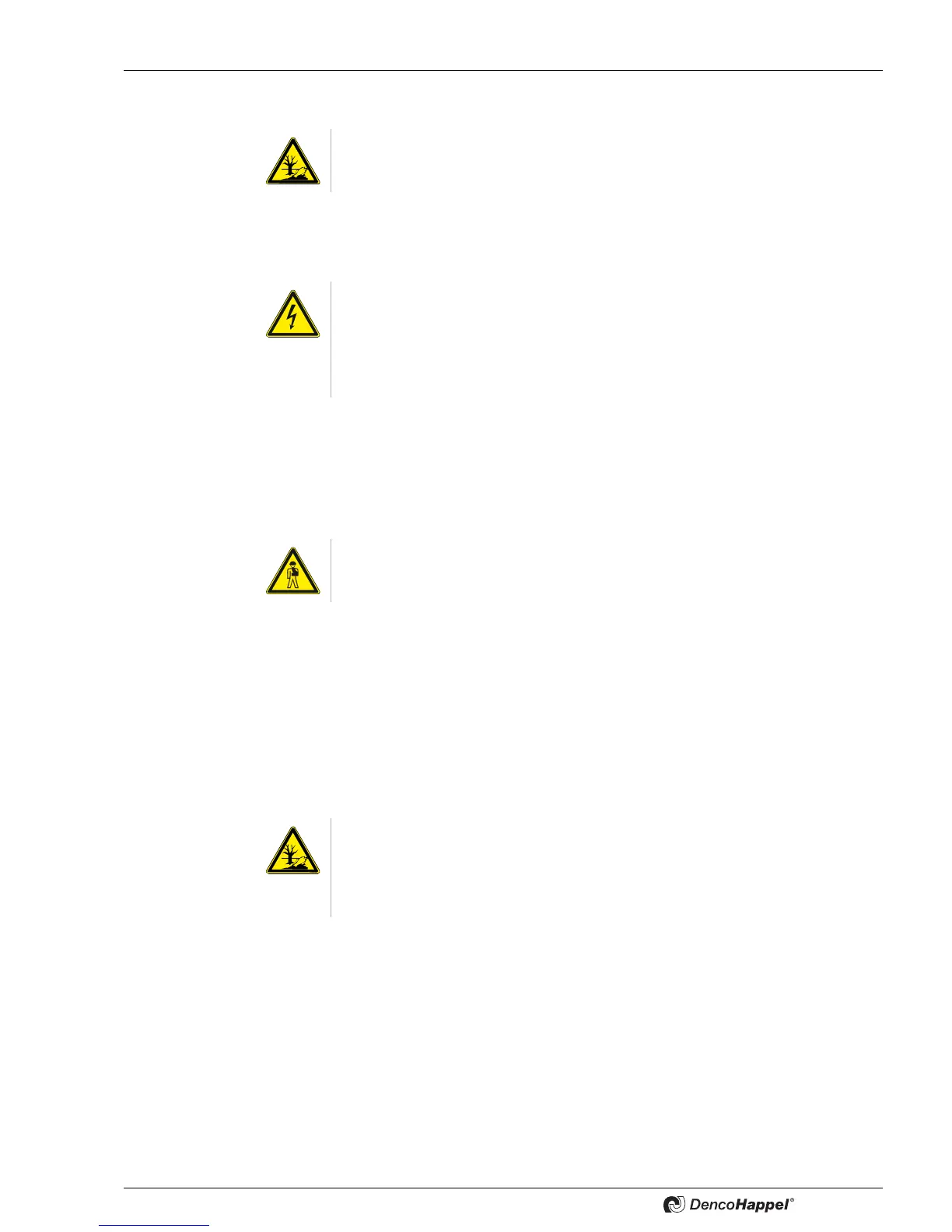
ENVIRONMENTAL DAMAGE!
Have qualified licensed staff dismantle and dispose of the unit!
DANGER OF ELECTRICAL CURRENT!
When carrying out decommissioning and dismantling work on the unit, disconnect all
power supply connections, ensure the power cannot be inadvertently energized and
verify that electric lines have been disconnected. Earth and short-circuit them, and
cover or otherwise isolate any neighboring live parts. Non-compliance can lead to
death or serious injury.
PERSONAL INJURY
Secure the unit against slipping.
ENVIRONMENTAL DAMAGE!
• Dispose of all components and filters (activated-carbon filter, filter cartridges,
etc.) and disused operating materials (e.g. oil, refrigerants and water-glycol
mixture) in an environmentally-friendly manner in accordance with the local
codes, practices and environmental regulations.


 To Next Page