Vehicle System System Operation 25
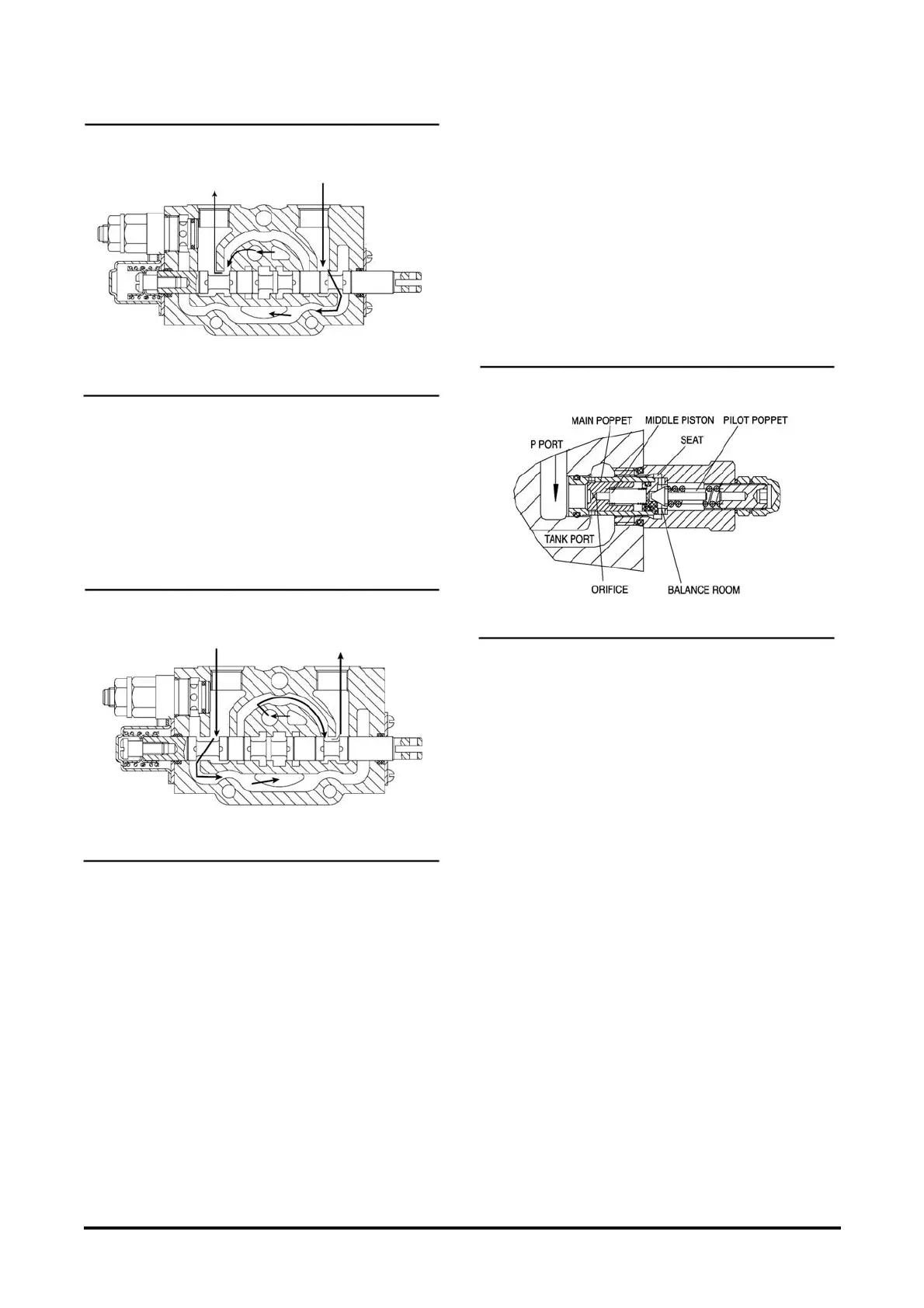
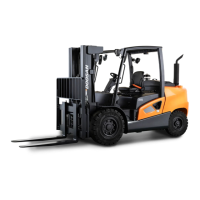
3. Spool-down
When unload path is closed, oil opens a load check
through parallel path and flow out from Port B. Flow
back oil returns to the tank through the tank path.
When cylinder loading is in excess of the rated
pressure of over-flow valve, the valve works and oil
flow into the tank path. The spool returns to the
neutral position by the spring.
Working Principle of Relief Valve
There are 3 kinds of relief valves in control valve.
Main relief valve to limit a max. pressure and PF
relief valve to limit PF flow pressure mounted on the
inlet side cover. Over-loaded valves are amounted
on the sides of inlet Port of the valve sections (lifting
and tilting valve-sections are not included) to limit
the Max. pressure of each port. And the valve also
equips the function of cavitation when in negative
pressure.
Main Relief Valve
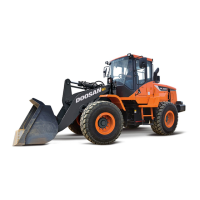
1. Free Action Condition of relief valve
When the circuit pressure is lower than the rated
values, relief valve keeps balance. Pressure at Port
P is filled in the spring chamber through poppet
throttle hole. By the work of spring force and oil
pressure, main poppet is squashed into the seat of
slip while the pilot poppet is also in the condition of
close by the force of spring. Therefore, all paths to
the tank port are closed and all flow in the circuit is
delivered to the working part.
2. Working Condition of Relief Valve
When the circuit pressure goes up and higher than
the rated value, the balance is broken and relief
valve works. When the circuit pressure is in excess
of the rated valve of pilot poppet, the pressure push
by the pilot poppet and flow into the tank.
The pressure difference is generated at the back
and forward of the throttle hole of the main poppet
and the spring chamber pressure goes down. Main
poppet is pushed open and tank port is open too.
Pressure oil flows into the tank and keeps the circuit
at a set value.



 To Next Page