Model 360/361 Control Valves
Dyna-Flo Control Valve Services Ltd.
Phone: 780 • 469 • 4000 Toll Free: 1 • 866 • 396 • 2356 Fax: 780 • 469 • 4035 Website: www.dynafl o.com
P-360M1019A
7
Operation, Parts, and Instruction Manual
PERIODIC INSPECTION
Special Equipment Required:
• Bypass or block valves.
Before You Begin:
• Read Safety Caution (Page 2).
• Use safe work practices and lock out procedures.
• Disconnect supply lines (air or gas), electric power, or control
signal to the actuator. Sudden movement of actuator can
cause damage or injury, make sure actuator will not operate.
• Vent any pneumatic actuator loading pressure and relieve
any actuator spring preload if present.
• Relieve process pressure and drain the process fl uid from up
and down stream of valve.
• Be aware of potentially hazardous process material that may
be present in-line and in-valve. Isolate the valve from
process pressure. Use a bypass or block valve if necessary,
or completely shut off the process.
Inspection Steps:
1 Check for visible signs of leakage around all seal and
gasket areas.
2 Check the valve for damage, especially damage caused by
corrosive fumes or process drippings.
3 Clean and repaint the areas as required.
4 Ensure all accessories, mounting brackets, and fasteners
are secure.
5 Clean any dirt and foreign material from the valve stem
(Key 5).
ACTUATOR REMOVAL
Note: Actuator removal does not require that the valve be
removed from the pipeline.
Tools Needed:
• Properly Rated Lifting Straps or Chains
• Lifting Device (Example: Crane)
• Hammer and Blunted Chisel
Before You Begin:
• Read Safety Caution (Page 2).
• Use safe work practices and lock out procedures.
• Disconnect supply lines (air or gas), electric power, or control
signal to the actuator. Sudden movement of actuator can
cause damage or injury, make sure actuator will not operate.
• Vent any pneumatic actuator loading pressure and relieve
any actuator spring preload if present.
1 Refer to the appropriate actuator instruction manual for
more information regarding the actuator being removed.
2 If the valve has been removed from the pipeline, place
the valve assembly on a fl at work surface that can support
the weight.
3 Before the actuator is removed, support the actuator using
lifting hooks or straps rated to support the weight of the
actuator.
4 If the actuator is a spring and diaphragm actuator,
determine if that actuator is fail open or fail closed. Fail
closed actuators will need to be energized to remove
downward force from the stem connector. Connect a supply
line to the inlet port of the actuator, be sure not to exceed
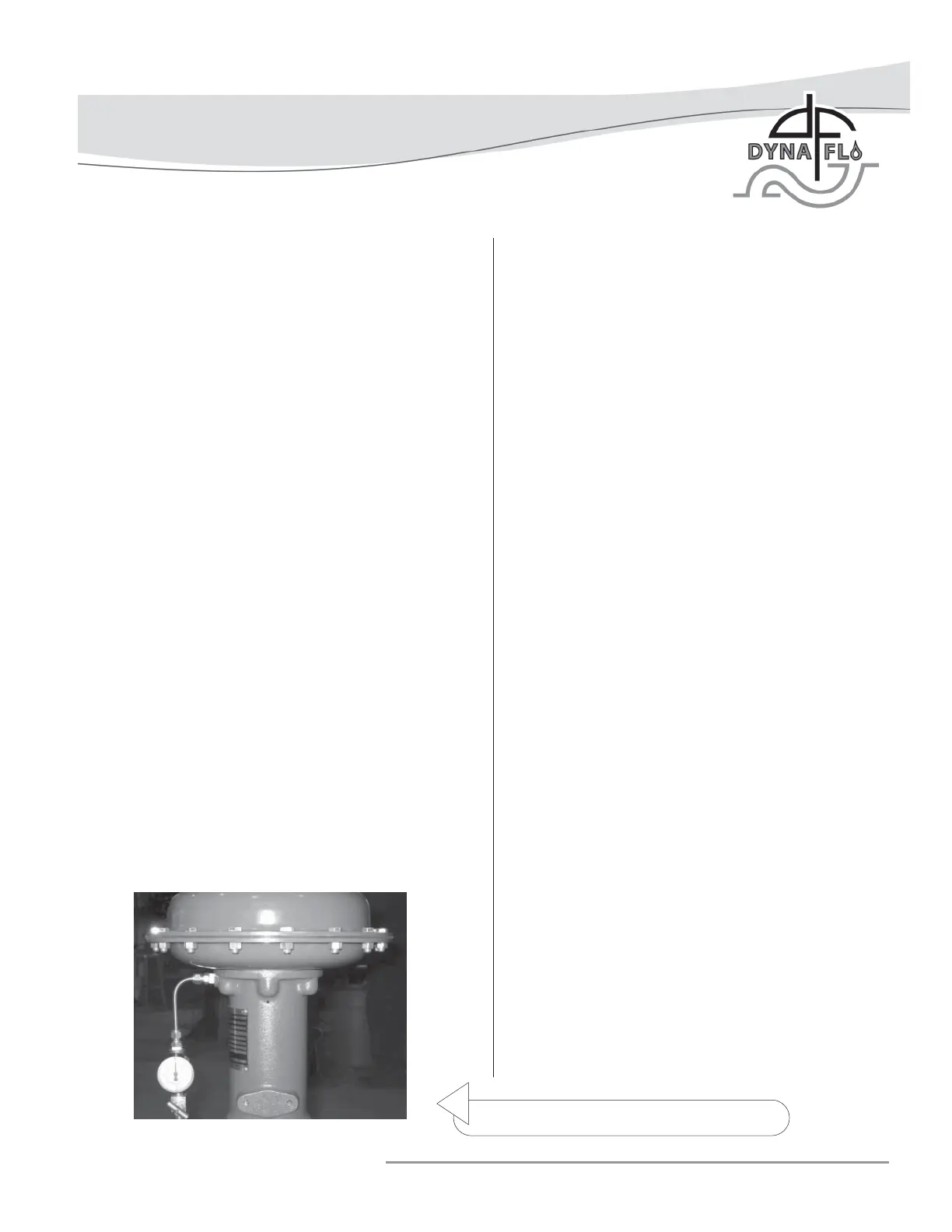
the maximum casing pressure. Refer to Figure 3 for
recommended needle valve and gauge setup.
5 Remove the stem connector (Refer to Figure 5).
6 Use a blunted heavy chisel to loosen the yoke nut (Key
44). Unscrew the yoke nut and remove the actuator from
the valve. If the actuator was energize during removal,
de-energize the actuator (Refer to Figure 4).
7 Remove the jam nut and hex nut (Keys 42 & 43) and travel
indicator from the valve stem (Key 5).
Figure 3 Needle Valve with Gauge setup



 To Next Page