39
Transmitter and 4-in-1 Control Unit Receiver Binding and Fail-Safe
Binding is the process of programming the receiver to recognize the GUID (Globally Unique Identifier) code of a
single specific transmitter. If you ever find that it is necessary to replace your transmitter or the 4-in-1 control unit in
your model, it will be necessary for you to “Bind” the new transmitter or 4-in-1 control unit receiver to your existing
transmitter or receiver for proper operation.
During the binding process, the smart fail-safe (SmartSafe™) positions of your system are also set. With
SmartSafe, in case of loss of signal, the throttle will go to the preset position that was stored during the binding
process and all other channels will hold their last position. And if the receiver (4-in-1 Control Unit) is powered on
before the transmitter, all channels but throttle will go to the fail-safe positions that were stored during the binding
process, while the throttle channel will not generate a pulse in order to prevent the ESC(s) from arming.
Note: Because the SmartSafe positions are set during the binding process, it is important to set all
channels to the preferred fail-safe positions before proceeding. In the case of the Blade™ CX2, we
strongly recommend setting the throttle stick and throttle trim to their lowest positions, and the rudder,
aileron and elevator channels to their neutral positions. Channel 5 should be set to your preferred
position if you have chosen to utilize it.
The following steps outline the binding process:
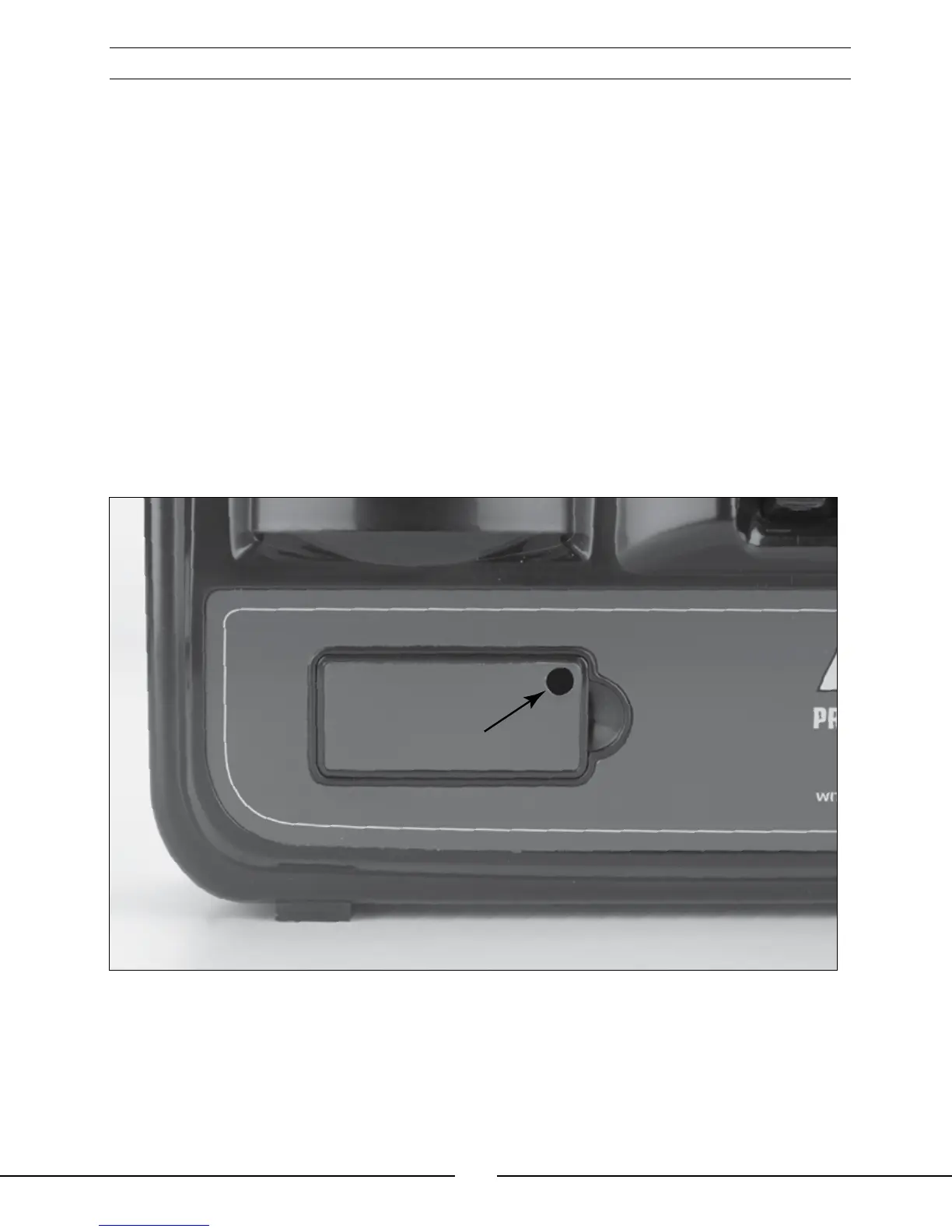
• Each time the transmitter is turned on, it enters “Bind Mode” for a few seconds. You can tell that the transmitter
is in bind mode when you see the red LED located under the door on the bottom left front of the transmitter blink
rapidly. Once the LED becomes solid, the transmitter is no longer in bind mode and will transmit normally.



 To Next Page