6. OUTDOOR UNIT INSTALLATION
6.1 SELECT INSTALLATION LOCATION
Before installing the outdoor unit, a suitable location must be chosen. The following
standards will determine the location.
Proper installation locations meet the following standards:
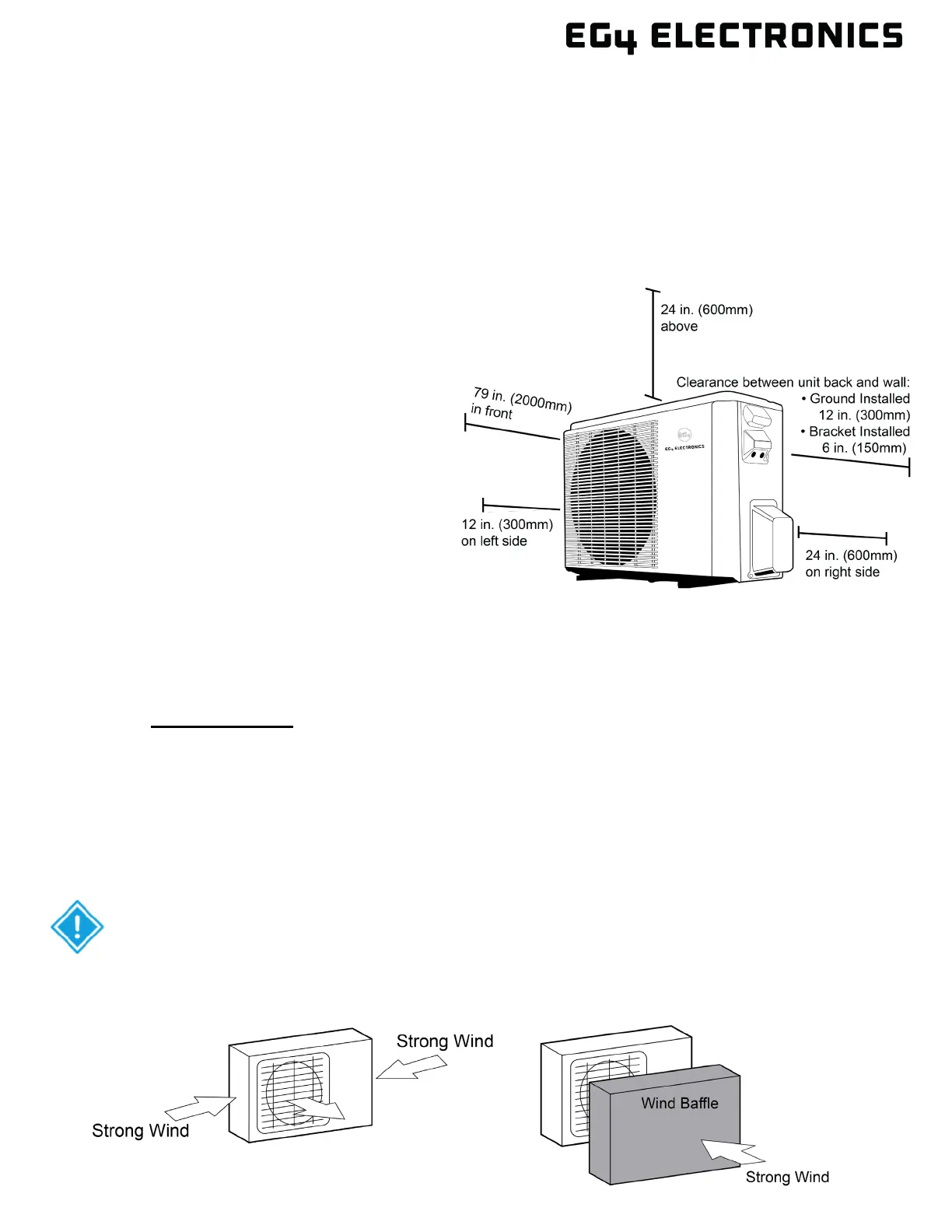
• Meets all spatial requirements shown in the image below.
• Good air circulation and
ventilation.
• Firm and solid location that
supports the weight of the unit
and mitigates vibration.
• Noise from the unit will not
disturb others.
• Protected from prolonged
periods of direct sunlight or rain.
• Where snowfall is expected,
raise the unit above the base
pad to prevent coil damage from
ice build-up.
• Mount the unit high enough to be
above the average accumulated
area snowfall. The minimum
height must be 18 inches off the ground.
• Mount the unit to a stable, non-moving structure
to help mitigate excess vibrations.
DO NOT INSTALL
• Near an obstacle that will block air inlets and outlets
• Near public streets, crowded areas, or other locations where noise from the unit will disturb
others
• Near animals or plants that will be harmed by hot air discharge
• Near any source of combustible gas or in a location that is exposed to large amounts of
dust
• In a location exposed to excessive amounts of salty air
IMPORTANT: SPECIAL CONSIDERATIONS FOR EXTREME WEATHER
If the unit is exposed to heavy wind, install unit so the air outlet fan is at a 90°
angle to the direction
of the wind. If needed, build a barrier in front of the unit to protect from
extremely heavy winds.
Ensure the wind barrier does not
lock necessary airflow.


 To Next Page