6
Chapter 1
Introduction
Chapter 1 Introduction
This chapter describes the features of the monitor and the name of each control.
1-1. Features
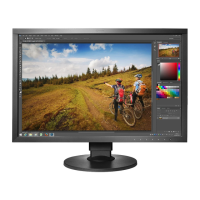
• 24″ widescreen
• Resolution: Supports 1920 x 1200
• IPS panel with 89˚ horizontal and vertical wide viewing angles
• Frame synchronization mode supported (23.75 Hz - 30.5 Hz, 47.5 Hz - 61.0 Hz)
• Support for three digital signal inputs (DVI-D x 1, HDMI x 1, DisplayPort x 1)
- DisplayPort (supports 8 bit and 10 bit)
*1
- HDMI (supports 8 bit, 10 bit, and 12 bit)
*1, *2
Supports PC signals by HDMI input
*1 Audio signals not supported.
*2 10 bit and 12 bit are supported only when using HDMI-Video. The maximum screen display is 8 bits.
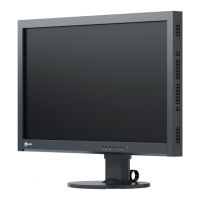
• Employs stand with wide range of movement.
Allows you to adjust the monitor to the optimal position for easy operation and minimizing fatigue.
(Tilt: up 35˚/down 5˚, Swivel: 344˚, Adjustable height: 155 mm (Tilt: 0°))
• Supports portrait format
• Compatible with color management software "ColorNavigator 7", which enables you to calibrate
monitor characteristics and generate color proles
• Equipped with a USB Hub function that supports USB 3.1
Achieves high-speed data transfers of up to 5 Gbps, which enables transfers of large amounts of data to and
from USB-connected devices in a short amount of time.
Also, the "CHARGE" USB downstream port supports quick charging, so you can recharge your smartphone
or tablet in a short period of time.
See “6-6. Making Use of the USB Hub Function” (page 38) and “USB CHARGE Port” (page 23)
• Displays HDCP (High Bandwidth Digital Protection) protected content.
Note
• This monitor supports portrait format. When using the screen in a portrait position, you can change the
orientation of the Setting menu (see “Menu Rotation” (page 22)).
• When using the monitor screen in a portrait position, the graphics board supporting portrait display is
required. When placing the monitor in a portrait position, settings of your graphics board need to be changed.
Refer to the User's Manual of the graphics board for details.



 To Next Page