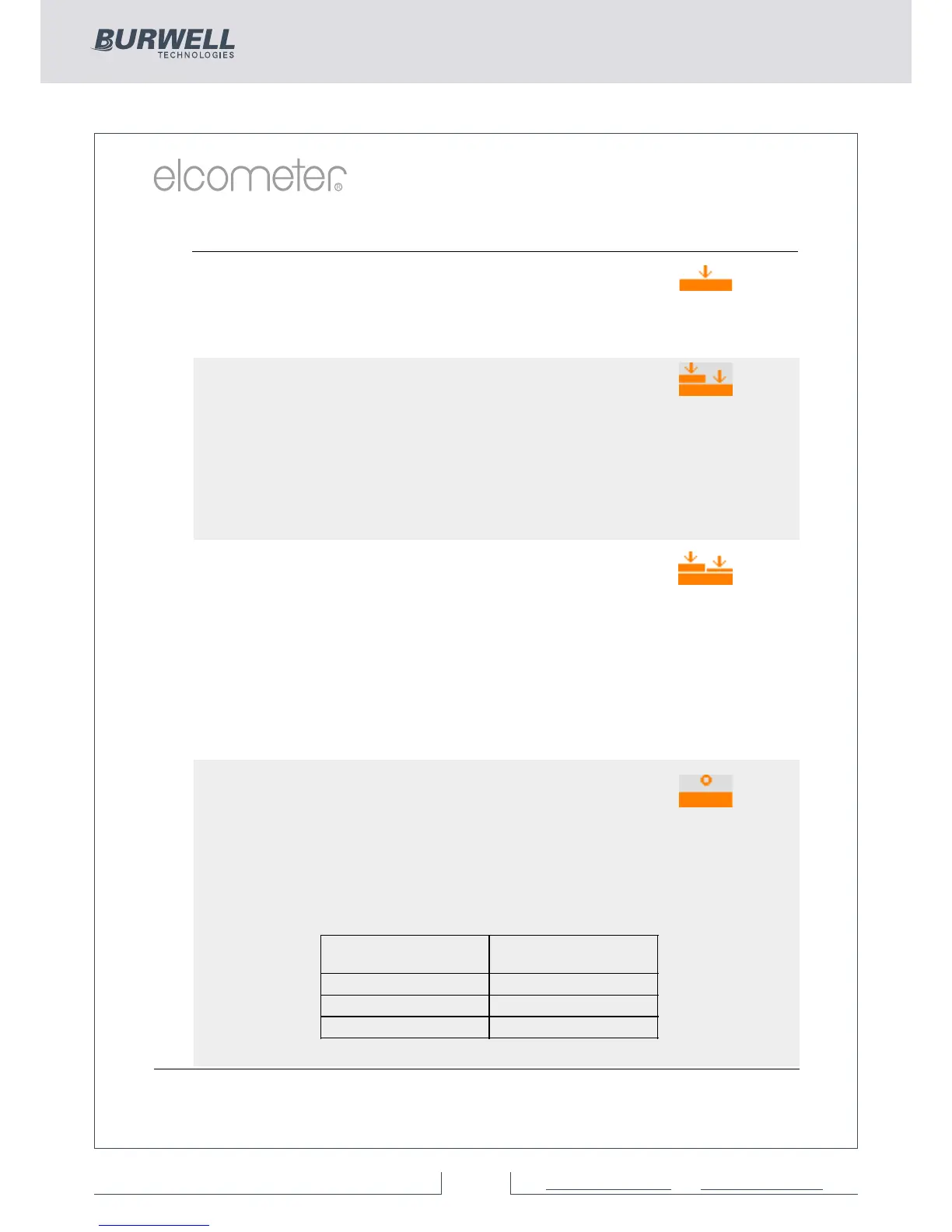
A simple method for calibrating on smooth
substrates. Simply place the probe on th
uncoated metal and the gauge will adjust
calibration accordingly. Also known as the
single
point calibration method.
Smooth
This is a more accurate method of calibrating
gauge than the Zero method as it requires
user to calibrate the gauge using a foil and
un-coated substrate.
The gauge’s on-screen calibration
will guide the user through the calibration
When selecting the foil value, the user
choose a thickness that is close to but
greater
than the expected dry film thickness value.
BST
Rough /
2 Point
Ideal for calibrating the gauge on both
metal substrates (when the uncoated surface
accessable) and substrates where there
significant differences in the magnetic (F)
electrical (N) properties of the substrate.
example cast iron, high carbon steel or
non-magnetic stainless steel alloys.
The calibration requires 2 foil values - one
the expected dry film thickness, and one below.
The gauge will guide the user through th
process with on screen instructions.
This is the ISO 19840 method for coatings on
steel surfaces roughened by blast cleaning
when the substrate profile is unknown, or
accessible. The calibration uses the smoot
surface technique, and a correction value
offset) is applied to each reading to account
the effect of the roughened surface; the value
the offset depends on the initial surface
and is described in ISO 19840 as follows:
Profile according to
ISO 8503-1
* mils values are calculated and for reference
as ISO 19840 indicates metric units only
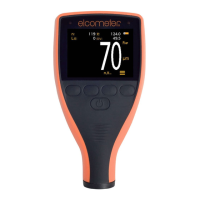
456 Dry Film Thickness Gauge
20 of 89For more information / 1300 287 935
mail@burwell.com.au / www.burwell.com.au


 To Next Page