EMW90HDNC1A Air-cooled Chiller
5. The refrigerant enters the plate heat
exchanger to evaporate and absorb the heat
of the coolant flowing through the plate heat
exchanger.
6. The circulating pump continuously transports
the coolant to the plate heat exchanger,
exchanges heat with the refrigerant, and
transports the cooled coolant to the container
to cool the battery pack.
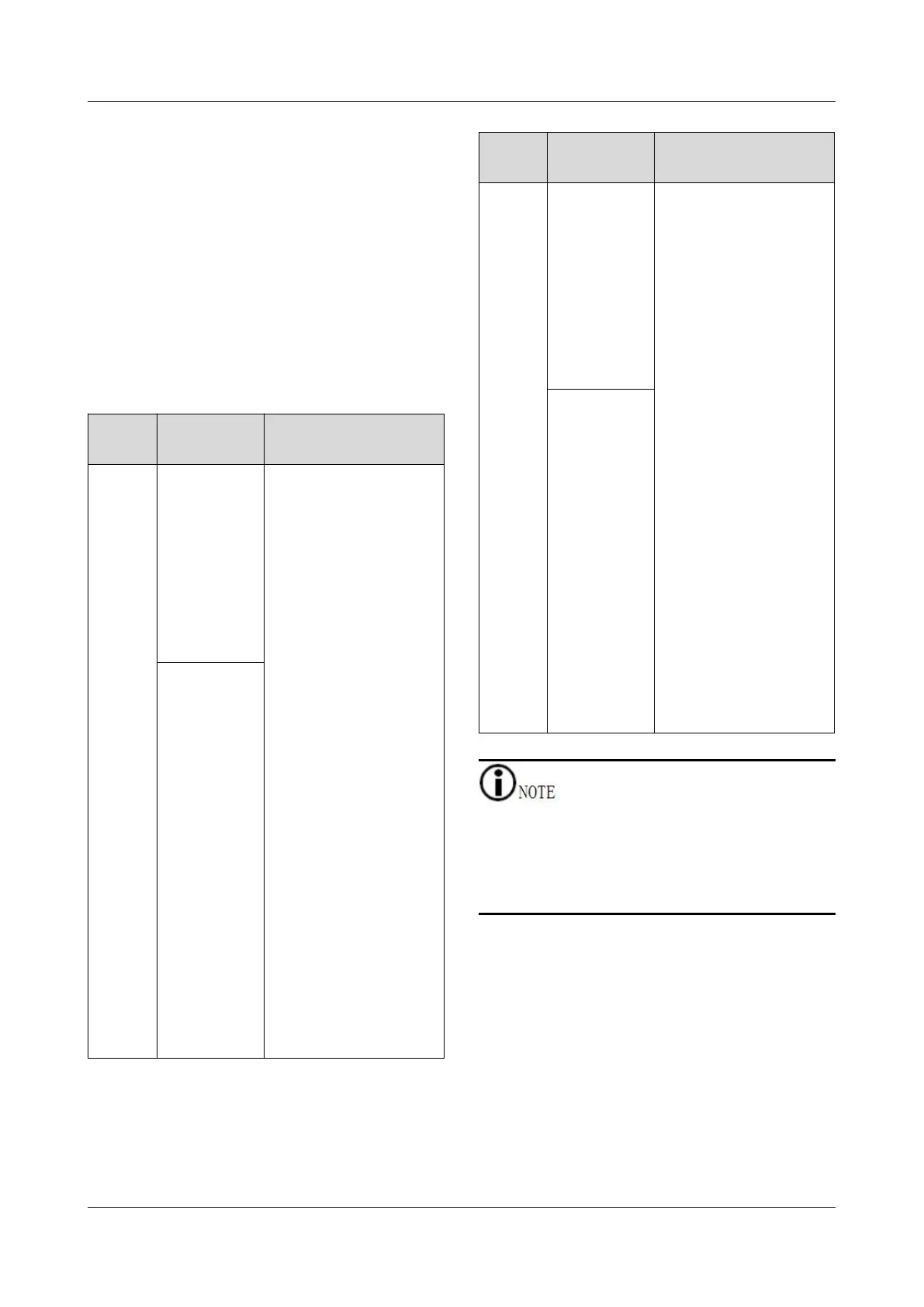
The control logic of EMW90HDNC1A chiller is
shown in Table 2-2.
Table 2-2 Control logic
Refrigeratio
n demand ≥
100%: the
refrigeration
is started.
Refrigeration demand
(%)= (actual control
temperature -
refrigeration set point)
/ refrigeration
sensitivity * 100%
When the refrigeration
set point is 22°C and
the refrigeration
sensitivity is 3°C, the
refrigeration start point
is 25°C
(22°C+3°C*100%=25°
C), and the
refrigeration stop point
is 22°C
(22°C+3°C*0%=22°C)
.
When the outlet
coolant temperature is
used as the actual
control temperature:
coolant temperature
is ≥ 25°C, the chiller
will start cooling.
coolant temperature
is ≤ 22°C, the chiller
stops cooling.
Refrigeratio
n demand ≤
0%: the
refrigeration
is stopped.
Heating
demand ≥
100%: the
heating is
started.
Heating demand (%)=
(heating set point -
actual control
temperature) / heating
sensitivity * 100%
When the heating set
point is 18°C and the
heating sensitivity is
3°C, the heating start
point is 15°C
(18°C-3°C*100%=15°
C), and the heating
stop point is 18°C
(18°C-3°C*0%=18°C).
When the outlet
coolant temperature is
used as the actual
control temperature:
coolant temperature
is ≤ 15°C, the chiller
will turn on the
electrical heaters.
coolant temperature
is ≥18°C, the chiller
will stop the
electrical heaters.
Heating
demand ≤
0%, the
heating is
stopped.
The actual control temperature is configurable and
supports the coolant outlet temperature and the cell
temperature sent by the host computer.
Refrigeration/heating set point and
refrigeration/heating sensitivity can be configured
according to actual planning.



 To Next Page