64 www.eta.co.at
[Solar] function block ETAtouch controller
7.7.5 Solar heating system with external
heat exchanger and stratified
charging valve
Solar heating system with external heat exchanger
and stratified charging valve
This variation of solar heating system also aims to
produce a sufficiently high temperature in the upper
area of the buffer, so the boiler does not have to start
for hot water charging.
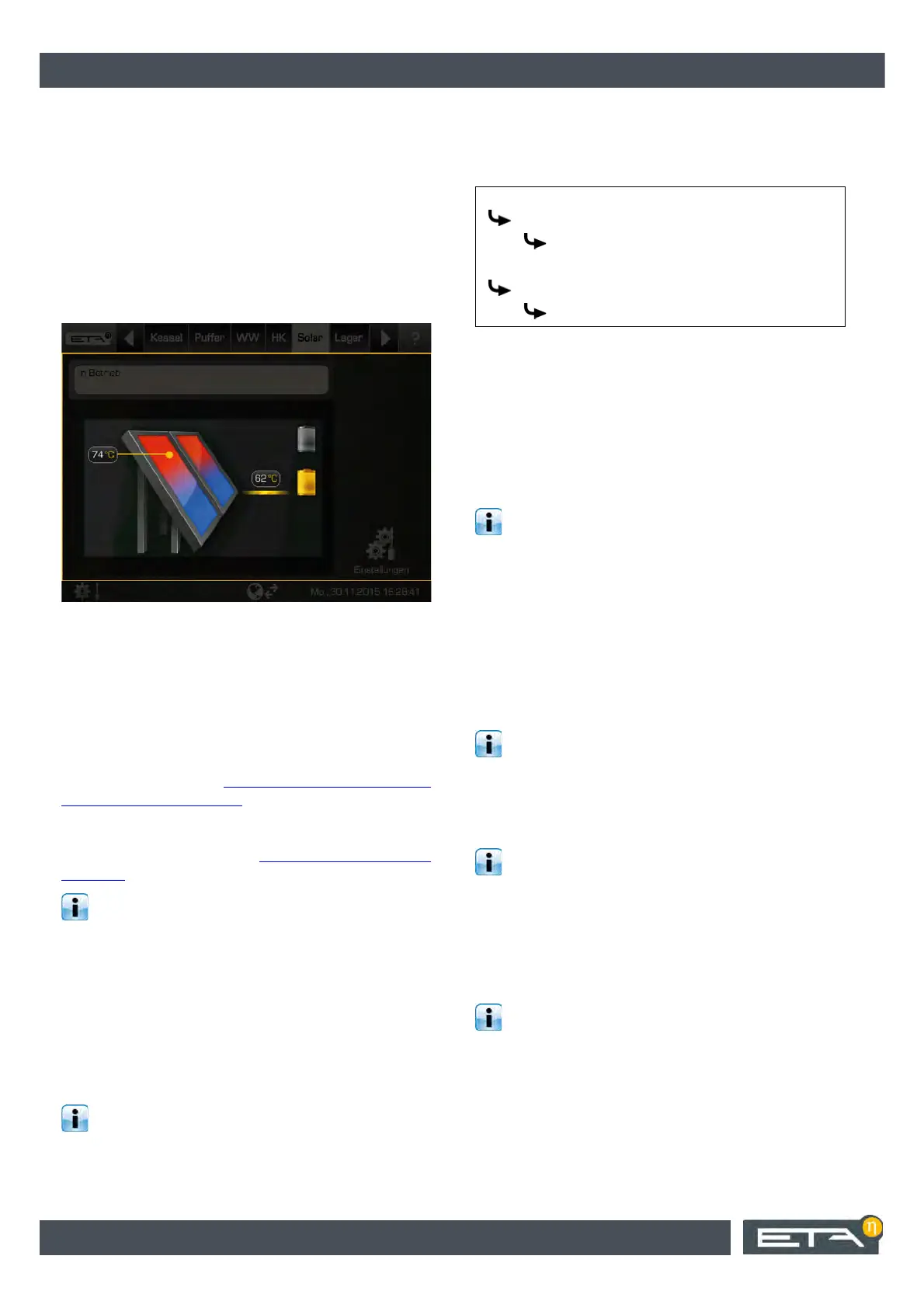
Fig. 7-73: Solar heating system with external heat exchanger
and stratified charging valve
The collector pump starts as soon as the collector is
warmer than the target temperature in the upper buffer
area [Buffer target solar].
The control principle is identical to that of a buffer with
two internal coils. The conditions for solar charging into
the upper buffer coil are also the same. A description
can be found in chapter 7.7.3 "
Solar heating system for
buffer with 2 internal coils".
The speed control of the secondary pump is identical
to that of a solar heating system with an external heat
exchanger, see graphic Fig. 7-72: "
Regulation
principle".
The only difference is the switching of solar
charging from the lower buffer coil to the upper. If
the conditions for solar charging into the upper coil are
not met, the lower coil will be charged first. If the
secondary feed temperature rises enough that the
temperature in the upper buffer area [Buffer top Solar]
is exceeded, solar charging is immediately switched to
the upper coil. No minimum time for solar charging is
taken into consideration. As soon as the secondary
feed temperature drops below the [Buffer top Solar]
temperature, the lower coil is charged again.
The secondary feed temperature rises when the
collector temperature increases or the speed of
the secondary pump decreases.
7.7.6 Text menu - Adjustable parameters
Adjustable parameters
Detailed descriptions of the parameters are provided
below.
Explanation of [Collector min]
This parameter sets the minimum temperature for
starting the solar pump. The solar pump can only be
started once the solar panel has exceeded this tem-
perature.
Do not set this temperature too high, to ensure
that it is possible for heat to supplied to pre-heat
the tank even when there is little sunlight. The optimal
range is between 30 °C and 50 °C.
Explanation of [Target collector diff.]
This parameter sets the desired temperature
difference between the solar panel and the connected
tank (buffer or hot water tank). This temperature
difference is controlled by adjusting the speed of the
solar pump.
If the buffer is being charged by the solar heating
system, the temperature of the solar panel
[Collector] is compared with the buffer temperature
[Buffer bottom Solar]. If the hot water tank is being
charged, the [Hot water tank bottom] temperature is
compared.
A high temperature difference results in a low
speed of the solar pump. This way, a smaller
quantity of water is conveyed through the solar panel.
The water remains in the solar panel for a longer time,
and therefore produces a higher working temperature
in the panel. Consequently, a higher hot water
temperature is achieved, but there are also more
losses from the solar panel.
A low temperature difference results in a high
speed of the solar pump. A larger quantity of
water is therefore conveyed through the solar panel.
The water remains in the solar panel for a short time,
and so also becomes less hot. The working
temperature of the solar panel is therefore lower, but
there are fewer losses via the solar panel.
State
Collector
Collector min
Collector pump
Target collector diff.


 To Next Page