Chapter 2 Specifications
PAGE 2-4
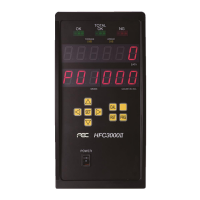
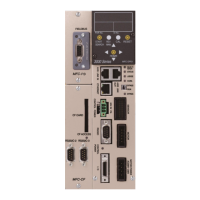
controller MODEL
HFC-B016-*-*-*-*
N:Option4 nothing EN:EtherNet
N:Option3 nothing CF:CF Card(RS232C-2)
N:Option2 nothing IO:I/O terminal is attached
N:Option1 nothing CC:CC-Link DN:DeviceNet
PB:ProfiBusDPV1 PI:ProfiNetIO EI:EtherNetI/P
2-3 Functions
2-3-1 Main Functions
(1) Fastening Function
The HAND SYSTEM is capable of the following fastening methods.
1. Torque method: Angle monitor, Torque rate monitor, 1/2/3 step fastening
2. Angle method: Torque monitor, Torque rate monitor, 1/2/3 step fastening
(2) Self-Check Function
When the start lever is gripped (turned ON), the home-position voltage level and CAL voltage level of
the torque transducer are automatically checked before fastening. This function is useful for
checking the transducer for abnormality and checking the cable for breakage etc.
(3) Bypass Function
When the BYPASS signal is input, the BYPASS signal is output to notify that the controller is in the
BYPASS mode. Starting by the START signal cannot be performed in this mode.
If the controller enters the BYPASS mode during fastening, fastening is stopped immediately.
(4) Abnormal Signal Output Function
When a fastening failure (NG) or a system error occurs, the tool is stopped immediately and a signal
corresponding to the problem is output. Also, the fastening failure (NG) details and the abnormal
state No. are displayed on the controller front panel.
(5) Tool Type Checking Function
If, when the Nutrunner is activated, the tool model set at the controller differs from the model No. of
the tool that is actually connected, the Tool Type Error is generated in the power activation process
and fastening will not be performed.
The tool ID contents are read in either of the following states.
1. If a tool is connected when the power is activated
2. When the tool is connected


 To Next Page