Chapter 6 Description of Operations
PAGE 6-31
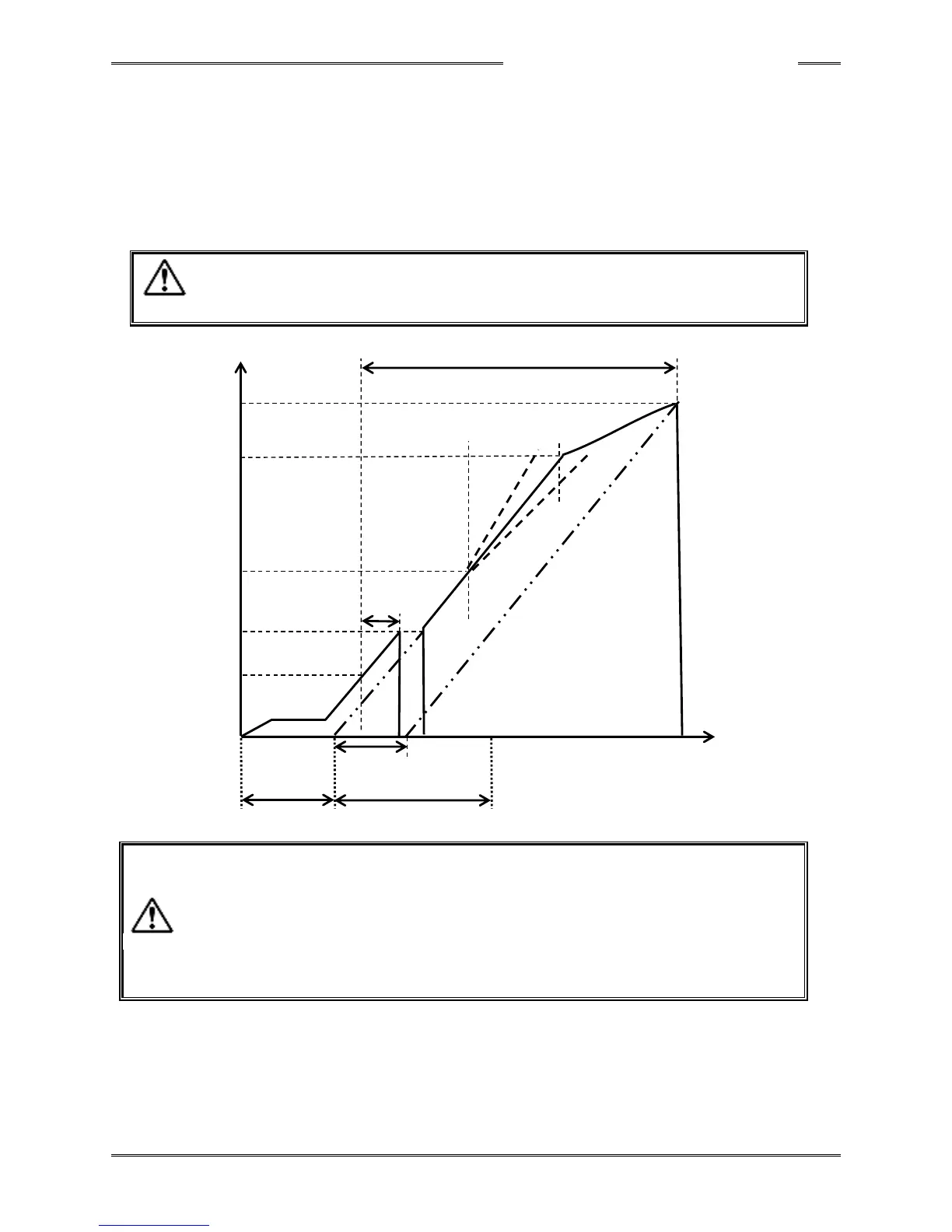
Differential Angle Check
After the end of fastening, the differential angle, which is the difference between the seating point
(angle) of the final torque and the seating point (angle) calculated from the rate 2, is measured and
judged.
The seating point (angle) calculated from the rate 2 is calculated based on the rate 2 start torque
(angle) and the rate 2 end torque (angle).
When the differential angle check is available, it is judged whether or not the calculated differential
angle is within ranges based on the seating point (angle) calculated from the value of rate 2 as a
reference point.
•The value of the Differential angle of the fastening curve data and the value of the
differential angle of the fastening result contain a measurement error of a maximum of
5deg (±2.5deg).
•If the rate 2 start torque cannot be detected during the fastening operation, the differential angle
check will not be performed.
•Under the following conditions, the torque at the end of fastening is judged as the rate 2 end
torque.
•If the set values are set so that rate 2 start torque > rate 2 end torque.
•If the rate 2 end torque cannot be detected during the fastening operation.
Differential Angle
(Fastening Result)
Seating point calculated from the Rate 2



 To Next Page