gas leak is corrected and the area cleared of
natural gas.
4.
Evacuate the area.
5.
Check the fuel lines, LNG tank/CNG cylinders,
and fittings to locate the leak. After the area is
cleared of natural gas and the alarm is no longer
active, have the vehicle inspected by a qualified
technician.
IMPORTANT: Do not consider the area clear
until all alarm indicators are off, and the alarm
panel light returns to green.
Sensors
Gas detection sensors are located in the cab and in
the engine compartment on the front wall. The
sensors are located in high areas, where rising gas
vapors will pass by or accumulate.
If the system detects that one of the sensors has
been disconnected or has malfunctioned, the sensor
fault light for that zone will illuminate. A failed sensor
may trigger and lock on an alarm. If a fault condition
or locked alarm is triggered, have the vehicle
serviced before operating.
The sensors are sensitive to all hydrocarbon vapors.
An alarm may be triggered by the use of chemicals
such as cleaners, paint, polish, lacquer, gasoline,
silicone, silicone spray, or other harsh chemicals.
The sensors will also detect hydrogen fumes from an
overcharged battery. If a sensor sends an alarm, but
no gas fumes are present, check for recent use of
chemicals or a battery charger.
NOTICE
Silicone-based chemicals and cleaners will
permanently disable the sensors. When cleaning
the vehicle, cover the sensors with a plastic
covering. Keep the sensors covered until the
area has been cleared of any cleaning fumes.
Harsh chemicals and extremely high
temperatures may damage the sensor.
Puncture of or damage to the seal located inside
the sensor housing will significantly shorten the
sensor life.
Frequent exposure to high concentrations of gas
will accelerate sensor deterioration.
Control Module and Alarm Panel
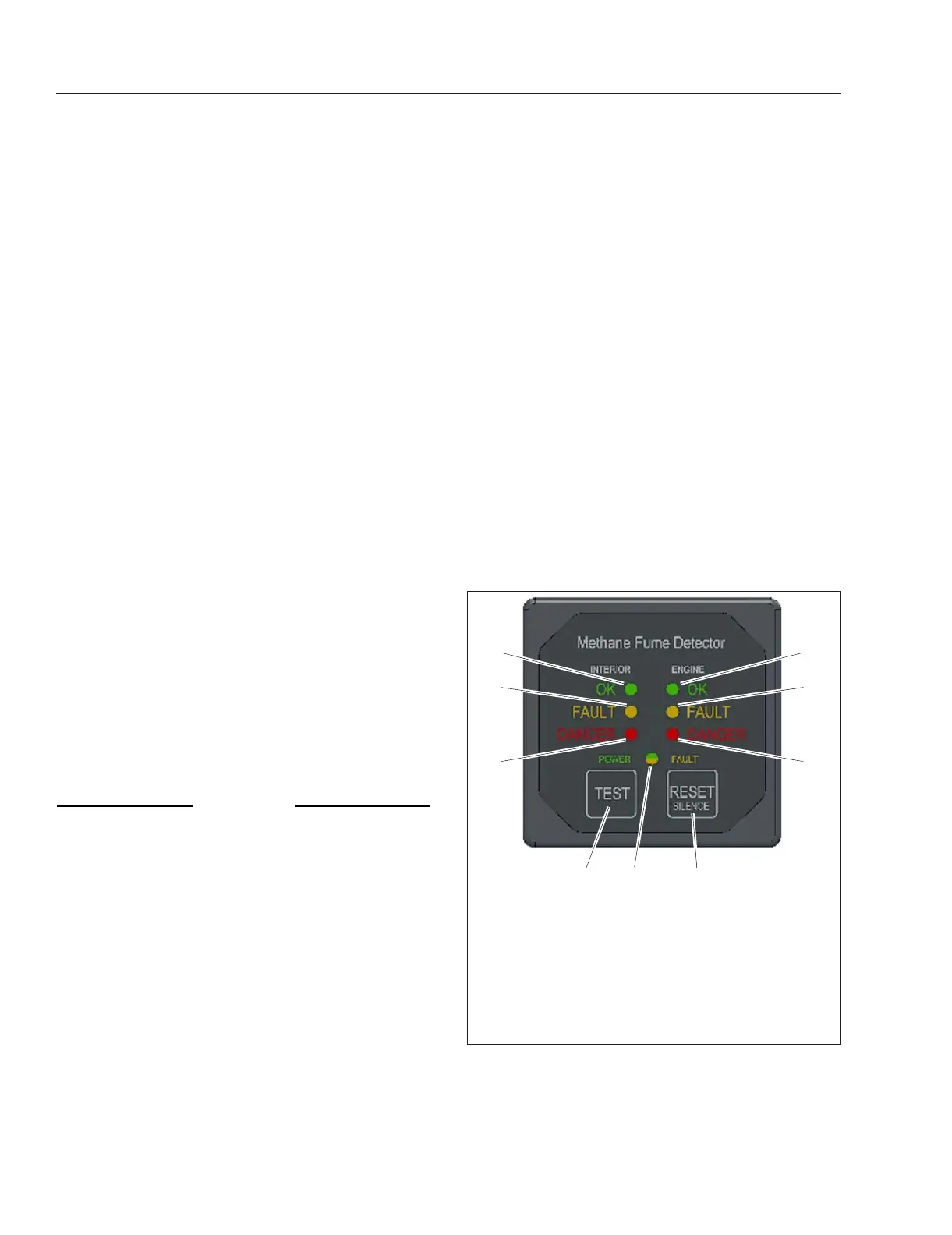
The gas detection system control module is located
on the center dash panel. See
Fig. 19.7. The alarm
panel is located on the overhead consol. It has a
green light, a red light, a buzzer, and a sensor. See
Fig. 19.8. It is located within view from outside of the
vehicle. The large green light is continuously
illuminated during normal operating conditions. There
is also a forward-facing alarm panel located at the
top center of the windshield for easy viewing from
the front of the vehicle. This panel only has the
green and red lights. See
Fig. 19.9.
Before entering the vehicle, always verify that the
green light is illuminated. If the green light is not
illuminated, do not enter the vehicle. Complete the
alarm procedure previously outlined.
The control module and the alarm panels meet the
California Highway Patrol Title 13-2008 and NFPA 52
2010 requirements. All drivers and technicians using
it should be trained regarding the red and green
lights, and the audible warning.
The control module, located on the center dash
panel, contains the status lights and control buttons
09/15/2015 f470667a
1
2
3
5
7
8
9
46
1. Interior OK LED (green)
2. Interior Fault LED (yellow)
3. Interior Danger LED (red)
4. Test Button
5. Power/Fault LED (green/yellow)
6. Reset/Silence
7. Engine Danger LED (red)
8. Engine Fault LED (yellow)
9. Engine OK LED (green)
Fig. 19.7, Control Module
Natural Gas Vehicle Information
19.7










 To Next Page