
 Need help?
Do you have a question about the GeoMax Zipp02 and is the answer not in the manual?
Instructions for storing the instrument safely within its protective case.
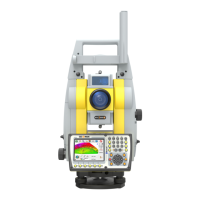
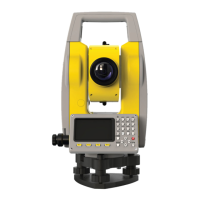
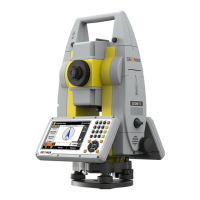
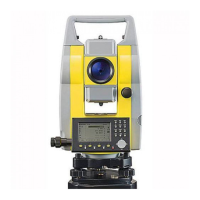
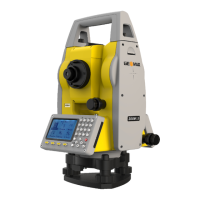
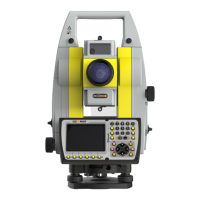
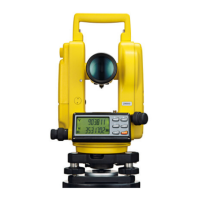
Identification and overview of the Zipp02 instrument's main parts.
Detailed explanation of each button's operation and function on the instrument.
Explanation of the symbols, readings, and status indicators on the instrument's display.
Guidelines for battery installation, removal, and recharging for the instrument.
Procedures for erecting, leveling, and centering the instrument on a tripod.
Steps for adjusting the telescope focus and eliminating optical parallax for accurate aiming.
Guide to configuring essential instrument parameters before starting measurements.
Steps for powering on the Zipp02 and entering the primary measurement mode.
Instructions for performing accurate horizontal and vertical angle measurements.
Method for calculating distances using the instrument's stadia capabilities.
How to inspect and adjust the tubular and circular leveling vials for accuracy.
Instructions for operating and adjusting the instrument's laser plummet for precise centering.
Procedure for checking and correcting the vertical circle index error.
Best practices for safe transportation of the instrument in various conditions.
Recommendations for proper storage conditions, including battery care.
Essential safety instructions for users to anticipate and avoid operational hazards.
Defines the proper applications and prohibited uses of the GeoMax Zipp02.
Identification of potential risks during operation and required safety precautions.
Information regarding laser safety standards and classification for the device's laser plummet.
Detailed technical data for the telescope, angle system, and compensator.
Statement confirming the instrument's compliance with national and European regulations.
 General
| Type | Total Station |
|---|---|
| Angle Accuracy | 2" |
| Measurement Range (Single Prism) | Up to 3, 000 m |
| Laser Wavelength | 635 nm |
| Laser Class | Class 2 |
| Operating Temperature | -20°C to +50°C |
| Accuracy | 2 mm + 2 ppm |
| Display | LCD |



 To Next Page